
Mary J. Malloy MD

https://cvri.ucsf.edu/mary-j-malloy-m-d/
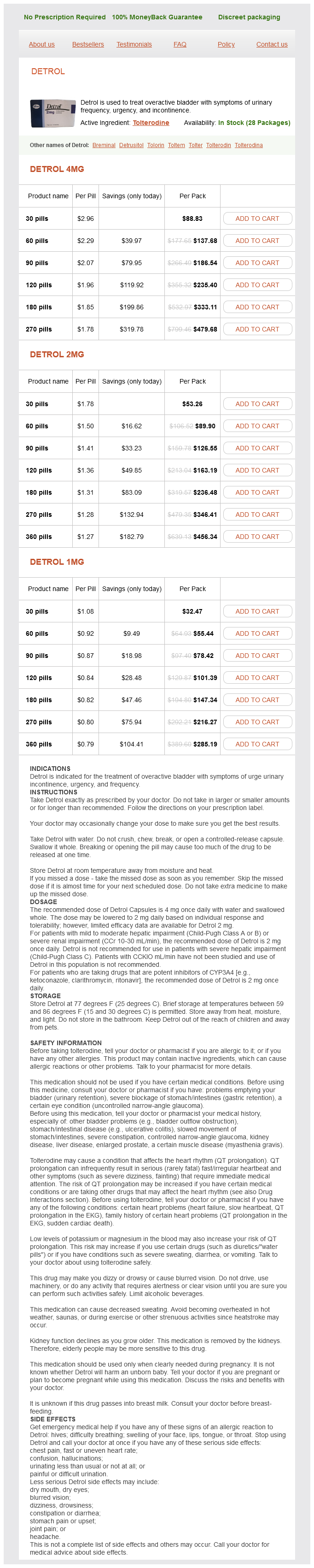
Tolterodine dosages: 4 mg, 2 mg, 1 mg
Tolterodine packs: 30 pills, 60 pills, 90 pills, 120 pills, 180 pills, 270 pills, 360 pills

In the United States, gonorrhea is the second mostly reported notifiable disease leading to serious outcomes in women, similar to tubal infertility, ectopic pregnancy, and continual pelvic ache. Nucleic Acid Hybridization Nucleic acid hybridization is a molecular method primarily based on annealing of complementary nucleic acid strands on a stable double-strand nucleic acid with out amplification. The opa and porA pseudogene have been validated as appropriate confirmatory check for optimistic nucleic acid amplification checks [28, 29]. This target area has two highly conserved sequence variations and is repeated thrice on the genome. The sensitivity and specificity of this assay on urine and swab samples have been ranged from ninety two. The assay contains two units of primers targeting a 122 bp conserved sequence within the C. There are four approaches to further molecular confirmatory exams: (1) testing a second specimen with a special take a look at using different target; (2) testing the unique specimen with a different test that makes use of a special goal or format; (3) repeating the unique test on the original specimen with a blocking antibody or aggressive probe; and (4) repeating the unique check on the original specimen [46]. Therefore, these three assays can be utilized as confirmatory exams for one another assay [47, 48]. Owing to the sluggish technology time and the lack to survive and multiply outside the mammalian body, despite repeated makes an attempt over the years, T. Dark-field microscopic examination in lesion exudate or tissue and serology are the definitive methods for diagnosing early syphilis. However, these tests could additionally be problematic within the early levels of major syphilis, as both serological tests and microscopic examinations are limited by low degrees of sensitivity and specificity [51]. The assays present a sturdy, delicate, and particular assay to instantly detect the presence of T. Several studies have proven that the accuracy of scientific diagnosis for chancroid ranged from 33 to 80% [68, 69]. The optimum sensitivity of culture can solely be 50�90% even in experienced and well-equipped laboratories, whereas the sensitivity may be less than 50% in inexperienced laboratories [70, 71]. The "gold requirements" for the prognosis of chancroid had been medical prognosis and laboratory culture of H. Mycoplasma hominis, Mycoplasma genitalium, Ureaplasma parvum, and Ureaplasma urealyticum are important etiological agents of postpartum fever, infertility, and pelvic inflammatory ailments [82, 83]. No commercial diagnostic system is available for the detection of mycoplasmas and ureaplasmas. Introduction of molecular detection techniques provides a model new horizon within the identification and detection of Mycoplasma and Ureaplasma species. Kam provide improved specificity and sensitivity compared with the time-consuming conventional tradition methods. Dot blot hybridization methods with 32P-labeled, digoxigenin or biotin-labeled probe for detection of mycoplasmas were additionally developed [87]. It represents a big improvement on current diagnosis of Mycoplasma an infection immediately from clinical samples in lower than 24 h. Over 180 million instances of trichomoniasis are reported yearly worldwide, while estimated five million women and a million men in United States are contaminated yearly [104]. Although direct microscopy examination of vaginal secretion and urine samples stays the commonest diagnostic take a look at for this an infection, detection of T. The sensitivities of each direct microscopy examination and tradition are low, only 40�70% [105]. However, the drawbacks of this assay are the instability of the probe, and the need to handle and eliminate radioactive materials. In one primer pair, a 102 bp genomic fragment was amplified and termed as A6p sequence, which appears extremely selective for a broad range of T. Historically, the popular method for prognosis of herpes infection was viral isolation in tissue tradition followed by type-specific immunofluorescence detection. The benefits of this fully automated assay are that it significantly reduces the turnaround time by reading as much as ninety eight results in 2. By comparing these fingerprints to a database of reference spectra by means of various algorithms, bacteria may be quickly identified [130]. The acquisition time for this system is simply about 10 min for identification of Haemophilus spp. Another related study was additionally demonstrated 29 Molecular Diagnostics of Sexually Transmitted Diseases 549 during which significant interspecies differences between N. Cluster evaluation efficiently separated mass spectra collected from three groups that corresponded to N.
After washing away the unbound oligonucleotide, the remaining elements required for the invader assay (see above and. In addition, Hologic is licensing using Invader know-how to other in vitro diagnostics, and biotechnology firms for brand new take a look at improvement. Beck S, Koster S (1990) Applications of dioxetane chemiluminescent probes to molecular biology. Momose H, Mizukami T, Ochiai M et al (2010) A new technique for the evaluation of vaccine security based mostly on complete gene expression analysis. Wright T, Massad L, Dunton C et al (2007) 2006 Consensus guidelines for the administration of women with irregular cervical cancer screening tests. Anal Biochem 374:278�284 Chapter 19 Real-Time Nucleic Acid Quantification Nima Mosammaparast and Alexander J. The prototypical software of the logistic perform is its use for modeling inhabitants growth, where the speed of population progress is determined by two factors: (1) the existing inhabitants and (2) the quantity of accessible resources [1]. At this initial development stage, the speed of population development is almost exponential. As the population grows, sources diminish, and the growth price additionally diminishes; this continues until the N. A purely exponential amplification can be proven for comparison (dashed blue line). Notice that in early cycles the 2 curves are practically identical progress rate decreases to zero and equilibrium is reached. Thus, plotting the connection between the number of amplification cycles necessary to attain a specified concentration of product (as determined by a set level of fluorescence) and the log of the starting concentration of the nucleic acid template provides a unfavorable linear relationship. While in concept the product threshold set point can be any amount during the exponential part of the response, in reality this threshold ought to be set at the lowest reliably detectable stage of fluorescence above background, since that is the place the reaction behaves most like to the exponential ideal. Besides the brink method, a number of other strategies exist for determining the Ct; these have been described in higher detail elsewhere [3]. The second objective in plotting such a curve is to create calibration or standard curves, which may be used to calculate the concentration of the target sequence in any given sample. The Ct worth decided from the unknown sample could also be utilized utilizing linear regression methods to the standard curve to decide the concentration of the goal sequence. The use of such a technique assumes that the amplification reaction in the unknown pattern behaved identically 348 N. Generally, the former is true in apply but is seldom approached within the medical laboratory as a outcome of a lack of need for such a large dynamic vary. For medical purposes, the decrease restrict of detection is normally outlined as the lowest amount of analyte (nucleic acid in this case) with a ninety five % chance of detection. With the use of such dyes, melting curve evaluation will assist to discriminate particular merchandise from different contaminants [2]. As a result of their sequence-specific binding, probes are unlikely to anneal to nonspecific amplification merchandise and primer dimers, and so are predicted to give more accurate quantitative results. All of those are affordable decisions to be used as calibrators in laboratory-developed tests, although quantified pathogen nucleic acid is most well-liked if it is obtainable, because it most intently resembles medical specimens. We have found that engineering a plasmid using a standard vector backbone (such as pBlueScript) to contain the target sequence of interest to be a useful and simple method to produce calibrator standards for a quantity of different assays. McAdam column kits, quantified using spectrophotometry, and then serially diluted to be used as calibrators described earlier. The quantitative take a look at results utilizing these synthetic requirements must be compared to quantified pathogen each time out there (such as reference requirements distributed by the World Health Organization), and adjusted if essential to better reflect the end result should a true organic standard have been used. It is essential to acknowledge that plasmid or synthetic oligonucleotide calibrators could not behave as patient-derived specimens, and this cause inaccurate quantitative measurements. Careful sequence comparability to all recognized variants of a given pathogen deposited in genome databases is crucial in selecting the appropriate amplicon sequence to avoid areas of excessive sequence variability. A single nucleotide mismatch within the primer or probe sequence could be enough to falsely cut back quantification a number of orders of magnitude or give a false adverse outcome. A number of pc applications exist, such as Beacon Designer (Premier Biosoft), which may help the consumer in choice of the amplicon. On occasion, it could be unimaginable to discover a specific pair of primers and a single probe that may work for all known sequence variants of a given pathogen. In these circumstances, it is going to be necessary to synthesize a small pool of primers or probes that will goal a fairly well-conserved region and canopy all potential variants.

The size, color, form and form of colonies fashioned by microorganisms on nutritional agar and other selective media are diagnostically informative. However, because not all microorganisms will grow in laboratory media and cell lines, embryonated eggs, insect vector, and laboratory animals. For instance, Trypanosoma cruzi, the causal agent for Chagas illness, is grown in the guts of its vector triatomine bug for affirmation and prognosis. The availability of cultured isolate/strain permits further antigenic studies, antibiotic susceptibility testing, and genetic research. Despite their comparatively high expense and size of time required, in vitro and in vivo techniques have contributed to the studies of microbial taxonomy, biology, epidemiology, pathogenesis, and therapy response. Based on genetically engineered bioluminescent/fluorescent microorganisms, this system enhances the study of microbial infections and host immune responses [12]. Application of genetically engineered mice with luciferase reporters for particular microbial or host genes helps overcome the limitations of in vivo bioluminescence imaging for evaluation of microbial replication, activation of key genes in host immunity, and response to tissue injury in vivo [13]. Because of their time-consuming, occasionally variable nature, and/or their restricted sensitivity and specificity, phenotypic approaches. Progresses in the areas of genetic goal selection, template preparation, transition from nonamplified to amplified approaches, and product detection over the previous 20 years have made molecular strategies an indispensable device in the laboratory analysis of microbial pathogens in veterinary medicine [1]. With regard to the number of genetic targets, the next three types could additionally be thought-about: nonspecific, shared, and particular genetic targets. Specific genes are uniquely present and symbolize ideal targets for the identification of pathogenic micro organism, fungi and parasites. Preparation of nucleic acid templates from cultured isolates and medical specimens represents an essential initial step for molecular identification and detection of microorganisms. Liu (4) removing of contaminating proteins, polysaccharides, polyphenolic pigments, and different compounds [14]. Furthermore, automated nucleic acid extraction techniques have turn into increasingly sophisticated and affordable, contributing to the streamlining of template preparation and discount of potential cross-contamination throughout guide handling. Subsequent detection and quantification of fluorescence sign permits identification and determination of the relative abundance of nucleic acid sequences in a pattern [16]. Nonetheless, some of these nonamplified methods stay useful for comparison of microbial genomes and for identification of species- and virulencespecific gene regions. This method was also applied for identification of novel virulence-specific gene regions in zoonotic bacterial pathogen Listeria monocytogenes and novel speciesspecific gene in animal bacterial pathogen Listeria ivanovii [19, 20]. This method has the capacity to synthesize billions of copies from a single nucleic acid template within 3�4 h, and demonstrates superior sensitivity, beautiful specificity, fast turnover time and amenableness to automation for prime throughput testing. Biochips (biosensors) are small analytical gadgets designed for nucleic acid-based electrical/optic detection (fluorescence or chemiluminescence) [26]. While the traditional Sanger methodology (also often identified as "chain termination technique" or "dideoxy sequencing") can read up to 900 bp per and produce one hundred kb of sequence information per run, the "subsequent generation sequencing" technologies. Subtyping and Phylogenetic Analysis Microbial pathogens are noted for the diversity and their capability to adapt and survive in difficult environments. The capacity to identify and track microbial strains and varieties concerned in disease outbreaks is crucial for their control and prevention. For this purpose, numerous phenotypic and molecular procedures have been developed and applied for subtyping and phylogenetic analysis of microbial strains and varieties causing animal ailments (Table 35. However, it has poor discriminatory power due probably to variation in gene expression and level mutation Phage typing Phage typing distinguishes microbial strains into "phage sorts" by their patterns of resistance or susceptibility to a standard set of bacteriophages, depending on the presence or absence of explicit receptors on the bacterial floor for phage (virus) binding. Phage typing shows good reproducibility, discriminatory power and ease of interpretation, however requires upkeep of biologically lively phages and demands technical abilities. In addition, many strains are nontypeable Serotyping Serotyping differentiates microbial strains into serotypes (serovars) according to the antigenic variations present on the floor constructions. Agglutination, latex agglutination, coagglutination, or fluorescent and enzyme labeled assays may be used for serotyping. However, serotyping is dependent upon the provision of excellent quality reagents, and a few autoagglutinable (rough) strains are nontypeable. Additionally, the method tends to have poor discriminatory power because of cross-reactive antigens Bacteriocine typing Bacteriocine typing assesses microbial strains for their susceptibility to a set of bacterial peptides (bacteriocine), and has been employed to type stains of Pseudomonas aeruginosa, Escherichia coli, and Yersinia pestis, and so on. The technique has glorious reproducibility and ease of interpretation, however reveals reasonable discriminatory power, and requires expensive equipments Antibiogram typing Antibiogram typing compares completely different microbial isolates in their susceptibility to a set of antibiotics. The method has ease of efficiency and interpretation and reasonable reproducibility.

This must be adopted by 1 mg hydroxocobalamin intramuscularly each three months, all through life. Hematologic abnormalities are quickly and fully reversed by vitamin B12 therapy. This anemia seems 2�10 years after the operation depending on the scale of the B12 store and the extent of gastric resection. These components determine the time taken for normal vitamin B12 stores to be depleted after the abrupt cessation or drastic diminution of vitamin B12 absorption. The likelihood of developing vitamin B12 deficiency is a operate of the quantity of abdomen resected. In most instances, the vitamin B12 deficiency appears to end result from a mix of the loss of intrinsic factor-secreting mucosa at operation and the following atrophy of the remainder of the gastric mucosa. The deficiency may end result from a failure to launch vitamin B12 from food because of a deficiency of acid and gastric pepsin (see below). In a few cases, and significantly when blind loops have been created (as happens following a Polya sort gastrectomy), the vitamin B12 deficiency could be the consequence of the development of an irregular intestinal bacterial flora. The frequency with which gastrectomy is now carried out has markedly reduced since the advent of profitable medical treatments for peptic ulceration and Helicobacter pylori infection. However, the widespread use of H blockers and proton pump inhibitors to reduce acid secretion has contributed to meals B12 malabsorption (see below). In addition, the weight problems epidemic in Western countries has led to a progress within the apply of gastric reduction surgical procedure which may be complicated by nutrient, including vitamin B12 malabsorption. The medical picture in such patients is further complicated by multiple nutrient deficiencies including that of copper, which can produce a myeloneuropathy resembling that seen in vitamin B12 deficient myelopathy as properly as anemia, which can be macrocytic. Such conditions include a quantity of jejunal diverticula, small-intestinal strictures, intestinal involvement in systemic sclerosis, and stagnant intestinal loops resulting either from gastrointestinal surgery or from fistulae complicating regional iletis or tuberculosis. These micro organism consume and even convert vitamin B12 from ingested meals into inactive cobinamides and different vitamin B12 analogues and thus lower the supply of vitamin B12 for absorption on the terminal ileum. Because vitamin B12 is absorbed in the terminal ileum, deficiency might end result from diseases affecting the decrease a part of the ileum. About 90% of sufferers with this illness malabsorb vitamin B12 and many also malabsorb folate. The absorption of vitamin B12 regularly returns to regular after a course of broad-spectrum antibiotics and in the early levels of the illness may enhance following therapy with folic acid. However, megaloblastic anemia caused by this tapeworm is extra or less confined to Finland, the Baltic states and Russia. Infestation happens by eating uncooked or partly cooked fish containing a larval form of the worm. The adult tapeworm could grow to a size of 10 m and is discovered attached by its head to the mucosa of the ileum. Only a few per cent of infested humans develop megaloblastic hemopoiesis or neurologic abnormalities because of vitamin B12 deficiency. The tapeworm causes these results by depriving the host of vitamin B12 within the intestinal lumen derived either from ingested food or from bile. Although most fish tapeworms are attached to the 204 distal half of the small intestine, the worms of anemic individuals are connected more proximally and it seems that parasites with a high attachment extract vitamin B12 before it reaches the absorptive website in the ileum. Vitamin B12 deficiency as a end result of infestation with the fish tapeworm is turning into much less frequent due to pollution of the lakes and a consequent discount in the inhabitants of potentially infective fish. Whereas in the past about 20% of Finns harbored the fish tapeworm this determine had come all the way down to about 2% in 1977. Vitamin B12 deficiency outcomes from a failure of the terminal ileum to take in vitamin B12 from the vitamin B12�intrinsic issue complicated. The defect of absorption only affects vitamin B12, the absorption of other substances being completely regular. The gastric juice accommodates normal portions of intrinsic factor and the histology of the stomach and terminal ileum is normal. The anemia is corrected by parenteral vitamin B12 but the mild proteinuria persists. Other causes of malabsorption of vitamin B12, normally without megaloblastic anemia.

Identification of Agents of Bioterrorism and Other Select Agents the latest threat of bioterrorism has resulted in development of technologies which may rapidly detect and establish select bacterial agents. Separation of organisms suitable for biowarfare and bioterrorism from related nonpathogenic species within the similar genus relies upon distinctive fatty acid profiles between the 2. It may be very difficult, for instance, to differentiate the two carefully related Yersinia species, Y. The incontrovertible fact that these two organisms are genetically very shut additionally poses difficulties for using molecular check strategies. This necessarily exposes laboratory personnel to probably harmful pathogens; thus correct training and handling of the organism(s) are of paramount significance. Mycolic Acid Analysis for Identification of Mycobacteria Mycobacteria produce unique fatty acids known as mycolic acids. Mycolic acids are high-molecular-weight a-alkyl, b-hydroxy fatty acids containing an a-branch of 20�25 carbons, and a main or meromycolate chain of 50�60 carbons. In addition, these massive fatty acids include a wide selection of practical teams and may range in both qualitative and quantitative characteristics between species. Initial strategies required guide interpretation of chromatograms with eventual growth of automated techniques [22, 23]. Once autoclaved, the organisms are killed by the process and the mycolic acids launched from the cell wall. Mycobacteria are typically grown on stable medium such as Middlebrook 7 H10 or 7 H11 at 35�37 �C until progress is visible. Currently obtainable databases have been developed which incorporate mycobacterial species which require different progress conditions corresponding to M. Once autoclaving has been completed, samples are cooled to room temperature, acidified, and extracted into chloroform. Subsequently, fluorescently labeled derivatives of the mycolic acid methyl esters are prepared utilizing a mixture of 4-bromomethyl 1-6, 7-dimethoxycoumarin and crown ether. The quantity of mycolic acid current is related to the quantity of sunshine emitted and the structure of the mycolic acid is said to the 182 N. Analysis is performed by the software which utilizes retention time, peak width, and peak amount to provide a peak name which may then be compared to a library database so as to provide an identification [24]. The precept of this method rests on the reality that nearly 30�50 % of the dry weight of the mycobacterial cell contains mycolic acids. The method, which has been standardized for all first-line drugs (isoniazid, rifampin, ethambutol, and pyrazinamide), is performed much as the usual identification process with a few modifications. The complete incubation required for all drugs considered collectively is 72 h versus the typical days to weeks for other automated platforms and solid media. For every test, a standardized inoculum is ready, and used to inoculate control and paired drug containing broth cultures. Values from control versus drug-treated cultures are acquired with ChemStation software and processed using Sherlock software for calculation of the entire mycolic 9 Cellular Fatty Acid-Based Microbial Identification. The ensuing ratio is plotted relative to a standardized breakpoint of 30 % which is used for all further data evaluation [26, 28]. Inter- and intra-assay reproducibility various by drug with a mean precision of thirteen. Subsequent research have been conducted by which this similar methodology has been applied to other mycobacterial species of medical significance together with M. In both circumstances, a significant discount in turnaround time from days/weeks to hours was realized. Smaller research have been performed which show that direct susceptibility testing from smear-positive sputum is feasible with this assay [31]. Additional improvements in mycolic acid extraction, derivatization, and sensitivity ought to streamline the assay and enhance this possibility. Advantages and Disadvantages of Fatty Acid-Based Identification Methods Technological advances proceed to move the field of microbiology forward with improvements in both detection and identification of organisms. However, the one most excellent diagnostic method stays elusive and most of the time, final identification requires a mix of strategies. As with any testing platform, there are advantages and disadvantages to be thought-about. A technician averages about 5 min per pattern to put together a batch of 30 samples and because nonsubjective offline exams or gram stains are required, the naming is extremely objective and reproducible.

Green Ozier (American Dogwood). Tolterodine.
Source: http://www.rxlist.com/script/main/art.asp?articlekey=96525
Manual pouring of slab-gels in traditional gel electrophoresis methods can cause inconsistencies within the matrix affecting results. Unlike conventional strategies although, expensive instrumentation is often needed to collect data and resolve sequences. Both these instruments even have the ability to detect a number of fluorophores which permits better discrimination between comparable sizes. Direct amplicon sequencing is often used within the scientific laboratory to detect viral mutations. Commercially available kits for genotyping have made it possible to obtain outcomes inside 48�72 h, thereby making this methodology more interesting for use in diagnostic molecular laboratories. Direct sequencing for amplification product detection and identification might be mentioned in detail in Chap. Pyrosequencing Pyrosequencing is a totally totally different strategy to sequencing compared to different chain termination methodology. Along with this template, the reaction combine also includes a sequencing primer, sulfurylase and 362 C. The technology of light indicates which nucleotide answer complements the first unpaired base of the template. In turn, the sequence of solutions which produced chemiluminescence determines the sequence of the template. However, this technique is proscribed to short sequence evaluation (about 300�500 nucleotides) and is mostly used for mutation detection and infectious illness typing like in determining Hepatitis C virus genotypes [24], somewhat than for producing new sequences. It is also typically provided with software for identifying the spots on the array by the array reader. Microarray technology has been used for over a decade in gene expression research and is now gaining reputation in microbial identification and detection. Today, a quantity of business merchandise that incorporate microarrays as the identification technique can be found available in the market for the detection of a panel of respiratory viral pathogens [28�30]. This strategy permits multiplex evaluation and simultaneous identification of a broad range of microorganisms in a given pattern. Multiple pairs of broad-range primers are used to amplify highly conserved regions of bacterial, viral, or fungal genomes. Using the plenty of the bottom compositions of amplicons from all the primer pairs, the organisms present within the pattern could be identified and quantified. Persing D, Tenover F, Tang Y-W, Nolte F, Hayden R, van Belkum A (eds) (2011) Molecular microbiology: diagnostic ideas and practice, 2nd edn. Buckingham LaF M (ed) (2007) Molecular diagnostics: fundamentals, strategies, and clinical purposes, 1st edn. Sambrook J, MacCullum P (eds) (2005) Molecular cloning: a laboratory guide, third edn. Mallet F, Hebrard C, Brand D et al (1993) Enzyme-linked oligosorbent assay for detection of polymerase chain reaction-amplified human immunodeficiency virus sort 1. Poljak M, Seme K (1996) Rapid detection and typing of human papillomaviruses by consensus polymerase chain response and enzyme-linked immunosorbent assay. Elahi E, Pourmand N, Chaung R et al (2003) Determination of hepatitis C virus genotype by pyrosequencing. Brunstein J, Thomas E (2006) Direct screening of medical specimens for a quantity of respiratory pathogens utilizing the Genaco Respiratory Panels 1 and a pair of. J Clin Virol 40(Suppl 1):S39�S46 20 An Introduction to Amplification�Production�Detection Techniques 365 31. J Clin Microbiol forty nine:908�917 Chapter 21 Gel Electrophoresis, Southern Blot, and Colorimetric Microwell Plate-Based System Jie He, Michael J. Loeffelholz, and Jiang Fan Introduction Infectious disease-related illnesses are a significant threat to human well being resulting in substantial morbidity and mortality, worldwide. Timely and correct diagnostic instruments are critical for patient therapy decisions and illness outcomes. Molecular diagnostics are revolutionizing the scientific apply of infectious disease.
Syndromes
The 5�-end of one strand and the 3�-end of the other strand are each labeled with a fluorescent or quenching moiety. Similar to molecular beacons, signal generation mechanism (energy transfer or quenching) is dependent upon the positions of the labels; and in a most popular design there could additionally be variations in the number of labels. In the absence of targets, because of the formation of double helix consisting of the two probe strands, the 2 labels are brought into the vicinity of each other. In the presence of targets, the probe strands hybridize to their corresponding complementary target sequence, thereby separating the two labels. The capacity to modulate the molar ratio between the two strands is a bonus of the complementary probes over the single-strand probes (such as TaqMan probe and molecular beacon) for which sequence variation stays the only source of design flexibility. Multiple forms of complementary probe designs (categorized by length symmetry) have been introduced, including partially double-stranded probes with differential lengths [60], and symmetric or near-symmetric probes with equal or near-equal lengths between the 2 strands [61, 62]. While symmetric or nearsymmetric probes ought to work effectively to distinguish mutations, that is accomplished on the expense of slower binding kinetics and potentially decrease sensitivity 24 Real-Time Detection of Amplification Products. The partially double-stranded probe could be designed either to achieve mismatch tolerance or mismatch discrimination. One significant benefit of partially doublestranded probe is that the design features. Partially double-stranded probes with two labeled oligonucleotides overlapping at the complementary region and containing noncomplementary single-stranded regions on each ends have additionally been described [63]. Single-Stranded Dual Label Hybridization Probes Eclipse probes are singled-stranded probes labeled with a 5� quencher and a 3� fluorophore [64]. Upon hybridization, the probe is stabilized in the double-stranded structure, allowing fluorescence to be emitted. The difference is that the fluorophore is labeled on the 5� finish and the quencher on the 3� finish. The extent of signal enhancement upon binding is way greater when complementary sequences are current compared to when noncomplementary sequences are present. Huang particular with one mismatch inflicting clear differentiation between perfect-matched and mismatched targets. Hybridization-Induced Quenching or Dequenching of Fluorescein-Labeled Oligonucleotides Fluorescence could be quenched by nucleobases because of photoinduced electron switch, as well as presumably coupled electron/proton switch and hydrophobic results. Due to their electron-donating properties, guanine derivatives have been discovered to be sturdy quenchers of fluorescence. Interestingly, it has been found that a probe labeled with G-quenched fluorescence (HyBeacon) could be dequenched upon hybridization to the complementary target strand, which leads to an increase in fluorescence signal [70]. In addition to the quenching impact primarily based on main sequence adjacency, the quenching effect from G bases introduced in close vicinity of the fluorophore by way of stem-loop formation has additionally been explored for the design of "Smart" probe. Like molecular beacon, the stem-loop structure opens up upon binding to the goal, thereby generating indicators as a result of decreased quenching [72]. All these abovementioned phenomena of hybridization-induced fluorescence dequenching have been or can be utilized to design probes for real-time assay-based nucleic acid detection and genotyping. In addition to dequenching, the G-associated quenching phenomenon has been utilized to design assays based mostly on hybridization-induced quenching [73, 74]. The extent of the quenching effect depends on the quantity and positions of the adjoining G bases on the complementary target strand. As target sequences accumulate in a real-time assay, the amount of quenched fluorescence may be measured that correlates with the amount of accrued targets, a lot in the same way that an increased fluorescence signal is measured in a typical real-time assay. This cleavage causes the bodily separation of the fluorescein and rhodamine labels, and loss of vitality switch which in flip results in improve in fluorescein indicators. There have also been related designs the place the donor and acceptor are separated solely by a restrictive enzyme website without a stem-loop construction. Besides the above examples where each copy of amplified target helps one sign era event, signals amplification may be achieved through the use of a cleavable fluorescence probe the place one copy of amplified goal supports multiple sign technology events. CataCleave probe (catalytically cleavable fluorescence probe) is one instance [76]. Invader Chemistry Invader chemistry detects goal with probe-mediated sequence-specific hybridization and achieves signal amplification with probe biking and structure-specific cleavage by Cleavase enzyme [27].

Copyright � American Society for Microbiology, J Clin Microbiol 2008;46:1946�1954; doi:10. This facet is of high relevance in medical microbiology because of the distinct end result and infection management measures associated to the completely different species. Other impressive examples of the enhanced discriminatory energy (see also Tables 10. Although differentiation of various clonal lineages throughout the species Staphylococcus aureus could probably be attained, makes an attempt to discriminate methicillin-resistant S. Starting from a single colony, it has now turn out to be an easy task to determine an unknown species within just a few minutes [31, 51, 52]. First studies have even demonstrated the proof of concept to establish species inside a mixed culture [52]. For instance, in gram-negative bacteria evaluation the whole bacterial cell suspension may be instantly mixed with the matrix. Still, for organisms with a extra refractory cell wall, corresponding to gram-positive bacteria or fungi, the extraction step is required earlier than mixing the sample with the matrix. Ultimately, the operator should resolve if an analyte pretreatment is always necessary or whether or not preceding extraction ought to be carried out only in situations the place the analysis of a immediately noticed sample failed. Depending on the specification of the mass spectrometer, high-throughput analyses of more than one hundred identifications per hour are achievable. Still, the monetary funding for installation of a mass spectrometer and the working prices of the reference 196 A. Interestingly, a current examine has in contrast the aptitude of each methods and found related results obtained from each platforms [55]. The system is up to now of restricted use in species identification and never universally usable, for instance, for determination of the antibiotic resistance sample, which is an important part of the diagnosis, particularly in clinical microbiology. Currently, the antibiotic resistance has to be decided by the use of totally different, largely phenotypic approaches, corresponding to agar diffusion or utilizing automated systems. M�thing A concern for scientific practices is the dearth of external high quality assurance tests and standardization of laboratory procedures which would to ensure interlaboratory reproducibility. So far, either a single colony on strong medium or an aliquot of a pure liquid tradition with a minimal variety of 1,000�5,000 cells is important for a sound identification [62, 63]. This is of excessive significance within the medical microbiological laboratory, where the timely prognosis of pathogens has a fantastic impact on the success of therapy. Finally, the standard of entries in the reference database is of crucial importance for valid species identification. Examples are the differentiation of pneumococci and members of the Streptococcus mitis/oralisgroup [71, 72] or the delineation of some Enterobacter species [73], where their close relationship likely hampers the legitimate species identification. However, these techniques are quite expensive and laborconsuming as in comparability with less expensive approaches primarily based on phenotyping mass spectrometry. Clients will a minimal of be simply convinced of a quick species end result, which allows for an empiric antibiotic remedy based on local resistance data in scientific microbiology. Stackebrandt E, Koch C, Gvozdiak O, Schumann P (1995) Taxonomic dissection of the genus Micrococcus: Kocuria gen. Wang H, Hanash S (2005) Intact-protein based mostly sample preparation strategies for proteome evaluation in combination with mass spectrometry. M�thing J, Distler U (2009) Advances on the compositional evaluation of glycosphingolipids combining thin-layer chromatography with mass spectrometry. Karas M, Hillenkamp F (1988) Laser desorption ionization of proteins with molecular lots exceeding 10,000 daltons. Tanaka K, Waki H, Ido Y, Akita S, Yishida Y, Yshida T (1988) Protein and polymer analyses as much as m/z one hundred,000 by laser ionization time-of-flight mass spectrometry. Carbonnelle E, Beretti J, Cottyn S et al (2007) Rapid identification of Staphylococci isolated in clinical microbiology laboratories by matrix-assisted laser desorption ionization-time of flight mass spectrometry. Liu H, Du Z, Wang J, Yang R (2007) Universal pattern preparation methodology for characterization of micro organism by matrix-assisted laser desorption ionization-time of flight mass spectrometry.
Up to 50% of warm autoantibodies with specificity for antigens other than Rh react with band 3 and glycophorin A. Di(b), an antigen of Diego system, is also carried on protein band three but is an uncommon goal for autoantibodies. The mechanism of Immune hemolytic anemia Immune hemolytic anemia is the most typical form of acquired hemolytic anemia and could also be autoimmune, alloimmune or drug-induced. Both IgG and C3 are detected in 50% of such sufferers; IgG alone in 23% and C3 alone in 27%. The additional exposure to blood transfusion may further aggravate alloantibody formation;50 nevertheless, transfusion remedy is still an important supportive measure in sufferers whose anemia has put them vulnerable to severe issues. In 60� 70% of patients, full remission can be achieved, but often maintenance therapy is required and as much as 50% may relapse. If no response to corticosteroids is observed by the top of the primary three weeks, continued remedy as sole remedy is usually ineffective. Splenectomy removes the main web site of antigen presentation and, in flip, reduces antibody production. The background of the smear is bluish because of excessive protein content, which accommodates IgM hemagglutinin. Cold autoantibodies are mainly IgM (85%);4 nevertheless, the IgG biphasic Donath�Landsteiner antibody accounts for roughly 15% of such autoantibodies, especially in kids. Clinically, the specificity of the antibody is less important than its thermal amplitude. Thermal range and titer of cold agglutinins is readily demonstrated within the laboratory. The cross-match and antibody display should be carried out using a prewarmed sample and monospecific anti-IgG to avoid false positive reactions. Cold avoidance is the cornerstone of management of patients with cold agglutinin illness. Corticosteroids and alkylating agents are usually ineffective, and the chance of remission with splenectomy is low. Plasmapheresis can be utilized to treat acute hemolytic episodes since it effectively removes the IgM autoantibody; that is greatest carried out in a heat setting with prewarmed tubing and equipment. Blood transfusion, when needed, is infused at room temperature; it stays controversial whether or not a blood hotter provides further benefit. Preliminary observations with rituximab are encouraging, leading to an increase in hemoglobin concentration by 4 g/dl and a lower in IgM ranges in 54% of patients. Due to the transient nature of the illness, establishing the prognosis is commonly troublesome. As a control, a whole blood sample maintained at 37�C ought to show no proof of hemolysis. False constructive outcomes happen with IgM hemolytic antibodies with a excessive thermal range. False adverse results could additionally be seen with low antibody titers or if soluble globoside (P antigen) is current in the added fresh normal serum. The improve in IgG titer usually occurs 7�14 days after the transfusion which coincides with the timing of hemolysis. Differentiating immune hemolytic transfusion reactions from different kinds of transfusion reactions may be difficult. Hypotension and shock can also occur in transfusion-related acute lung damage or severe allergic symptoms. Maternal sensitization usually occurs at supply or after minor trauma throughout pregnancy, including amniocentesis, leading to subclinical alloimmunization. More commonly, the affected fetus may present only with hyperbilirubinemia and anemia throughout the first 24 h of life which may progress to kernicterus unless correct therapy is instituted. Typically, this happens following a blood transfusion, pregnancy or hematopoietic stem cell transplantation.
Ashton, 62 years: Identification of any of the above options wants pressing administration: � Arrange quick hospital admission. An early trial demonstrated superiority of this transplantation in contrast with help and anabolic steroids,fifty eight the one non-transplant treatment then out there.
Cruz, 34 years: Automation Commercially obtainable immunoanalyzers have been widely used to facilitate the analysis of huge numbers of samples by improving the throughput and automation (Table 4. The medical microbiology laboratory must assist drive antibiotic intervention in partnership with pharmacists and physicians.
Larson, 45 years: Knowledgeable interpretation of the outcomes of screening checks will slender the vary of likely defects and the first assays carried out ought to observe this logic. Sequence Exclusion Module In comparison to prokaryotic or eukaryotic genome, viral genomes are a lot smaller.
References

Desarrolló: Grupo Guadalupe S.R.L.