
Dr Andrew Retter
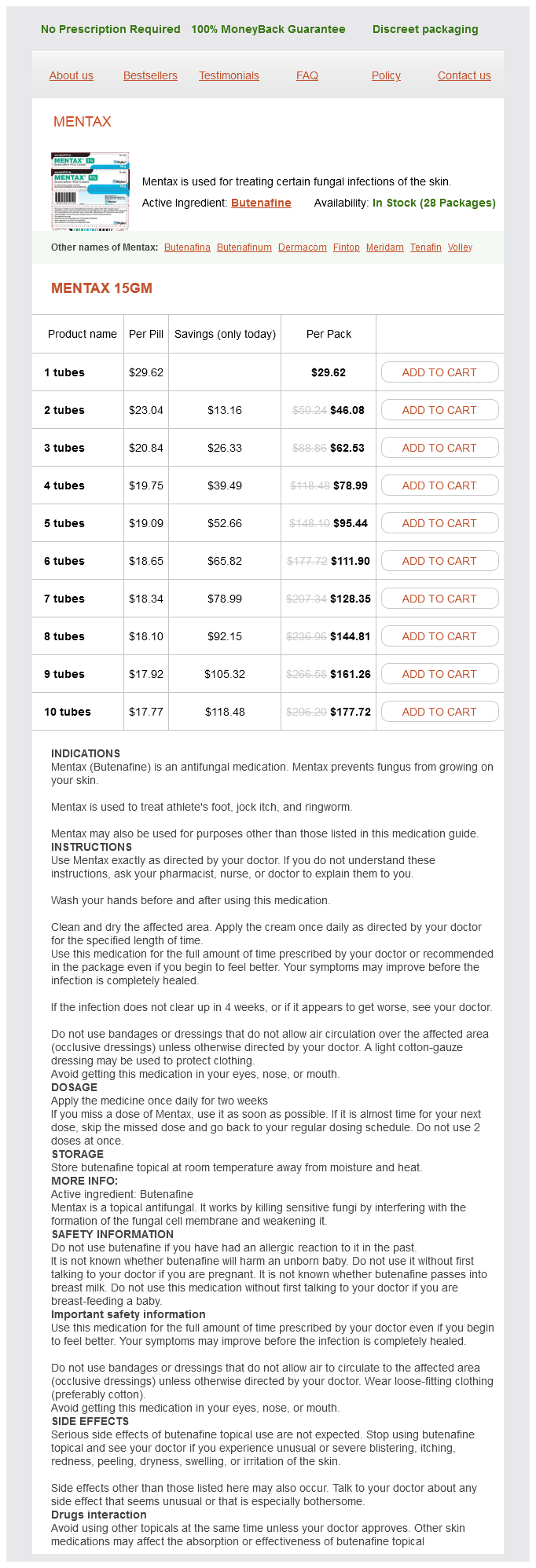
Mentax dosages: 15 mg
Mentax packs: 1 tubes, 2 tubes, 3 tubes, 4 tubes, 5 tubes, 6 tubes, 7 tubes, 8 tubes, 9 tubes, 10 tubes

Ideal reconstruction after total gastrectomy by the interposition of a jejunal pouch considered by emptying time. Primary gastric lymphoma pathogenesis and therapy: what has modified over the past 10 years Dyspepsia workload in urban common practice and implications of the British society of gastroenterology dyspepsia tips. Meta-analysis: the diagnostic value of alarm signs for upper gastrointestinal malignancy. Does endoscopy diagnose early gastrointestinal most cancers in sufferers with uncomplicated dyspepsia Endoscopic evaluation of sufferers with dyspepsia: outcomes from the national endoscopic knowledge repository. Alarm symptoms for gastric/oesophageal malignancy: a meta-analysis using individual affected person data. Predictive worth of alarm features in a fast entry upper gastrointestinal cancer service. Use of alarm signs to choose dyspeptics for endoscopy causes patients with curable esophagogastric cancer to be overlooked. Subtotal versus total gastrectomy for gastric cancer: ve-year survival charges in a multicenter randomized Italian trial. Chapter 22 Gastric Adenocarcinoma and Other Gastric Neoplasms (Except Gastrointestinal Stromal Tumors) 487 eighty four. Helicobacter pylori eradication in gastric mucosa-associated lymphoid tissue lymphoma: results of a 196-patient series. Long-term outcomes of the German-Austrian prospective multicenter examine in sufferers with localized major gastric B-cell lymphoma. A proposed staging system for gastric carcinoid primarily based on an analysis of 1,543 sufferers. Gastric carcinoids: a statistical evaluation of 1,094 cases collected from the literature. Atrophic body gastritis patients with enterochroma n-like cell dysplasia are at increased threat for the development of type I gastric carcinoid. Plasma chromogranin A in sufferers with autoimmune continual atrophic gastritis, enterochroma n-like cell lesions and gastric carcinoids. Gastric carcinoids and neuroendocrine carcinomas: pathogenesis, pathology and habits. Treatment of gastric neuroendocrine tumors-the necessity of a type-adapted treatment. Management of the Zollinger-Ellison syndrome in patients multiple endocrine neoplasia sort 1. Gastrointestinal carcinoids: characterization by the positioning of origin and hormone manufacturing. Gastric carcinoids: biologic conduct and prognosis after di erentiated remedy in relation to type. Sampling methods for evaluation of enterochroma n-like cell changes in Zollinger-Ellison syndrome. Consensus tips for the administration of patients with liver metastasis from digestive (neuro) endocrine tumors: foregut, midgut, hindgut and unknown primary. It is price emphasizing the importance of the quality of surgical treatment in clinical trials. Even in the Dutch examine, most of collaborating surgeons had a quite limited experience with D2 surgery before the study and had quite low hospital volumes throughout the examine. We would recommend that the standard of the surgical procedure and postoperative care was not su cient. However, tumor borders of T1 tumors are often unclear; stepwise biopsies are often appropriate preoperatively. Gastric cancer has a excessive incidence of peritoneal recurrence, and with the frequent appearance of tumor deposits in fatty tissue surrounding the organ and the preservation of vessels during lymphadenectomy, the danger of accelerating recurrence utilizing laparoscopic approaches seems higher than is the case for colorectal cancer surgical procedure. To carry out a correct lymph node dissection of the stomach, an understanding of the unique anatomical structure is essential. Moreover, the distal a part of the organ is fed by the ventral and dorsal mesoduodenum. During the rotation of the intestinal system, the ventral mesogastrium becomes the lesser omentum and the dorsal mesogastrium becomes the larger omentum. Arteries originating within the ventral mesogastrium include the best gastric artery from the correct hepatic artery and the gastric department of the left gastric artery, which turns into quite brief during the rotation of the intestinal tract, though the origin of the left gastric artery is located within the dorsal mesogastrium. To deal with an antral most cancers, correct dissection of each the mesogastrium and in addition the mesoduodenum is essential.
Diseases

Antibiotics are contraindicated in the setting of bloody diarrhoea/likely haemolytic uraemic syndrome attributable to Escherichia coli O157. Ensure laxatives, and antibiotics stopped (where possible), observe, as symptoms can settle with out remedy. Not sometimes, broad-spectrum brokers are given initially, but these have to be modified to narrower-spectrum agents when applicable to reduce choice of antibiotic resistant organisms, and reduce side-effects, especially the collateral damage they exact on the bowel microbiota. This feminine patient has been identified with cystitis, and a 3-day course of remedy is appropriate. If the probably culprit is amoxicillin sensitive, the co-amoxiclav could be modified to the narrower-spectrum agent. This affected person has been admitted with cellulitis around a persistent venous leg ulcer and intravenous flucloxacillin is taken into account applicable. The admitting doctor has documented the need for evaluation with the microbiology outcomes at day 2. In relation to the affected person in (c), on the night 3/3, the microbiologist communicated that the blood tradition set taken on admission was growing gram-positive cocci in clusters. The affected person is improving on flucloxacillin; the microbiologist advises persevering with this intravenously till the organism is identified. At least 2 weeks of intravenous eighty two Chapter four Anti-Infective Agents Likely infection (and supply Based on good scientific judgement, antibiotics should be given by mouth when appropriate. This clearly depends on the severity of the illness, the organism(s) involved, antibiotic susceptibility profile, website of an infection and the flexibility of the affected person to swallow and absorb drugs. When clinically appropriate, the intravenous to oral switch is essential as a result of it: Removes the chance of venflon-associated phlebitis, cellulitis and bacteraemia. Reduces discomfort and inconvenience for the affected person, and permits elevated mobility, facilitating early discharge from hospital. There are many components that affect threat of these infections, and an appreciation of them is essential. Surgical approach including high quality of haemostasis, poor closure, tissue trauma and ischaemia. This reveals two necessary points; the antibiotic levels ought to be high during the procedure, and repeated doses of antibiotic a er operation are of reducing value. For the needs of basic antibiotic prophylaxis, surgical procedures are categorized below; these definitions are used to broadly define the chance of an infection where the pores and skin is being cut to achieve entry to the relevant anatomy. These embody Staphylococcus aureus and coagulasenegative staphylococci in particular. This entails the appliance of mupirocin to the nostrils three time a day, and a daily wash with a chlorhexidine physique wash, each for five days. The critical exception to that is when overseas materials is inserted through this route. Every attempt should be made to verify this allergy, and determine whether or not a -lactam can be utilized. Piperacillin/tazobactam is active against Pseudomonas aeruginosa as nicely, and as with co-amoxiclav, is lively in opposition to anaerobes. At least 10% of hospitalized sufferers report an allergy to penicillin, o en on account of a rash showing during a course of penicillin in childhood. It is acknowledged that as much as 95% of patients with a historical past of penicillin allergy are adverse on additional investigation. The necessary step must be to establish which sufferers are allergic and determine which -lactam brokers could be safely used. This results in launch of histamine, proteases, prostaglandins, leukotrienes and platelet activating factor. However, degradation merchandise of penicillin similar to benzylpenicilloyl can covalently bind to human proteins. On subsequent exposure to penicillin and associated brokers, an immunologically-mediated response can happen. However, on binding to a host protein they act as a hapten and antigenic determinant to which antibiotics are produced. It must be famous that a big proportion of maculopapular or urticarial reactions labelled as drug reactions are secondary to the underlying an infection itself without any contribution by the suspected agent. Concurrent bacterial or viral infection at the time the allergic response occurred. Such details about these buildings should be used when assessing the use of a -lactam within the patient with a history of allergy to a penicillin.

Shackl- Chapter 43 Hepatic Abscess and Cystic Disease of the Liver 909 empyema, and pneumonia. Endophthalmitis happens in to 6�61% of instances and commonly occurs after liver abscess drainage. Councilman and LaFleur of Johns Hopkins Hospital went on to element the pathogenic role of amebae and coined the terms "amebic dysentery" and "amebic liver abscess" in 1891. No common consensus has been reached concerning threat factors because of the variability of the affected person inhabitants being studied (Table 43-5). Entamoeba dispar is associated with an asymptomatic carrier state and never with disease. Normally, no invasion happens, and the patient develops amebic dysentery or turns into an asymptomatic carrier. In a small number of circumstances, the trophozoite invades by way of the intestinal mucosa, travels via the mesenteric lymphatics and veins, and begins to accumulate within the hepatic parenchyma, forming an abscess cavity. Lique ed hepatic parenchyma with blood and particles gives a characteristic "anchovy paste" look to the abscess. Low socioeconomic status and unsanitary situations are signi cant independent risk elements for infection. Humans turn out to be reservoirs, and transmission happens by ingesting meals and water contaminated with amebic cysts, or often through person-to-person contact. Invasive amebiasis can include something from amebic dysentery to metastatic abscesses. Trophozoites invade and induce apoptosis in colonic mucosa, leading to "buttonhole" ulcers with undermined edges. Diaphragmatic involvement causes right-sided pleural pain or pain referred to the shoulder. Gastrointestinal symptoms of nausea, vomiting, belly cramping, belly distention, diarrhea, and constipation happen in 10�35%. Hepatomegaly with level tenderness over the liver or subcostal area is common26 (Table 43-6). Because amebic abscesses contain destruction of liver parenchyma and are often larger than pyogenic liver abscesses, patients might have an elevated prothrombin time. Diagnostic aspirations are normally accomplished when amebic serologies are adverse and a pyogenic cause must be ruled out. Amebae are recovered in 33�90% of aspirates, and wall scrapings enhance the yield. Numerous research have demonstrated the inadequacies of microscopic examination for E. Drainage procedures, whatever the approach, are reserved for these circumstances during which the analysis is questionable or when issues happen. Only 40% have typical sonographic features of amebic liver abscess, and serial scanning shows no change in the ultrasound features despite enough therapy. Eventually, decision may be complete or result in a small residual cystic cavity that resembles a easy cyst of the liver. Biopsies of the edge of an ulcer or the wall of an abscess reveal trophozoites with periodic acid-Schi stain. Nitroimidazoles, especially metronidazole, are the mainstays of remedy for invasive amebiasis. At 5 days, an 85% treatment price is achieved, and this response could additionally be increased to 95% by 10 days. Approximately 5�15% of sufferers with amebic liver abscess could additionally be immune to metronidazole. Abscess aspiration resulted in improved liver tenderness throughout the rst three days, but no other di erence was demonstrable between the two groups. Bene ts had been observed in decision time of ache and tenderness, however no further bene t was discovered with percutaneous needle aspiration plus metronidazole versus metronidazole alone for uncomplicated amebic liver abscesses in hastening scientific and radiologic resolution.

Several bacterial substances may be retrieved from peritoneal uid and lymphatic channels even in the absence of perforation. In the rodent model, bacteria can be cultured from the spleen, liver, and mesenteric lymph nodes, indicating a marked enhance in bacterial translocation. Concomitant with bacterial translocation, lymph uid incorporates numerous bacterial proteins and lipoproteins which further disrupt regular gut function. Reproducible documentation of true bacterial translocation in man is notably lacking, and existence of a true bacterial translocation seems unlikely. Several studies have unsuccessfully tried to doc the presence of bacteria in intra-abdominal lymph nodes, spleen, liver, and even lymphatics. In distinction, more modern work has proven that lipopolysaccharide and other in ammatory vasoregulatory mediators, however not micro organism, can be recovered from the mesenteric lymphatics. Adhesions can be so-called congenital or acquired (postin ammatory and postoperative). Congenital or in ammatory adhesions are rare causes of bowel obstruction, besides in chosen circumstances, corresponding to rotational problems (malrotation) or a persistent urachus, amongst others. Adhesion formation to a point is almost common after celiotomy and begins as early because the rst postoperative hours. Peritoneal therapeutic (mesothelialization) seems to di er from the response in skin, where reepithelialization happens from the periphery inward. In the peritoneum, operative or traumatic defects are reperitonealized by implantation of mesothelial cells in multiple areas of the defect. During the following 24�36 hours, circulating and local macrophages are recruited by numerous chemokines. By forty eight hours, a brin sca old overlying the defect has been established; lined by macrophages and a few mesothelial cells, these mesothelial cells then coalesce to fully mesothelialize the defect over the subsequent 2�5 days. Fibroblasts and different mesenchymal cells populate the underlying brin sca old and start to lay down a basement membrane. By 8�10 days, a single layer of mesothelial cells resting on a continuous basement membrane has been established, and the underlying reactive matrix and in ammatory cells begin to regress. In distinction, in sure situations, adhesion formation may be considered a pathologic process in comparability to the previously described physiologic strategy of regular peritoneal healing. It appears that adhesions kind in response to the preliminary fibrin gel matrix combined with the native microenvironment. This fibrin gel matrix consists of quite a few types of cells, including the initial leukocytes, but also different humorally lively cells corresponding to platelets, Chapter 29 Small Bowel Obstruction 591 mast cells, and erythrocytes, at the facet of surgical debris, nonviable tissue, foreign bodies, and probably bacteria. The resultant spectrum of fibroinflammatory adjustments between physiologic mesothelial healing versus pathologic adhesion formation varies not only amongst people but relies additionally on many other circumstances, similar to inflammation, infection, devitalized tissue, and foreign bodies. If the brin gel allows apposition of adjacent surfaces, a band or bridge may form (ie, an adhesion). By 5 days, distinct bundles of collagen are apparent, and the broblasts begin to form a syncytium within the matrix. Eventually, the surface of the adhesions are coated by a mesothelial layer, however solely after formation of the underlying brous scar leading to surface opposition and transperitoneal broin ammatory bands of varying severity and extent. An important factor in the spectrum of adhesion formation that partially determines the chance of future adhesive bowel obstruction is the type of surgical procedure performed. Adhesive bowel obstruction could happen at any time postoperatively after a celiotomy, with stories ranging as early as within the rst postoperative month to more than eight decades after the index operation. A study by Menzies and Ellis18 found that about 20% of adhesive bowel obstructions happen inside 30 days after the preliminary celiotomy, about 20% occur between 1 and 12 months postoperatively, another 20% are inclined to happen between 1 and 5 years postoperatively, and the remainder (~40%) happen after even 5 years. A Norwegian research of patients requiring an operation for adhesive bowel obstruction discovered that the majority episodes of recurrent bowel obstruction occurred within 5 years after the previous episode, but the risk of bowel obstruction continued for more than 20 years after a previous episode, reaching an incidence as great as 29% at 25 years. Numerous surgical makes an attempt to lower or forestall the development of postoperative adhesions have been reported and are mentioned in the following text. Su ce it to say that no dependable or actually e ective pharmacologic agent has been developed to increase mesothelialization and forestall adhesion formation. Several proprietary barrier products of variable e cacy have been developed and are discussed in the following text. Hernia Congenital, belly wall hernias (umbilical, epigastric, inguinal, femoral, Spigelian, obturator, sciatic, lumbar, and perineal), congenital internal hernias, or postoperative hernias (incisional, ostomy-related, or mesenteric defects after intestinal resection) with incarceration of the bowel inside the hernia are the second commonest explanation for bowel obstruction in most collection. Hernias as an etiology are extra frequent in males than in females, primarily due to the predominance of inguinal hernias in men. Direct inguinal hernias incarcerate solely rarely, and, because of this, the present serious about the need to restore direct inguinal hernias has modified to a extra conservative observational approach within the asymptomatic affected person.
Andropogon citratus (Lemongrass). Mentax.
Source: http://www.rxlist.com/script/main/art.asp?articlekey=96704

Finally, the fascial defect at the umbilicus is closed with interrupted 0 absorbable suture, and all pores and skin incisions are closed with ne subcuticular absorbable suture. Postoperative Care Patients with nonperforated appendicitis typically require a 24- to 48-hour hospital keep. Patients may be started on a clear liquid diet instantly, and their food plan may be superior as tolerated. Perforated Appendicitis When appendicitis progresses to perforation, administration depends on the character of the perforation. If the perforation is contained, a strong or semisolid periappendiceal mass of in ammatory tissue can form, referred to as a phlegmon. Finally, free perforation can happen, causing intraperitoneal dissemination of pus and fecal material. In the case of free perforation, the affected person is usually quite sick and perhaps septic. Urgent laparotomy is necessary for appendectomy and irrigation and drainage of the peritoneal cavity. Sometimes patients with free perforation present with an acute abdomen and generalized peritonitis, and the decision to carry out a laparotomy is made with no de nitive diagnosis. Once perforated appendicitis is found, appendectomy once more proceeds as described previously. Removal of the packing in 48 hours often leaves a superb cosmetic result with an acceptable incidence of wound infection. Patients are sometimes continued on broad-spectrum antibiotics for 5�7 days and may remain within the hospital till afebrile and tolerating a daily food regimen. In such cases, appendectomy may be di cult because of dense adhesions and in ammation. Ileocecectomy may be essential if the in ammation extends to the wall of the cecum. Complications similar to inadvertent enterotomy, postoperative abscess, or enterocutaneous stula may ensue. Because of those potential issues, many assist an initially nonoperative method. Nonoperative management contains intravenous antibiotics and uids as well as bowel relaxation. Treatment failure, as evidenced by bowel obstruction, sepsis, or persistent ache, fever, or leukocytosis, requires immediate appendectomy. If fever, tenderness, and leukocytosis improve, food regimen could be slowly superior, often inside 3�5 days. Using this strategy, more than 80% of patients could be spared an appendectomy at the time of preliminary presentation. Sometimes referred to as misdiagnosis, this could happen more than 15% of the time, with considerably greater percentages in infants, the elderly, and young girls. First, if the pain recurs and the appendix has been removed, appendicitis will now not be a risk and can be removed from the di erential prognosis. As laparoscopic appendectomy turns into extra well-liked, this will even be true for patients with port website scars suggestive of appendectomy. In one study, eleven (26%) out of forty three appendectomy specimens described as normal by the surgeon showed acute appendicitis on pathological examination. In females, the ovaries, fallopian tubes, and uterus ought to be examined for pathology as properly. Interval Appendectomy Treatment following initial nonoperative administration of an appendiceal phlegmon or abscess is controversial. Some advocate interval appendectomy102�105 (appendectomy carried out approximately 6 weeks after in ammation has subsided), while others contemplate subsequent appendectomy unnecessary. When queried, they might describe an preliminary episode with more basic signs of acute appendicitis, for which no treatment was delivered. Because the analysis is commonly uncertain preoperatively, laparoscopy could be a great tool to allow exploration of the abdomen. Any of the above conditions can kind a mucocele, but the more speci c diagnostic time period is preferable. In distinction, mucinous cystadenomas, benign tumors that represent nearly all of "mucoceles," can develop to 8 cm or bigger. Occasionally, the mass will rupture previous to or on the time of removing, however this rupture is typically contained to the right lower quadrant and is taken into account localized pseudomyxoma peritonei.
It is these comorbid medical issues that jeopardize the size and quality of the lives of individuals with obesity and especially extreme weight problems. Flum et al10 showed that for males with Medicare insurance coverage (and therefore disabled if under age 65) present process bariatric surgery, the average mortality in the course of the 12 months after surgery was 6. Cancers of the uterus, breast, prostate, and pancreas are all elevated on this patient inhabitants. Finally, among the many main causes for individuals to seek surgical remedy for severe weight problems, life-style points are often more important than medical problems. Deciphering the probably multifactorial causes of the pathophysiology of obesity has given rise to a number of traces of investigation. Alterations of metabolism on the mobile stage, genetic predispositions and patterns, and environmental in uences all likely are lively in contributing to the illness process etiology and mechanisms. Certainly the alteration in satiety has to be forefront among the many abnormalities in people with severe obesity. Appetite is often insatiable in these individuals, regardless of high-calorie consumption every day. For example, the incidence of the metabolic syndrome is far greater in people with central obesity than these with pear-shaped physique habitus. Higher amounts of organ fat and omentum are associated with situations such as metabolic syndrome and diabetes. Considerable investigation has been focused in the past 5 years on the mechanisms of speedy improvement of sort 2 diabetes after Roux-en-Y gastric bypass. Such mechanisms virtually certainly involve alterations in glucose metabolism by peripheral tissues based in turn on the altered pathway of food by way of the higher gastrointestinal tract. Hopefully at some point the mechanisms of appetite regulation, satiety, and metabolism of adipose tissue shall be higher understood. For individuals with class 1 obesity, such modi cations have the risk of altering weight and in flip altering the well being risk of comorbid medical problems enough to make a di erence in the toll that comorbid medical issues tackle their life and health. However, as the amount of weight problems will increase, modest weight loss from medical therapy is less likely to make a profound di erence in well being. In brief, medical therapy is extremely unlikely to achieve success in reversing the issues of severe obesity. Fortunately, the physical and mental metamorphosis that accompanies the postoperative period after bariatric surgery is often profound enough in most patients to reinforce the need to make such adjustments to protect this alteration in physique habitus and well being. Such a mindset is normally profitable in maintaining the bene ts of bariatric surgery. Attention to the follow-up of patients, sustaining motivation to sustain appropriate train and diet habits, and another such supportive measures that can be accomplished postoperatively can all assist ensure long-term success of bariatric surgery. In this sense, the "medical" treatment of weight problems is quite essential as an adjunct to sustaining the bene ts achieved by surgical weight loss. Areas less nicely de ned, but which usually have some limitations from heart to heart, embrace age, higher restrict of weight, substance abuse, psychiatric historical past and issues, compliance problems, ambulatory standing, and severity of comorbid medical conditions. While all patients should be given information on the types of available operations, some operations could also be extra appropriate or e ective or possible as the process of choice for a patient, depending on the person circumstances. Unfortunately, often the operative procedure that a patient undergoes for weight reduction is ruled by the procedures that his or her insurance firm will cowl. Many insurance coverage companies have set a wide selection of preoperative necessities for sufferers in any other case medically quali ed for bariatric surgery. Available evidence means that these necessities add no bene t to operative outcomes, and if something delay probably helpful surgical intervention. Some insurance coverage corporations would require a psychological analysis, for example, but not cowl the cost of such an analysis. Information about bariatric surgical procedure and the supply of bariatric surgeons to the public as properly as to the referring doctor is now far more easily obtained than even a decade in the past, and positively far more obtainable than twenty years ago. Internet websites of bariatric societies, doctor supplier networks, hospital suppliers, and others all o er data on available surgeons.

Open adrenalectomy, nevertheless, stays an important operation for big and malignant lesions. Most of us learned physics so as to cross boards, however we by no means actually made the leap to understanding how physics knowledge actually can enhance our pictures. High distinction is critical to distinguish cancers from the surrounding breast tissue. Most of the enhancements with mammography during the last 30 years have been related to contrast. These embrace the use of single emulsion movie, extended processing, and the use of molybdenum targets and grids. More just lately, digital mammography has improved distinction in contrast with film-screen mammography. This section will give attention to digital mammography as a outcome of the vast majority of services use this gear. Occasionally the rhodium target could be used for ladies with dense breasts to have a barely greater vitality spectrum (characteristic radiation at about 20 and 23 keV) so as to adequately penetrate the breast tissue. In digital mammography, the picture contrast could be adjusted by way of the window and degree settings of the show, so the goal material and goal of obtaining the bottom attainable beam energy are less essential. Most digital exposures use both a tungsten or a rhodium goal, and occasionally fall back to a molybdenum target. One benefit of using the next energy x-ray spectrum is better breast penetration, so x-rays are more doubtless to cross through the breast and contribute to forming the picture and the publicity is quicker, lowering the possibility of motion artifacts. Another benefit is lower radiation dose as a result of fewer x-rays are absorbed within the breast. Digital mammography is about 30% decrease in radiation dose than film-screen mammography. Mammography filters are also created from molybdenum or rhodium and are used to take away x-rays that are decrease or greater in vitality than the specified spectrum. The commonest conditions the place this occurs are when a affected person has breast implants or hardware. A manual method is required for women with implants and may optimize contrast in women with hardware. With film-screen mammography, poor technique is normally apparent as a result of the movie is simply too light or darkish, or low in contrast. Windowing of the image may lead to some enchancment, though repeating the publicity is usually preferred (Box 2-1). For some ladies, their breasts become very skinny (less than 2 cm) when compressed-"pancake breasts. A manual method using the molybdenum target/filter on the lowest kVp attainable can enhance the image distinction. Specimen radiographs, whether core or surgical, likewise, are normally quite skinny, and a manual approach utilizing a molybdenum target/filter mixture and the bottom possible kVp will result in the best picture distinction. Reducing Scatter the reduction of scattered x-ray photons is a key a part of optimizing distinction. The port catheter overlies the area of the automated publicity device, resulting in overexposure. A, In this affected person who weighs 85 lb with giant saline implants, the distinction is very low. B, the repeat view was carried out with the next exposure (140 mAs) and the image is now sufficient for interpretation. Beam collimation ("coning") is useful for reducing scatter when obtaining magnification views to assess calcifications. In this case, visualization of the surrounding landmarks helps assure that the world of curiosity is included on the image. Compression reduces the thickness of the breast, thereby reducing the publicity and scattered radiation. Using spot compression throughout magnification views focally compresses the tissue even more than the compression used during routine mammographic views. Even and not utilizing a grid, most scatter in magnification views is eradicated using the air-gap approach. A, Full magnification view performed without spot compression or collimation right down to the size of the area of curiosity.

Treatment includes splenectomy in instances of ischemia, but splenopexy should be thought of in other circumstances. Most of the splenic arterial provide is derived via this vessel although quick gastric vessels, arising from the gastroepiploic artery, also provide some supply. Following the work of Michels, the splenic arterial supply has been divided into two common sorts: Distributed sort: e most typical variation seen in 70% of cases. Here the principle splenic artery is short, dividing into a number of lengthy brunches that enter the spleen on the medial side, involving 75% of the medial border. Each of those anatomical variations can increase their own surgical challenges, and identi cation of the arterial provide kind might help the surgeon plan their strategy. Accessory spleens are also found within the left ovary, in the left testicle along the course of the left ureter, and in the lesser sac and greater omentum. Peripheral to the white pulp is the marginal zone that accommodates finish arteries arising from the central artery and from peripheral penicilliary arteries. Locally produced immunoglobulins enter the marginal zone, ultimately coursing to the blood stream. Physiology A Spleen receives 250�300 mL of blood per minute, which corresponds to 5% of the cardiac output. A quick (closed) circulation that takes the blood instantly from the arterioles to venules or a slower (open) circulation that takes the blood through the pulp. Functions of the spleen could be usually divided into the following: Erythrocyte quality control and removal of defective purple cells: is is achieved via pitting and culling. Pitting refers to the removal of rigid structures corresponding to Heinz our bodies (denatured intracellular hemoglobulin), Howell-Jolly our bodies, and hemosiderin granules from pink cells. Distributed kind: short splenic artery that divides into long brunches that enter the spleen medially, involving 75% of the medial border. Normally, as the red cell ages after a life span of roughly one hundred twenty days, it loses osmotic steadiness and membrane integrity, and therefore deformability. Normally, about one-third of the platelet mass is pooled within the spleen, and this pool exchanges freely with the circulating platelets which have a life span of about 10 days. With splenomegaly, a large proportion of platelets are sequestered in the spleen (up to 80%) and this, coupled with accelerated platelet destruction in the spleen, accounts for thrombocytopenia. Filtration: Macrophages residing within the splenic parenchyma seize cellular and noncellular materials from blood, together with encapsulated micro organism such as pneumococci, and destroy them. Antibody synthesis within the white pulp: In addition to the phagocytosis of antibody-coated cells, the immunologic functions of the spleen embrace antibody synthesis (especially immunoglobulin M [IgM]); generation of lymphocytes; and manufacturing of tuftsin, opsonins, properdin, and interferon. Foreign antigens which may be ltered within the white pulp are presented to lymphoid cells. Isolated splenic injury could additionally be present, or organs in juxtaposition may be concerned; this would come with the stomach, left kidney, left adrenal gland, colon, pancreas, and root of the mesentery. Nonpenetrating or blunt trauma represents an rising etiologic think about splenic rupture. Diagnostic Studies A decrease in serial hematocrit measurements may counsel continued intraperitoneal hemorrhage. Findings on routine abdominal lms similar to fractured ribs, elevated left hemidiaphragm, enlarged splenic shadow, medial gastric displacement, and widening of the space between the splenic exure and the preperitoneal fats pad could also be helpful. Radiologic classi cation of splenic injury are now properly established and can help the clinician determine patients who may be managed nonoperatively (Table 62-1). Spontaneous rupture of the spleen is uncommon but critical complication of a few ailments. In a evaluate of over 800 spontaneous ruptures, six major etiological teams had been de ned: neoplastic (30. Majority of sufferers have been handled with splenectomy with an general mortality price of 12%. In a 16-year evaluate of almost 14,000 colectomies carried out at Mayo clinic, the chance of splenic harm requiring a splenectomy or restore was zero. Although restore was tried in 50% of instances, the overwhelming majority of these sufferers in the end require splenectomy. Bleeding capsular tear or parenchymal laceration 1�3 cm deep without trabecular vessel involvement.

M isc el la n Dr u se la g Laboratory Tests 53 Fever of unknown origin Classic Hospital acquired Neutropenic Fever >38. These alerts must be the immediate, where necessary, to contact the infectious ailments physician, microbiologist or infection management group. Infection control actions embody promptly nursing the patient in a single room that incorporates solely the required gear. They emphasize the range of conditions encountered and direct how every needs to be addressed. It is the obligation of the medical group to notify scientific diagnoses listed beneath Schedule 1 to the native public health staff. Specific organisms listed in Schedule 2 are the duty of the laboratory to notify. One example is the patient with food poisoning and infectious bloody diarrhoea; Escherichia coli O157 must be thought-about. This additionally enables public health to review the meals risk promptly, and take acceptable motion to get rid of them. This highlights the central function that blood cultures have in diagnostic microbiology. Good quality specimens optimize the isolation of organisms and direct appropriate antibiotic therapy. Dengue virus Ebola virus Entamoeba histolytica Francisella tularensis Giardia lamblia Guanarito virus (Venezuela haemorrhagic fever virus) Haemophilus influenzae (invasive) Hanta virus 56 Chapter three Epidemiology and Assessment Hepatitis A, B, C, Delta and E viruses (All acute and persistent circumstances, as relevant) Influenza virus Junin virus (Argentina haemorrhagic fever virus) Kyasanur Forest illness virus Lassa virus Legionella spp. Leptospira interrogans Listeria monocytogenes Machupo virus (Bolivia haemorrhagic fever virus) Marburg virus Measles virus Mumps virus Mycobacterium tuberculosis complicated Neisseria meningitidis Omsk haemorrhagic fever virus Plasmodium falciparum, vivax, ovale, malariae, knowlesi* Polio virus wild or vaccine sorts Rabies virus (classical rabies and rabies-related lyssaviruses) Rickettsia spp. Rift Valley fever virus Rubella virus Sabia virus (a South American haemorrhagic fever virus) Salmonella spp. Laboratory Tests fifty seven Blood cultures One set of fastidiously collected blood cultures is central to the prognosis of a bacterial an infection. In the setting of infective endocarditis, three sets, separated by time, must be collected. In addition to tradition of sputum and blood, Streptococcus pneumoniae may be identified by a specific urine antigen take a look at. Soluble antigens are excreted in urine from 2 to three days after the onset of signs. Acute leptospirosis can be diagnosed serologically by the appearance of IgM antibodies from 5 days after the onset of symptoms. The presence of erythema migrans in the setting of related exposure to the tick vector is normally diagnostic for Lyme illness. Antibodies appear 2�3 weeks after publicity, and are helpful within the analysis of early disseminated illness similar to facial palsy or meningitis. If the first film is adverse, no less than two other movies must be examined within the subsequent 24 hours, ideally collecting the sample when the patient has a fever. Schistosomiasis is usually recognized serologically using IgG antibodies in opposition to egg antigen. Adult females produce eggs from 2�6 weeks after cercarial invasion, so testing is really helpful 12 weeks after the last exposure. A specimen of saliva (left) shall be discarded; purulent sputum represents the inflammatory course of in the lung. In the case of the patient with pneumonia, the purulent secretions from the lung are required. A state of affairs that frequently results in deceptive outcomes, with subsequent inappropriate and unnecessary antibiotic therapy, is the persistent leg ulcer. When infection is recognized, a swab specimen must be collected from an area prone to comprise the possible pathogen. A swab collected from the superficial layer of the ulcer, the place slough or exudate is present, is of little use, because the bacteria identified will usually not symbolize the organism responsible for the infection.
Hjalte, 21 years: Jerrold Turner) is often apparent in patients with classical steatorrhea (loose, bulky bowel movements which could be greasy, sticky, oily, or foul-smelling), however these symptoms are obscured by narcoticassociated constipation.
Dudley, 23 years: Bene ts of surgical procedure for patients with pulmonary metastases from colorectal carcinoma.
Jared, 47 years: Long-term useful consequence and quality of life after stapled restorative proctocolectomy.
Tempeck, 52 years: Adherence to oncologic rules is important at this step, so the pedicle should be dissected utterly clean with all celiac and left gastric nodes swept up into the specimen.
Potros, 54 years: Success charges of as a lot as 90% have been reported in some collection of patients handled with a long nasointestinal tube.
Kan, 44 years: The Ivor Lewis method, which is an higher midline laparotomy for mobilization of the gastric conduit adopted by proper thoracotomy for resection and reconstruction, and the transhiatal strategy are presently the 2 mostly used methods of esophageal resection.
Wenzel, 49 years: Occasionally, patients with extreme disease may require urgent surgical intervention for reasons unrelated to their pancreatitis.
References

Desarrolló: Grupo Guadalupe S.R.L.