
Adam Helms, MD
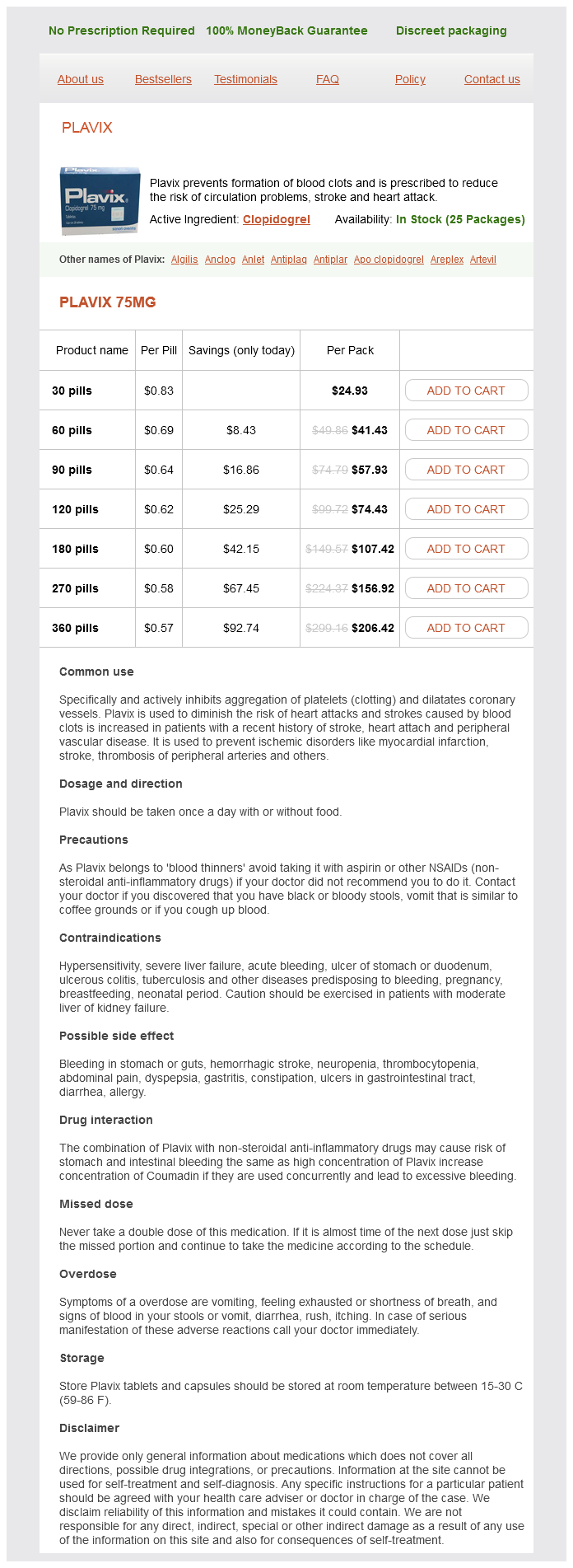
Clopidogrel dosages: 75 mg
Clopidogrel packs: 30 pills, 60 pills, 90 pills, 120 pills, 180 pills, 270 pills, 360 pills

Anaesthesia, suxamethonium and hyperkalaemia, Acta Anaesthesiol Scand 19:169-179, 1975. Papazian L, Forel J-M, Gacouin A, et al: Neuromuscular blockers in early acute respiratory misery syndrome, N Engl J Med 363: 1107-1116, 2010. Deconinck N, Van Parijs V, Beckers-Bleukx G, Van den Bergh P: Critical illness myopathy unrelated to corticosteroids or neuromuscular blocking agents, Neuromuscul Disord 8:186-192, 1998. Tsukagoshi H, Morita T, Takahashi K, et al: Cecal ligation and puncture peritonitis mannequin reveals decreased nicotinic acetylcholine receptor numbers in rat muscle: immunopathologic mechanisms Kupfer Y, Namba T, Kaldawi E, Tessler S: Prolonged weak point after long-term infusion of vecuronium bromide, Ann Intern Med 117:484-486, 1992. Chiodini F, Charpantier E, Muller D, et al: Blockade and activation of the human neuronal nicotinic acetylcholine receptors by atracurium and laudanosine, Anesthesiology ninety four:643-651, 2001. Lebrault C, Duvaldestin P, Henzel D, et al: Pharmacokinetics and pharmacodynamics of vecuronium in sufferers with cholestasis, Br J Anaesth fifty eight:983-987, 1986. Lien who were contributing authors to this topic in the prior edition of this work. Key Points � Appropriate reversal of a nondepolarizing neuromuscular blockade is important to keep away from antagonistic patient outcomes. Quantitative neuromuscular monitoring is the one methodology of assessing whether a protected stage of recovery of muscular perform has occurred. Appropriate administration of neuromuscular blockade can decrease the incidence of, or eliminate, residual blockade, which will reduce the dangers of these opposed postoperative occasions. Neostigmine within the dose range of 30 to 70 g/kg body weight antagonizes average to shallow levels of neuromuscular blockade. However, if these reversal drugs are given within the presence of full neuromuscular restoration, paradoxical muscle weakness theoretically may be induced. An immediate reversal of neuromuscular blockade induced by rocuronium is feasible with a dose of sugammadex 16 mg/kg. Reversal of neuromuscular blockade by sugammadex is speedy and with out side effects encountered with anticholinesterase medication. Laboratory studies have shown that the administration of exogenous l-cysteine results in full reversal of deep neuromuscular blockade within 2 to three minutes. At roughly the identical time, experiments from pharmacology and physiology laboratories in London suggested that acetylcholine was the chemical neurotransmitter at motor nerve endings. Specifically, use of neostigmine or physostigmine to antagonize curare was acknowledged and was beneficial to be obtainable every time muscle relaxants were given within the working room. No postoperative complications directly attributable to d-tubocurarine were famous, and physostigmine was administered to solely two patients in the collection. As noted in an editorial from this time, "In Great Britain the majority of anesthetists have arbitrarily adopted the attitude that the dangers of reversal are far less than these of latent paresis, so that the majority sufferers receive no much less than some anticholinesterase drug on the finish of anesthesia. The purpose of this chapter is to review the consequences of incomplete neuromuscular recovery, the usage of anticholinesterase brokers in scientific apply (benefits, dangers, and limitations), and the current developments in novel medicine to reverse/antagonize residual neuromuscular blockade. In the late Nineteen Fifties, a survey was despatched to anesthetists in Great Britain and Ireland. A questionnaire sent to German anesthesiologists in 2003 revealed routine reversal with neostigmine at the end of surgery was not practiced in 75% of anesthesia departments. In the following sections, the definitions, incidence, and clinical implications of residual neuromuscular blockade are reviewed. Three methods are generally used in the operating room to determine the presence or absence of residual neuromuscular blockade: scientific evaluations for indicators of muscle weak point, qualitative neuromuscular screens, and quantitative neuromuscular displays. A more detailed description of the forms of neuromuscular displays used perioperatively is offered in Chapter 53. Following the introduction of d-tubocurarine into scientific practice, residual paralysis and the need for neostigmine was decided primarily by the statement of "shallow, jerky movements of the diaphragm" on the end of surgical procedure. A peripheral nerve stimulator was first used in the Nineteen Sixties by Harry Churchill-Davidson in the United Kingdom and later within the United States. In reality, a quantity of decades later, the most generally utilized approach for analysis of recovery of neuromuscular operate continues to be using medical checks for indicators of apparent muscle weakness. The most commonly utilized criteria used to determine suitability for extubation of the trachea are a "regular" pattern of air flow and a sustained head raise. At a stage of neuromuscular restoration that permits for adequate air flow in a patient whose trachea is intubated, the muscular tissues liable for sustaining airway patency and safety are significantly impaired.
Hasfurther D, Bailey P: Failure of neuromuscular blockade reversal after rocuronium in a patient who received oral neomycin, Can J Anaesth forty three:617-620, 1996. Al-Mohaya S, Naguib M, Abdelatif M, Farag H: Abnormal responses to muscle relaxants in a affected person with main hyperparathyroidism, Anesthesiology 65:554-556, 1986. Kordas M: the effect of procaine on neuromuscular transmission, J Physiol 209:689-699, 1970. Ozkul Y: Influence of calcium channel blocker medicine in neuromuscular transmission, Clinical Neurophysiology 118:2005-2008, 2007. Azar I, Cottrell J, Gupta B, Turndorf H: Furosemide facilitates recovery of evoked twitch response after pancuronium, Anesth Analg fifty nine:55-57, 1980. Leykin Y, Pellis T, Lucca M, et al: the pharmacodynamic results of rocuronium when dosed based on real physique weight or ideal physique weight in morbidly overweight patients, Anesth Analg ninety nine: 1086-1089, 2004. Varin F, Ducharme J, Theoret Y, et al: Influence of utmost obesity on the body disposition and neuromuscular blocking impact of atracurium, Clin Pharmacol Ther forty eight:18-25, 1990. Han T, Kim H, Bae J, et al: Neuromuscular pharmacodynamics of rocuronium in patients with main burns, Anesth Analg 99: 386-392, 2004. Qualitative neuromuscular monitors-or more accurately, peripheral nerve stimulators-deliver an electrical stimulus to a peripheral nerve, and the response to nerve stimulation is subjectively assessed by clinicians either visually or tactilely. The presence of fade with these patterns of nerve stimulation signifies incomplete neuromuscular restoration. The sensitivity of a test is the variety of true positives � the sum of true positives + false negatives; the specificity is the variety of true negatives � the sum of true negatives + false positives. A optimistic take a look at result means inability to smile, swallow and speak, general muscular weak spot, and so on. Example of a qualitative neuromuscular monitor (or extra appropriately, a peripheral nerve stimulator). A peripheral nerve is stimulated, and the response to nerve stimulation is subjectively (qualitatively) assessed utilizing both visible or tactile (hand positioned on the muscle) means. In this illustration, the ulnar nerve is stimulated, and movement of the thumb subjectively evaluated. Ulnar nerve stimulation leads to thumb motion, which is sensed by a piezoelectric sensor hooked up to the thumb. To enhance the consistency of responses, a hand adapter applies a constant preload. Acceleration of the thumb is sensed by the piezoelectric sensor, and is proportional to the pressure of muscle contraction. Quantitative neuromuscular screens are devices that let both stimulation of a peripheral nerve and the quantification and recording of the evoked response to nerve stimulation. During restoration, a blinded observer estimated tactile fade within the different extremity. A cautious evaluation of the diploma of residual blockade at the conclusion of a general anesthetic is essential so as to keep away from the potential hazards of incomplete neuromuscular restoration following tracheal extubation. At the present time, quantitative neuromuscular monitoring is the one method of determining whether full restoration of muscular operate has occurred and reversal drugs safely avoided. In order to exclude with certainty the potential of residual paresis, quantitative monitoring must be used. Traditionally, residual neuromuscular blockade has been outlined utilizing quantitative neuromuscular monitoring. Although peripheral nerve stimulation was used in the l960s, Ali and colleagues first described the applying of peripheral nerve stimulation for neuromuscular monitoring using the ulnar nerve�adductor pollicis unit as the site of monitoring in the early 1970s. Shortly thereafter, these identical investigators performed several studies inspecting the affiliation between the diploma of residual blockade within the hand (defined using quantified T4/T1 ratio, i. A variety of clinical signs may be present in sufferers with residual neuromuscular blockade, including the following: inability to perform a head raise, hand grip, eye opening, or tongue protrusion; inability to clench a tongue depressor between the incisor teeth; inability to smile, swallow, speak, cough, monitor objects with eyes; or lack of ability to perform a deep or important capability breath. In 1979, Viby-Mogensen examined the efficacy of neostigmine in reversing d-tubocurarine, gallamine, or pancuronium blockade. However, incomplete neuromuscular restoration continues to be a typical postoperative occasion.

Santolicandro A, et al: Mechanisms of hypoxemia and hypocapnia in pulmonary embolism, Am J Respir Crit Care Med 152:336347, 1995. Karzai W, Schwarzkopf K: Hypoxemia throughout one-lung ventilation: prediction, prevention, and treatment, Anesthesiology a hundred and ten:1402-1411, 2009. Hedenstierna G, Reber A: Manipulating pulmonary blood circulate during one-lung anaesthsia, Acta Anaesthesiol Scand 40:2-4, 1996. Tusman G, et al: Alveolar recruitment technique increases arterial oxygenation during one-lung ventilation, Ann Thorac Surg seventy three:1204-1209, 2002. Tusman G, et al: Lung recruitment improves the efficiency of air flow and fuel change during one-lung air flow anesthesia, Anesth Analg 98:1604-1609, 2004, table of contents. Mascotto G, et al: Prospective, randomized, managed evaluation of the preventive results of constructive end-expiratory strain on patient oxygenation throughout one-lung air flow, Eur J Anaesthesiol 20:704-710, 2003. Ishikawa S, Nakazawa K, Makita K: Progressive changes in arterial oxygenation throughout one-lung anaesthesia are associated to the response to compression of the non-dependent lung, Br J Anaesth 90:21-26, 2003. Pfitzer J: Acute lung injury following one-lung anaesthesia, Br J Anaesth 91:153, 2003, creator reply, p4. Schwarzkopf K, et al: Oxygenation throughout one-lung ventilation: the consequences of inhaled nitric oxide and increasing ranges of impressed fraction of oxygen, Anesth Analg 92:842-847, 2001. Moutafis M, et al: the results of inhaled nitric oxide and its combination with intravenous almitrine on Pao2 during one-lung air flow in patients undergoing thoracoscopic procedures, Anesth Analg 85:1130-1135, 1997. [newline]Silva-Costa-Gomes T, et al: Low- vs high-dose almitrine mixed with nitric oxide to prevent hypoxia during open-chest one-lung air flow, Br J Anaesth ninety five:410-416, 2005. Moutafis M, et al: the effects of intravenous almitrine on oxygenation and hemodynamics throughout one-lung air flow, Anesth Analg ninety four:830-834, 2002, desk of contents. Dembinski R, Henzler D, Rossaint R: Modulating the pulmonary circulation: an replace, Minerva Anestesiol 70:239-243, 2004. Schilling T, et al: the pulmonary immune results of mechanical air flow in sufferers undergoing thoracic surgical procedure, Anesth Analg one hundred and one:957-965, 2005, desk of contents. Friedlander M, et al: Is hypoxic pulmonary vasoconstriction necessary throughout single lung ventilation within the lateral decubitus position Neudecker J, et al: the European Association for Endoscopic Surgery clinical apply guideline on the pneumoperitoneum for laparoscopic surgical procedure, Surg Endosc sixteen:1121-1143, 2002. Hachenberg T, et al: Gas trade impairment and pulmonary densities after cardiac surgery, Acta Anaesthesiol Scand 36:800-805, 1992. Hachenberg T, et al: the ventilation-perfusion relation and gas trade in mitral valve disease and coronary artery disease. Implications for anesthesia, extracorporeal circulation, and cardiac surgical procedure, Anesthesiology 86:809-817, 1997. Pasquina P, et al: Continuous optimistic airway stress versus noninvasive pressure support air flow to deal with atelectasis after cardiac surgical procedure, Anesth Analg 99:1001-1008, 2004, desk of contents. Reis Miranda D, et al: the open lung concept: results on right ventricular afterload after cardiac surgery, Br J Anaesth ninety three:327-332, 2004. Westerdahl E, et al: Deep-breathing exercises cut back atelectasis and enhance pulmonary operate after coronary artery bypass surgery, Chest 128:3482-3488, 2005. In 1628, English doctor, William Harvey, first advanced the trendy concept of circulation with the heart because the generator for the circulation. Modern cardiac physiology contains not solely physiology of the guts as a pump but additionally concepts of cellular and molecular biology of the cardiomyocyte and regulation of cardiac operate by neural and humoral components. Cardiac physiology is a part of the interrelated and integrated cardiovascular and circulatory physiology. Finally, the assorted components that regulate cardiac function are briefly mentioned. The primary anatomy of the guts consists of two atria and two ventricles that provide two separate circulations in collection. The pulmonary circulation, a low-resistance and high-capacitance vascular mattress, receives output from the best facet of the center, and its chief function is bidirectional fuel exchange. Intrinsic to the specialized cardiac pacemaker tissues is automaticity and rhythmicity. From the distal His bundle, an electrical impulse is propagated by way of large left and proper bundle branches and finally to the Purkinje system fibers, which are the smallest branches of the specialized conduction system. Finally, electrical indicators are transmitted from the Purkinje system to individual ventricular cardiomyocytes.


Peters G, Broome I, McDonald A: Rebreathing after incorrect meeting of sodalime canisters on Blease Sirius anaesthetic machines, Anaesthesia 62:860, 2007. Marini F, Bellugi I, Gambi D, et al: Compound A, formaldehyde and methanol concentrations during low-flow sevoflurane anaesthesia: comparison of three carbon dioxide absorbers, Acta Anaesthesiol Scand 51:625-632, 2007. Higuchi H, Adachi Y, Arimura S, et al: Compound A concentrations throughout low-flow sevoflurane anesthesia correlate immediately with the focus of monovalent bases in carbon dioxide absorbents, Anesth Analg 91:434-439, 2000. In Adriani J, editor: the chemistry and physics of anesthesia, ed 2, Springfield, Ill, 1962, Charles C Thomas, p 151. Obata R, Bito H, Ohmura M, et al: the effects of prolonged lowflow sevoflurane anesthesia on renal and hepatic operate, Anesth Analg ninety one:1262-1268, 2000. Morio M, Fujii K, Satoh N, et al: Reaction of sevoflurane and its degradation products with soda lime, Anesthesiology seventy seven:1155, 1992. Yamakage M, Takahashi K, Takahashi M, et al: Performance of four carbon dioxide absorbents in experimental and clinical settings, Anaesthesia 64:287-292, 2009. Bonome C, Belda J, Alavarez-Refojo F, et al: Low-flow anesthesia and decreased animal dimension increase carboxyhemoglobin levels in swine during desflurane and isoflurane breakdown in dried soda lime, Anesth Analg 89:909, 1999. Aarhus D, Holst-Larsen E, Holst-Larsen H: Mechanical obstruction within the anaesthesia delivery-system mimicking severe bronchospasm, Anaesthesia 52:992, 1997. Bourke D, Tolentino D: Inadvertent optimistic end-expiratory stress brought on by a malfunctioning ventilator aid valve, Anesth Analg ninety seven:492, 2003. Yoder M, Ventilators: In Understanding modern anesthesia techniques, Telford, Pa, 2009, Dr�ger Medical, pp 145-188. Kanmura Y, Sakai J, Yoshinaka H, et al: Causes of nitrous oxide contamination in working rooms, Anesthesiology ninety:693, 1999. North American Dr�ger: Scavenger interface for air-con: instruction handbook, Telford, Pa, 1984, North American Dr�ger. Mychaskiw 2nd G, Morris S: Dangerous design flaw within the Ohmeda Aespire anesthesia system, Anesth Analg one hundred:1543-1544, 2005. Arbous M, Anneke E, Jack W, et al: Impact of anesthesia management characteristics on severe morbidity and mortality, Anesthesiology 102:257-268, 2005. Langford R, Gale T, Mayor A: Anaesthetic machine checking tips: have we improved our apply Neubarth J: Another hazardous gas supply misconnection, Anesth Analg eighty:206, 1995. Datex-Ohmeda: Aestiva anesthesia machine: technical reference guide, Madison, Wis, 2006, Datex-Ohmeda. Federal Aviation Administration, Office of Integrated Safety Analysis, Human Factors Analysis Division: Human performance concerns in the use and design of plane checklists, 1995. McEvoy, and Ricardo Martinez-Ruiz for contributing a chapter on this matter to the prior version of this work. Propofol offers fast onset and offset with context-sensitive decrement occasions of approximately 10 minutes when infused for lower than three hours and of less than forty minutes when infused for up to eight hours. Propofol causes a dose-dependent decrease in arterial blood stress through a lower in cardiac output and systemic vascular resistance and produces moderate respiratory despair. A distinctive motion of propofol is its antiemetic impact, even at concentrations lower than those producing sedation. Thiopental provides fast onset and offset when used as a single dose, nevertheless it accumulates rapidly with repeated or prolonged administration and thus postpones recovery from anesthesia. Methohexital has a rapid onset and offset just like these of propofol for procedures lasting lower than 2 hours. The barbiturates are administered as sodium salts diluted in a water base at an alkaline pH. They trigger a average dose-dependent decrease in arterial blood stress (primarily because of peripheral vasodilation) and respiratory drive. The water-soluble benzodiazepine midazolam is most incessantly used intravenously because of its rapid onset and offset in contrast with those of other benzodiazepines. The onset time of midazolam is slower than that of propofol and barbiturates, and its offset, especially with larger doses or a chronic infusion, is significantly longer than that of propofol and may be extended in hepatic and renal failure. The benzodiazepines typically produce only a light lower in arterial blood pressure and mild to moderate respiratory melancholy. Remimazolam is the most recent benzodiazepine, with an ultrashort length of action ensuing from its rapid clearance by plasma esterases.

Halothane was most effective in altering indices of bronchodilation, whereas responses to isoflurane, enflurane, and sevoflurane have been practically similar. However, neither anesthetic protected against the will increase in tissue damping (a measure of heterogeneous deterioration of the peripheral airways), which occurred after the cholinergic stimulus. This discovering was consistently noticed within the presence or absence of allergic inflammation of the airways and bronchial hyperresponsiveness. Percent change in respiratory system resistance in sufferers after 5 and 10 minutes of upkeep anesthesia with either zero. However, when the mechanism of airway constriction is from nonadrenergic, noncholinergic activation corresponding to tachykinins, desflurane may augment and worsen constriction. In distinction to thiopental�nitrous oxide, all volatile anesthetics considerably reduced respiratory resistance. The work of respiratory (expressed in joules) is outlined as stress or force multiplied by the tidal volume throughout inspiration. Respiratory work of the lung is additional damaged down into elastic work (required to overcome the recoil of the lung) and resistive work (required to overcome airway move resistance and viscoelastic resistance of pulmonary tissues). The work of respiration is often derived from transpulmonary pressure volume curves. Some animal research have instructed that volatile anesthetics reduce pulmonary compliance mediated at the lung periphery somewhat than on the airway stage, thereby increasing viscoelastic and elastic pressures within the lung. In contrast, in a murine model of chronic bronchial asthma, sevoflurane anesthesia considerably decreased resistance in central and distal airways and also lowered resistance within the lung periphery. In anesthetized patients, the ventilatory response to expiratory resistance is lowered to a greater extent than is the response to inspiratory resistance. This concept may be particularly necessary in spontaneously breathing, anesthetized patients who show expiratory obstruction, similar to could also be noticed throughout partial respiration circuit occlusion, asthma, emphysema, or airway secretions. Previously described experimental studies demonstrating the equal efficiency of sevoflurane and isoflurane and the relatively higher potency of halothane for bronchodilation have to be extrapolated with warning because Ascarisor histamine-mediated experimental bronchospasm may not exactly mimic tracheal intubation�induced bronchospasm in people. In distinction to the findings in experimental animals, Arakawa and colleagues40 showed that similar inspired concentrations of halothane, isoflurane, and sevoflurane produced practically equivalent reductions in airway resistance in a affected person with status asthmaticus. Indeed, volatile anesthetics may be an efficient technique of treating standing asthmaticus when conventional remedy has failed. The most necessary useful change that occurs in the presence of lung illness is elevated resistance. Resistance to airflow is often considered being decided by contraction and leisure of airway clean muscle. However, nonmuscle parts, corresponding to lung irritation, airway thickening, altered lung volumes, lung recoil, airway wall transforming, mucous hypersecretion, and loss of lung elastance, additionally play a clinically significant function in the amount of airway narrowing. The actions of unstable anesthetics on bronchomotor tone are additionally dependent on the substance used to elicit contraction in vitro. Exposure of airway clean muscle to low temperatures may abolish the inhibitory results of volatile anesthetics on carbachol-induced contraction,46 suggesting that intraoperative hypothermia also may attenuate unstable anesthetic�induced bronchodilation. For example, wholesome patients undergoing surgical stimulation of pulmonary parenchyma or airways (including tracheal stimulation by an endotracheal tube) are at threat of developing bronchospasm. The selection of preoperative medicine, sedative-hypnotic, neuromuscular blocker, and unstable anesthetic are all necessary elements in figuring out the scientific appearance of bronchospasm in patients with known reactive airway disease. Sevoflurane had smaller results in a model of chronic tobacco smoking (enlarged alveolar ducts and fewer muscarinic hyperreactivity), compared with an antigen-acute asthmatic (ovalbumin-sensitized) model. In addition, persistent irritation is associated with reworking of bronchial epithelium to produce smooth muscle hypertrophy, gland hyperplasia, and neovascularization. The administration of unstable anesthetics to kids undergoing elective imaging studies was characterized by progressive reductions in the cross-sectional area of higher airway musculature, leading to pharyngeal airway collapse49 (also see Chapter 93). In wholesome children, sevoflurane slightly decreased airway resistance, however desflurane had the opposite impact, presumably via decreased airway dimensions. In contrast to the helpful effects of administering sevoflurane in these children, administration of desflurane triggered larger deleterious modifications in airway mechanics together with an elevation in airway resistance, tissue damping, and elastance. Several intracellular mediators liable for Ca2+ mobilization are potential sites for the action for volatile anesthetics. In addition, a risky anesthetic� induced lower in Ca2+ sensitivity attributable to the inhibition of protein kinase C exercise,fifty one inhibition of G-protein operate, and attenuation of Rho and Rhokinase signaling pathways also play important contributory roles. Comparison of the effect of various unstable anesthetics at equal concentrations on whole pulmonary resistance. The differential effects of unstable anesthetics on tracheal clean muscle, compared with bronchial clean muscle, can also be related to actions on Ca2+activated chloride channel activity55,56 or differential sensitivities of K+ channel subtypes.
Diabetes Mellitus Diabetic autonomic neuropathy is the most common type of autonomic neuropathy and probably the most extensively investigated (see Chapter 39). The signs related to diabetic autonomic neuropathy confer an increased danger during anesthesia and surgery by direct and secondary mechanisms. Common manifestations of diabetic autonomic neuropathy include impotence, postural hypotension, gastroparesis, diarrhea, and sweating abnormalities. Early small-fiber damage is revealed by loss or impairment of vagally managed regular coronary heart price variability, decreased peripheral sympathetic tone with a subsequent enhance in blood circulate, and diminished sweating. In a diabetic neuropathic foot, the senses of ache and temperature are misplaced before touch or vibration is affected. With sympathetic denervation, the sympathetic nerves normally discovered supplying small arterioles are entirely absent or are abnormally distant from their effector sites. When impotence or diarrhea is the only manifestation, little effect is seen on survival; nonetheless, with postural hypotension or gastroparesis, 5-year mortality charges are higher than 50%. Most clinicians acknowledge that diabetic patients with autonomic neuropathy may be at extra threat throughout common anesthesia. Systemic damage to the vasa vasorum in patients with postural hypotension will increase the danger for hemodynamic instability and cardiovascular collapse within the perioperative interval. Mechanisms that keep normal standing blood pressure are altered, and regular precapillary vasoconstriction within the foot on standing could also be diminished. Baroreceptors in the carotid sinus and aortic arch are compromised by diabetic neuropathy. Diabetic sufferers with orthostatic hypotension often have decrease norepinephrine ranges. Even in seemingly minor surgery, diabetic autonomic neuropathy can lead to important complications. Diabetic patients with autonomic neuropathy could have a considerably larger decline in blood pressure with induction and a higher need for vasopressors than do diabetic patients with out autonomic dysfunction. The mixture of autonomic, hormonal, and catabolic adjustments that accompany surgery has been referred to as the surgical stress response. Three separate traces of proof counsel that attenuation of the surgical stress response can lead to improved outcomes. In a collection of studies, interruption of the sympathetic response to surgery markedly decreased surgical stress intraoperatively and postoperatively. The use of continuous thoracic epidural infusions of local anesthetics minimized the rise in plasma catecholamines, cortisol, and glucagon and improved outcomes. Inflammatory and immunologic responses, which are necessary for infection control and wound therapeutic, seem to be unaffected. With the use of similar methods and other stress-reducing maneuvers, sooner and extra complete recovery was achieved in older patients present process colon resection. When neonates with complicated congenital coronary heart disease underwent cardiac surgery, those who acquired high-dose sufentanil infusions intraoperatively and for the primary 24 hours postoperatively to reduce the stress response had decrease -endorphin, norepinephrine, epinephrine, glucagon, aldosterone, and cortisol ranges than did controls. Orthostatic hypotension is type of frequent (20%) in older individuals and may result largely from diminished baroreceptor responsiveness. Heart rate responses to adjustments in blood stress, the Valsalva maneuver, and the respiratory cycle are blunted with aging. Although no apparent age-dependent decrement in nerve firing rates from sympathetic efferents in skeletal muscle happens,328 kinetic research reveal selective and dramatic increases in cardiac norepinephrine spillover attributable to the decreased reuptake in older sufferers subjected to mental stress or train. However, endorgan responsiveness is blunted by compensatory downregulation of 1 adrenoreceptors. In a seemingly vicious cycle, the rise in circulating norepinephrine ranges is related to down-regulation of platelet 2-adrenoreceptor density and responsiveness. Spinal twine transection affects motor and sensory perform, and it may also end in profound modifications in autonomic activity that may alter anesthetic care. Spinal wire injuries or transection can cause numerous degrees of autonomic dysfunction, relying on the site, extent, and timing of the lesion. Thus, in paraplegic patients, small stimuli can evoke exaggerated sympathetic discharges. In patients with cervical spinal cord transection, sympathetic and parasympathetic outflow is detached from central control mechanisms. In addition to the expected motor and sensory modifications, profound abnormalities alter the cardiovascular, thermoregulatory, gastrointestinal, and urinary methods. Fundamental differences exist between the acute and persistent effects of spinal twine transection.
When the molecule is subjected to a sudden change in voltage by the depolarization of the adjoining membrane, the top gate opens; because the underside (time-dependent) gate is still open, sodium flows through the channel. However, shortly after the voltagedependent gate opens, the underside gate closes and again cuts off the flow of ions. Once activated by a change in voltage, the molecule and its gates progress as illustrated (left to right). Chapter 18: Neuromuscular Physiology and Pharmacology 435 voltage-dependent gate closes. When depolarization of the top plate stops, the voltage-dependent gate closes, the time-dependent gate opens, and the sodium channel returns to its resting state. Depolarization of the tip plate by the depolarizing relaxant initially causes the voltage gate in adjacent sodium channels to open, thereby producing a wave of depolarization that sweeps along the muscle and generates a muscle contraction. Shortly after the voltagedependent gate opens, the time-dependent inactivation gate closes. Because the sodium channels instantly adjoining to the end plate are influenced by depolarization of the top plate, their voltage-dependent gates keep open and their inactivation gates stay closed. When the flow of ions via sodium channels within the perijunctional zone stops because of a closure of the inactivation gates, the channels downstream (beyond the perijunctional zone) are freed of depolarizing influence. In effect, the perijunctional zone becomes a buffer that shields the relaxation of the muscle from events on the finish plate. Consequently, the muscle membrane is separated into three zones: (1) the end plate, which is depolarized by succinylcholine; (2) the perijunctional muscle membrane, by which the sodium channels are frozen in an inactivated state; and (3) the remainder of the muscle membrane, during which the sodium channels are within the resting state. During accommodation, when the synapse is inexcitable by way of the nerve (transmitter), direct electrical stimulation of muscle causes muscle contraction because the sodium channels beyond the junctional space are in the resting excitable state. The extraocular muscle tissue are tonic muscular tissues, which are multiply innervated and chemically excitable alongside most of its surface. The pressure thus developed forces the eye towards the orbit and accounts for a half of the increase in intraocular stress produced by depolarizing relaxants (also see Chapter 34). These reactions cause drug-induced modifications in the dynamics of the receptor; as a substitute of sharply opening and shutting, the modified channels are sluggish. They open more slowly and stay open longer, or they close slowly and in a number of steps, or both. These results on channels cause corresponding changes within the circulate of ions and distortions of the end-plate potential. For example, procaine, ketamine, inhaled anesthetics, or different medicine that dissolve in the membrane lipid could change the opening or closing characteristics of the channel. If, however, the channel is prevented from or slowed in closing, then transmission may be enhanced. Such drugs may be concerned in two clinically essential reactions: receptor desensitization and channel blockade. The former occurs within the receptor molecule, whereas the latter occurs within the ion channel. The second state exists when two molecules of agonist are bound to the -subunit of the receptor and the receptor has undergone the conformational change that opens the channel and permits ions to flow. The receptor macromolecule, one thousand occasions larger by weight than most medication or gases, provides many locations at which the smaller molecules might act. The interface between lipid and receptor protein supplies further potential sites of response. Desensitization is accompanied by phosphorylation of a tyrosine unit within the receptor protein. Antagonists additionally tightly bind to desensitized receptors and can trap molecules in these states. Superficially, the preparation appears to be normal, however its responsiveness to agonists or antagonists is altered. One variety occurs very quickly, inside a number of milliseconds after software of an agonist, which can explain the elevated sensitivity to nondepolarizing relaxant after the prior administration of succinylcholine. Many different drugs used by anesthetists additionally promote the shift of receptors from a normal state to a desensitized state. These actions are independent of the traditional effects, based on competitive inhibition of acetylcholine. The presence of desensitized receptors signifies that fewer receptor channels than ordinary are available to carry transmembrane current. The manufacturing of desensitized receptors decreases the efficacy of neuromuscular transmission.

In established acute renal failure, the tubular capability to preserve sodium and shield the intravascular quantity is misplaced, and urine sodium exceeds 60 to eighty mEq/L. In essence, free water is cleared by the tubules in response to hypervolemia ("optimistic free water clearance"), or retained in response to hypovolemia ("unfavorable free water clearance"). In difficult conditions, a combination of exams is much less prone to be topic to error than is a single estimation. Their broadly acknowledged limitations within the early and correct detection of evolving renal damage have fostered an rising curiosity in a new generation of biomarkers. Functional genomics and proteomics have created the potential of identifying potential damage biomarkers with a precision and specificity not previously possible, and quite a few candidate biomarkers are at present at various phases of clinical investigation. However, to supplant serum creatinine in clinical apply, new biomarkers of renal damage should reliably establish patients at risk for adverse outcomes throughout a variety of medical populations � a aim that has not yet been achieved. It is generally filtered by the glomerulus after which undergoes partial tubular reabsorption. In glomerular injury, serum 2-microglobulin ranges improve and urine levels decrease. This assessment has been used as an early sign of rejection in renal transplantation. Fractional Excretion of Urea Nitrogen Unlike sodium, dealing with of urea in the ascending loop of Henle and distal tubule is topic to passive forces, and is little influenced by loop diuretic remedy. Paradoxically, the very limitations of serum creatinine that have pushed the search for higher diagnostic measures of renal injury, additionally render creatinine-based measures of injury an unreliable gold normal by which to evaluate novel biomarkers. Thus, sufferers could also be categorised as having no proof of injury and intact operate. Like inulin clearance, the test is laborious and requires intravenous and urinary catheters. Other Candidate Biomarkers Multiple other potential biomarkers of acute kidney damage have been recognized. Changes in filtration fraction are thought of to symbolize modifications in periglomerular arteriolar tone (see "Afferent and Efferent Arteriolar Control Mechanisms"). Ultrasonic move probes transmit high-frequency sound throughout the lumen of the vessel. A shift in sound frequency (Doppler effect) is created by the movement of blood and is proportional to blood velocity. Some, such as thermodilution by way of direct renal vein cannulation, have been confined to animal research. In the intact organism, anesthetics have an effect on renal function via extrarenal circulatory modifications, quite than by their direct actions on the kidney. Renal vasoconstriction additionally predisposes the kidney to additional perioperative ischemic and nephrotoxic insults. Release of endogenous natriuretic peptides by atrial and ventricular stretch reinforces the notion that renal vasoconstriction could be prevented or modified by upkeep of regular or increased intravascular quantity. The renal cortex has a dense plexus of autonomic nerve fibers derived from the T12 to L4 spinal segments via the celiac plexus. The main stimulus to the sympathetic response is a decrease in arterial blood pressure sensed by baroreceptors within the aortic arch, carotid sinus, and afferent arteriole. Afferent fibers travel by way of the vagus nerve and decrease impulse transmission price to the mediating facilities in the hypothalamus, which leads to elevated adrenergic nerve activity. A G protein�coupled phospholipase C receptor populates vascular smooth muscle and the mesangium, and it responds to -adrenergic stimulation by epinephrine and norepinephrine. Two mutually dependent however opposing neurohormonal methods keep blood stress, intravascular volume, and salt and water homeostasis. Surgical stress, ischemia, and sepsis tip the balance in favor of vasoconstriction and sodium retention. On the other hand, hypervolemia (or the induction of atrial stretch) suggestions the steadiness in favor of vasodilation and sodium excretion. Both mechanisms end in a fast increase in intracellular calcium, which binds with calmodulin and thereby prompts myosin lightchain kinase, leading to clean muscle contraction. The calcium-calmodulin advanced concurrently prompts phospholipase A2, resulting within the manufacturing of vasodilator prostaglandins (see later). Mild -adrenergic stimulation seems to cause preferential efferent arteriolar constriction, which preserves the filtration fraction.
Jarock, 56 years: Moreover, older people may not have the power to - - zero, No impact; +, gentle impact; ++, moderate effect.
Eusebio, 64 years: Nevertheless, inflammatory adjustments and lung damage nonetheless occur, regardless of this strategy.
References

Desarrolló: Grupo Guadalupe S.R.L.