
Ivan Damjanov, MD

http://www.kumc.edu/school-of-medicine/pathology/faculty-and-staff/clinical-faculty/ivan-damjanov-md-phd.html
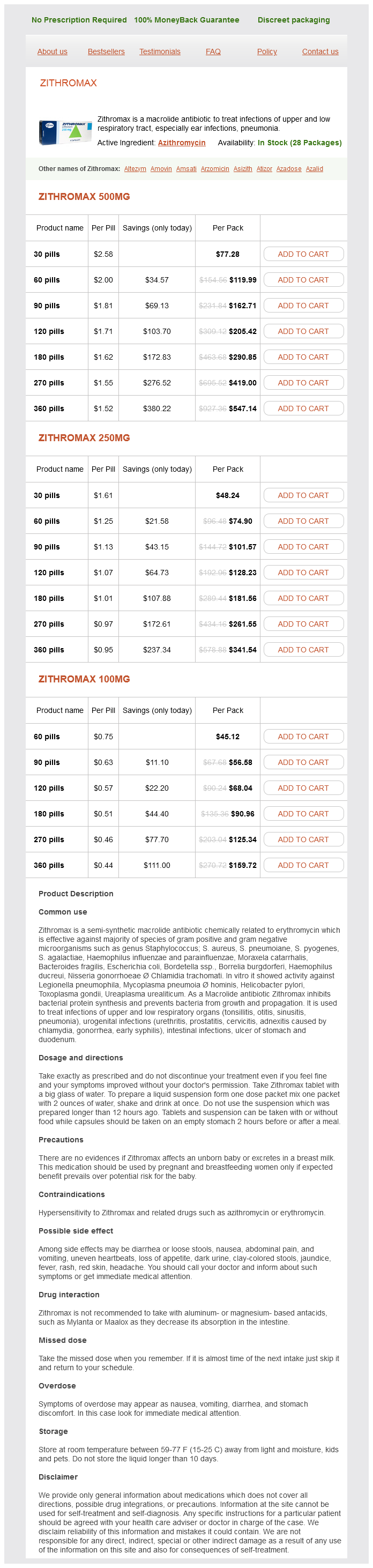
Azithromycin dosages: 500 mg, 250 mg, 100 mg
Azithromycin packs: 30 pills, 60 pills, 90 pills, 120 pills, 180 pills, 270 pills, 360 pills

However, additional analysis is required to decide the optimum dose and most effective route of administration of iron in preterm infants receiving erythropoietin. Vitamin E is an antioxidant, inhibiting peroxidation of polyunsaturated fatty acids in the lipid bilayers of all cell membranes. Malek A, et al: Lack of transport of erythropoietin across the human placenta as studied by an in vitro perfusion system. I thank Erin Adair for assistance with illustrations and Cynthia Suniga for assistance with chapter preparation. Keleman E, et al: Atlas of human hemopoietic growth, Berlin, 1979, Springer-Verlag, pp 1�261. Dgaldetti M: Hematopoietic events in human embryonic spleens at early gestational ages. Rosse C, et al: Bone marrow cell populations of regular infants: the predominance of lymphocytes. Umemura T, et al: the mechanism of growth of late erythroid progenitors throughout erythroid regeneration: goal cells and effects of erythropoietin and interleukin-3. In Petak T, editor: Proceedings of the Tel Aviv University convention on erythropoiesis, New York, 1970, Academic Press, p 24. Konwalinka G, et al: Effect of human plasma lipoproteins on the erythropoietic progenitor cells in serum-free cultures. Nagai T, Yasuoka Y, Izumi Y, et al: Reevaluation of erythropoietin production by the nephron. Meberg A: Hemoglobin focus and erythropoietin ranges inappropriate in small for gestational age infants. Yoder M, Hiatt K: Engraftment of embryonic hematopoietic cells in conditioned new child recipients. Kaushansky K, et al: Do the preclinical effects of thrombopoietin correlate with its in vitro properties Miyagawa S, Kobayashi M, Konishi N, et al: Insulin and insulin-like growth issue I help the proliferation of erythroid progenitor cells in bone marrow by way of the sharing of receptors. Miharada K, Hiroyama T, Sudo K, et al: Refinement of cytokine use within the in vitro enlargement of erythroid cells. Bratteby L: Studies on the erythro-kinetics in infancy: red cell volume of newborn infants in relation to gestational age. Delivoria-Papadopoulos M, et al: Postnatal adjustments in oxygen transport of time period, preterm and sick infants: the function of pink cell 2,3 diphosphoglycerate in adult hemoglobin. Oh W, Lind J: Venous and capillary hematocrit in new child infants and placental transfusion. Kleihauer E, et al: Demonstration of fetal hemoglobin in the erythrocytes of a blood smear. Leder A, et al: In situ hybridization reveals co-expression of embryonic and grownup alpha-globin genes in the earliest murine erythrocyte progenitors. Masala B, et al: A examine of the swap of fetal hemoglobin and new child erythrocytes fractionated by density gradient. Safaya S, et al: Augmentation of gamma-globin gene promoter exercise by carboxylic acids and parts of the human beta-globin locus management region. Stamatoyannopoulos G, et al: Fetal hemoglobin induction by acetate, a product of butyrate catabolism. Vitale M, et al: Evidence for a globin promoter-specific silencer element located upstream of the human delta-globin gene. Cao S-X, et al: Identification of a transcriptional silencer within the 5 flanking area of the human epsilon-globin gene. Papayannopoulou T, et al: Asynchronous synthesis of HbF and HbA throughout erythroblast maturation. A synchrony of the zetaalpha and epsilongamma-globin genes in primitive and definitive erythropoietic lineage.
Individual microbiome communities amongst numerous people may lead to vastly distinct alternative bile acid species together with iso-bile acids. Little is known of such alternative bile acid species within the normal or unwell new child infant. The intracellular accumulation of retained biliary constituents, particularly hydrophobic bile acids, may be toxic to the liver and other tissues even at submicellar concentrations. Exposure to micromolar concentrations of bile acids causes disruption of the lipid bilayer of cell membranes in a detergent-like manner, leading to dissociation of many membrane proteins. These amassed bile acids can even increase calcium fluxes throughout membranes, leading to altered mitochondrial operate, cell toxicity, and apoptosis. In addition, bile acids are potent modulators of cell-signaling processes in the liver, together with those linked to progress and the event of hepatocellular carcinoma. Determining whether or not the process is acquired or congenital is the subsequent problem and is the place much of the issue lies in evaluating the toddler with persistent elevation of conjugated bilirubin ranges. In basic, all types of cholestasis result in elevated conjugated (direct) bilirubin levels of higher than 1 mg/dL and thus warrant consideration of underlying liver disease. However, sepsis, parenteral diet, and certain medicine and infections can result in liver harm and elevated conjugated bilirubin levels, which may enhance with time. With severe liver disease or long-standing cholestasis, the results of hepatocyte harm are seen as impairments in hepatocellular artificial dysfunction mirrored in hypoalbuminemia, hypoglycemia, coagulopathy, hyperammonemia, impaired drug metabolism, and elevated ranges of conjugated bilirubin and serum bile acids. It is postulated to be an aminophospholipid transporter (flippase) liable for sustaining the asymmetrical distribution of phosphatidylserine, phosphatidylethanolamine, and cholesterol on the inside leaflet of the canalicular membrane, thus defending it from the detergent effects of high bile salt concentrations within the canalicular lumen. Elevated maternal bile acid ranges result in reversal of this gradient, leading to elevated ranges in each the mother and the fetus. The fetus, nonetheless, suffers extra critical penalties, including elevated danger for preterm delivery, fetal misery, and fetal loss. The enhanced susceptibility of infants to the cholestatic results of certain drugs could also be related to immature protecting measures towards apoptosis and necrosis, an enhanced inflammatory response to damaged tissues, and decreased developmental expression of cleansing and transport genes. Cholestasis is the widespread endpoint of many toxin-related injuries but could evolve from quite a lot of mechanisms, including direct toxicity and necrosis of hepatocytes and cholangiocytes, impaired bile acid transport, and alterations in the viscosity of bile. For instance, cephalosporins are extremely concentrated in bile, which is considered one of the routes of elimination. This can end result in increased viscosity of biliary fluid, resulting in the formation of sludge or stones and ultimately obstructive cholestasis. Research demonstrated that administration of an intravenous solution composed of concentrated glucose solutions containing amino acids, micronutrients, nutritional vitamins, and minerals could help each development and weight gain in kids and adults. The medical presentation is characterised by jaundice, conjugated hyperbilirubinemia, and hepatomegaly. With progression of this course of, hepatocellular dysfunction is evidenced by elevated transaminases, portal hypertension followed by the development of hypoalbuminemia, elevated clotting occasions, hypoglycemia, and hyperammonemia with end-stage liver failure. In earlier phases, this process is mostly reversible if enteral vitamin can be achieved. In distinction to older kids and adults, up to 65% of essentially the most severely affected infants will progress quickly (over four to 6 months) from the onset of cholestasis to end-stage liver illness, highlighting the unique and critical risk to the neonate. Until lately, the only options for parenteral nutrition�dependent infants with end-stage liver illness had been liver and/or small bowel transplantation, both of that are related to vital morbidity and mortality. A small share of this phytosterol and ldl cholesterol pool is transformed to bile acids, while the remainder is eradicated through specific canalicular sterol transporters and secreted into the bile. Sir William Osler was among the many first to make the connection between nonhepatic infections and cholestasis and coined the phrase toxemic jaundice. The mechanism appears to involve the discharge of inflammatory cytokines from Kupffer cells in response to endotoxin, which in flip act on receptors on the sinusoidal membranes of the hepatocyte. During sepsis, the liver additionally performs an essential role in the acute-phase response, which capabilities to prioritize the functions of the liver and restore homeostasis to the physique. Those cytokines, nonetheless, also suppress the operate and expression of critical hepatobiliary transporters. Longer-term publicity to endotoxin and inflammatory cytokines results in activation of the mitogen-activated protein kinase household, which ends up in marked alteration within the expression of a extensive selection of hepatic transporters, prolonging cholestasis. It is likely that the enhanced susceptibility to inflammationassociated cholestasis in infants is expounded to hepatic immaturity, which is much more obvious in those born prematurely.

The fetus and neonate of several species, together with human and sheep, have a decreased capacity to excrete quantity loads. This reduced excretory capacity can, in part, be attributed to the reduced intravascular fluid retention. In the ovine fetus with a low intravascular retention, plasma arginine vasopressin and renin exercise are unchanged, and atrial natriuretic issue undergoes solely a transient improve. The transition from the intrauterine "aquatic" fetal to the "terrestrial" neonatal setting is affected by maturation and maternal and fetal conditions. Fluid distribution within the neonate is affected by gestational age, start weight, adaptation to extrauterine surroundings, and postnatal age. Appropriate administration of fluids and electrolytes within the preterm neonate can attenuate the event of many untoward issues of prematurity. Friis-Hansen B: Body water compartments in kids: changes throughout progress and related adjustments in physique composition. Lapillonne A, Braillon P, Claris O, et al: Body composition in acceptable and in small for gestational age infants. Bellini C, Boccardo F, Bonioli E, Campisi C: Lymphodynamics in the fetus and new child. In human fetuses with anemia receiving intravascular transfusions, 31% of the transfused volume was lost from the circulation. These observations counsel that prenatal hypoxia or asphyxia induces a placental transfusion earlier than supply. This is according to the statement that acute hypoxia promotes a translocation of fetal blood out of the placenta in sheep. Thus, evidence is ample supporting the concept that prenatal hypoxia causes a partial placental transfusion in utero, however its time course, precise extent, and reversibility are unclear. The loss of plasma is undoubtedly as a end result of increase in capillary stress inside the fetal physique. This phenomenon happens with no changes in fetal arterial or venous strain throughout gentle hypoxia (presum- 73. Plasma, blood and red cell volume estimates in relation to hematocrit ranges and high quality of intrauterine growth. Oh W, Blankenship W, Lind J: Futher research of neonatal blood quantity in relation to placental transfusion. National institute of child health and growth conference summary: amniotic fluid biology-basic and scientific aspects. Doi S, Osada H, Seki K, Sekiya S: Effect of maternal hydration on oligohydramnios: a comparability of three volume growth methods. Bauer K, Bovermann G, Roithmaier A, et al: Body composition, diet, and fluid balance during the first two weeks of life in preterm neonates weighing lower than 1500 grams. Hartnoll G, Betremieux P, Modi N: Body water content material of extremely preterm infants at delivery. Padoan A, Rigano S, Ferrazzi E, et al: Differences in fats and lean mass proportions in normal and growth-restricted fetuses. Johnsson H, Eriksson L, Gerdin B, et al: Hyaluronan in the human neonatal lung: association with gestational age and other perinatal factors. Pauls J, Bauer K, Versmold H: Postnatal body weight curves for infants under a thousand g start weight receiving early enteral and parenteral vitamin. Wadhawan R, Oh W, Perritt R, et al: Association between early postnatal weight loss and death or bpd in small and acceptable for gestational age extremely low-birth-weight infants. Jegier W, Maclaurin J, Blankenship W, Lind J: Comparative study of blood quantity estimation in the newborn toddler utilizing I-131 labeled human serum albumin (ihsa) and t-1824. Linderkamp O, Holthausen H, Seifert J, et al: Accuracy of blood volume estimations in critically ill children utilizing a hundred twenty five I-labelled albumin and 51Cr-labelled red cells. Bauer K, Versmold H, Prolss A, et al: Estimation of extracellular quantity in preterm infants less than 1500 g, kids, and adults by sucrose dilution. Takagi K, Tanaka H, Nishijima S, et al: Fetal blood values by percutaneous umbilical blood sampling. Holman R: the flow and protein content of subcutaneous lymph in dogs of different ages.

Associated cardiovascular defects embrace hypoplastic left heart, aortic coarctation, atrial septal defects, patent ductus arteriosus, tetralogy of Fallot, and a left pulmonary artery sling. There are four main types based on location of the drainage: supracardiac, cardiac, infracardiac, or blended. Cardiac drainage is the second most typical, with venous connections to the coronary sinus or the posterior wall of the proper atrium. Infrequently, this vertical vein might be a part of the ductus venosus, hepatic vein or inferior vena cava. In the blended pattern, the pulmonary veins drain into more than one location, together with the brachiocephalic vein, superior vena cava, azygos vein, coronary sinus, right atrium, or a vein under the diaphragm. These malformations allow blood to bypass the pulmonary capillaries, which creates an extracardiac, or intrapulmonary, right-toleft shunt, leading to hypoxemia, dyspnea, cyanosis, clubbing, and polycythemia. Age at presentation ranges from birth to the seventh or eighth decade of life, although most are diagnosed in the second or third a long time. Most circumstances of pulmonary lymphangiectasis are sporadic, with males extra incessantly affected than females (>2. Pulmonary lymphangiectasis could additionally be inherited as a dominant, recessive, or X-linked inheritance pattern. Thereafter, lung improvement proceeds in a stereotypical pattern, involving branching morphogenesis of the tracheobronchial tree adopted by outgrowth, growth, and maturation of the alveolar parenchyma, or gas-exchange regions of the lung. This course of could be divided into 5 chronologic levels of morphogenesis, which prolong throughout gestation and into early childhood. These are the embryonic, pseudoglandular, canalicular, saccular, and alveolar periods of lung development, terms describing the anatomic, microscopic, biochemical, and physiologic modifications that determine regular development and development of the lung. Pulmonary malformations that come up during the early embryonic and pseudoglandular levels of lung development are a heterogeneous group of carefully related abnormalities related to faulty lung bud formation, separation of the trachea from the esophagus, branching morphogenesis, and formation of the conducting airways. These lesions typically result in obstruction of the airway, leading to secondary cystic or dysplastic changes in the distal lung. Pulmonary vascular abnormalities that come up throughout this era of lung growth additionally cause obstructive malformations of the lung and conducting airways. Pulmonary lymphangiectasis could be divided into three major classes: major, secondary, and generalized. Affected infants present with respiratory misery and pleural effusions and die shortly after delivery. Secondary pulmonary lymphangiectasis is associated with cardiovascular malformations, including anomalous pulmonary venous return, atrioventricular valve defects, ostium secundum, pulmonary stenosis, ventricular septal defect, mitral atresia, hypoplastic left coronary heart, cor triatium, and atresia of the widespread pulmonary veins. Infants born prematurely through the late saccular or early alveolar levels of lung improvement are subject to biochemical immaturity of the lung, resulting in surfactant deficiency, progress problems of the parenchyma, or continual interstitial lung disease. Chromosomal and genetic analyses of sufferers with hereditary lung malformations have been necessary for identifying molecular mechanisms underlying irregular lung growth. Integration of genomic studies in human sufferers with primary investigational research utilizing a selection of animal models will proceed to be essential for elucidating additional developmental and molecular pathways involved in both regular and abnormal lung growth. Langston C, Kida K, Reed M, et al: Human lung progress in late gestation and within the neonate. Spilde T, Bhatia A, Ostlie D, et al: A function for sonic hedgehog signaling within the pathogenesis of human tracheoesophageal fistula. Aktogu S, Yuncu G, Halilcolar H, et al: Bronchogenic cysts: clinicopathological presentation and remedy. Garcia-Pena P, Coma A, Enriquez G: Congenital lung malformations: radiological findings and clues for differential prognosis. Correia-Pinto J, Gonzaga S, Huang Y, et al: Congenital lung lesions�underlying molecular mechanisms. Del Riccio V, van Tuyl M, Post M: Apoptosis in lung improvement and neonatal lung harm. Endo H, Oka T: An immunohistochemical research of bronchial cells producing surfactant protein A within the creating human fetal lung. Peca D, Boldrini R, Johannson J, et al: Clinical and ultrastructural spectrum of diffuse lung disease associated with surfactant protein C mutations. Newman B: Congenital bronchopulmonary foregut malformations: concepts and controversies.

The cardinal veins differentiate into the superior vena cava, whereas the vitelline and umbilical veins develop into the inferior vena cava. Like the pulmonary arteries, these veins grow towards the lung the place they anastomose with the vascular plexus growing in the mesenchyme across the bronchial buds. Failure of the ductus arteriosus and/ or foramen ovale to shut at delivery permits this shunting to persist and may require intervention. For instance, regular growth of the main pulmonary artery and pulmonary valve is affected by cardiac anomalies that disrupt division of the truncus arteriosus into the ascending aorta and the pulmonary artery, corresponding to tetralogy of Fallot (ventricular septal defect, pulmonary valve stenosis, displacement of the aorta, and right ventricular hypertrophy) or persistent truncus arteriosus (ventricular septal defect with incomplete separation of the aortic and pulmonary outflow tracts). These abnormalities create a right-to-to left shunt, bypassing the lungs and inflicting hypoxemia and cyanosis within the affected neonate. Aberrant pulmonary arteries could originate from the descending or ascending aorta, from the brachiocephalic or subclavian arteries, or from a persistent ductus arteriosus, causing compression of the trachea and/or esophagus. Accessory arteries may arise from the descending aorta at the side of accessory pulmonary lobes or pulmonary sequestration. Agenesis of the right or left pulmonary artery may be partial or full and affects progress of the ipsilateral lung, which can be hypoplastic. Blood supply to the affected lung is from enlarged collateral vessels, together with the bronchial arteries, intercostal arteries, coronary arteries, and/or a patent ductus arteriosus. Often patients are asymptomatic, until further cardiac abnormalities, such as a patent ductus arteriosus, coarctation, or tetralogy of Fallot, are current, creating a large left-to-right shunt. Pulmonary artery sling is a rare malformation in which the left pulmonary artery originates from the posterior facet of the proper pulmonary artery. In order to get to the left lung, the artery passes anteriorly to the proper major stem bronchus and then posteriorly between the trachea and esophagus, forming a partial sling around the trachea. This causes compression of the adjacent bronchus and/or trachea with air trapping and hyperinflation of the right lung, as properly as recurrent respiratory infections. Additional vascular abnormalities that cause compression of the tracheobronchial tree and/or esophagus embrace double aortic arch, proper aortic arch with aberrant left subclavian artery, anomalous innominate artery, circumflex aorta, and cervical aortic arch. Symptoms depend on hemodynamic changes that are secondary to the left-to-right shunt, to the magnitude of the shunt, and to the presence of cardiac defects. These include dyspnea, shortness of breath, fatigue, chest ache, palpitations, tachycardia, and peripheral edema. On chest x-ray, the anomalous vein resembles a curved Turkish sword or "scimitar"-that is, a crescent-shaped tubular shadow or curvilinear density, situated over the right decrease lobe and coursing toward the right hemidiaphragm. Commonly, the defect affects the proper pulmonary vein, which drains into the inferior vena cava, and is related to proper lung hypoplasia and dextroposition of the guts. The right bronchial tree may be abnormal, exhibiting a left-sided branching sample with a discount in lobes from three to two on the best side. Often, an anomalous systemic blood supply, with or with out sequestered lung tissue, bronchogenic cysts, horseshoe lung, or diaphragmatic defects, could additionally be found, as nicely as hypoplasia or absence of the best pulmonary artery. Berrocal T, Madrid C, Novo S, et al: Congenital anomalies of the tracheobronchial tree, lung, and mediastinum: embryology, radiology, and pathology. Ergun S, Tewfik T, Daniel S: Tracheal agenesis: a uncommon however fatal congenital anomaly. Tiozzo C, De Langhe S, Carraro G, et al: Fibroblast development factor 10 plays a causative position in the tracheal cartilage defects in a mouse mannequin of Apert syndrome. Girosi D, Bellodi S, Sabatini F, et al: the lung and the intestine: frequent origins, shut links. Wall J, Coates A: Prenatal imaging and postnatal presentation, diagnosis and administration of congenital lung malformations. Holstein A, Weber M: An extraordinary finding-accidental analysis of complete pulmonary aplasia in a 90-year-old lady. Fitoz S, Ucar T, Erden A, et al: DiGeorge syndrome associated with left lung aplasia. Hastings R, Harding D, Donaldson A, et al: Mardini-Nyhan affiliation (lung agenesis, congenital heart, and thumb anomalies): three new circumstances and possible recurrence in a sib-is there a definite recessive syndrome Fischer M, Gorenflo M, Eichhorn J: First description of unilateral lung agenesis and anomalous pulmonary venous connection in a new child with Goldenhar syndrome.

This is an important consideration when determining and monitoring therapeutic intervention. Ignjatovic V, Lai C, Summerhayes R, et al: Age-related variations in plasma proteins: how plasma proteins change from neonates to adults. Andrew M, Paes B, Milner R, et al: Development of the human coagulation system within the healthy untimely infant. Monagle P, Barnes C, Ignjatovic V, et al: Developmental haemostasis: influence for clinical haemostasis laboratories. Andrew M, Schmidt B, Mitchell L, et al: Thrombin era in newborn plasma is critically depending on the concentration of prothrombin. Andrew M, Mitchell L, Berry L, et al: An anticoagulant dermatan sulfate proteoglycan circulates in the pregnant girl and her fetus. Cord plasma levels of thromboxane B2, -thromboglobulin, and platelet factor-4 are elevated, the granular content material of cord platelets is decreased, and epinephrine receptor availability is lowered, maybe secondary to occupation. In a rabbit venous model, glycosaminoglycans by mass are considerably elevated in inferior vena cavas from pups compared with grownup rabbits. Nitric oxide is a potent inhibitor of platelet adhesion and aggregation and stimulates disaggregation of platelet aggregates. Nitric oxide doubtless interacts with prostaglandin I2 and other metabolites of the fifty five. Perlman M, Dvilansky A: Blood coagulation status of small-for-dates and postmature infants. Mitsiakos G, Papaioannou G, Papadakis E, et al: Haemostatic profile of fullterm, wholesome, small for gestational age neonates. Gross S, Melhorn D: Exchange transfusion with citrated complete blood for disseminated intravascular coagulation. G�bel U, von Voss H, Petrich C, et al: Etiopathology and classification of acquired coagulation disorders in the newborn infant. Karitzky D, Kleine N, Pringsheim W, K�nzer W: Fibrinogen turnover in the untimely toddler with and without idiopathic respiratory distress syndrome. Kn�fler R, Hofmann S, Weissbach G, et al: Molecular markers of the endothelium, the coagulation and the fibrinolytic systems in wholesome newborns. Yurdak�k M, Yiit S, Aliefendiolu D, et al: Plasma thrombomodulin ranges in early respiratory misery syndrome. Yurdakok M, Yigit S: Plasma thrombomodulin, plasminogen activator and plasminogen activator inhibitor ranges in preterm infants with or with out respiratory distress syndrome [letter; comment]. Nako Y, Ohki Y, Harigaya A, et al: Plasma thrombomodulin degree in very low birthweight infants at birth. Andrew M, Paes B, Johnston M: Development of the hemostatic system in the neonate and young toddler. Johnston M, Zipursky A: Microtechnology for the research of the blood coagulation system in newborn infants. Forestier F, Daffos F, Galact�ros F, et al: Hematological values of 163 regular fetuses between 18 and 30 weeks of gestation. Forestier F, Daffos F, Rainaut M, et al: Vitamin K dependent proteins in fetal hemostasis at mid trimester of being pregnant. Forestier F, Daffos F, Sol� Y, Rainaut M: Prenatal prognosis of hemophilia by fetal blood sampling beneath ultrasound steering. Reverdiau-Moalic P, Delahousse B, Body G, et al: Evolution of blood coagulation activators and inhibitors within the wholesome human fetus. Attard C, van der Straaten T, Karlaftis V, et al: Developmental hemostasis: age-specific differences in the levels of hemostatic proteins. Teruel R, Martinez- Martinez I, Guerrero J, et al: Control of post-translational modifications in antithrombin during murine post-natal growth by miR200a. Karpatkin M, Blei F, Hurlet A, et al: Prothrombin expression within the adult and fetal rabbit liver. Ignjatovic V, Kenet G, Monagle P, Perinatal and Paediatric Haemostasis Subcommittee of the Scientific and Standardization Committee of the International Society on Thrombosis and Haemostasis: Developmental hemostasis: suggestions for laboratories reporting pediatric samples. Andrew M, Brooker L, Leaker M, et al: Fibrin clot lysis by thrombolytic agents is impaired in newborns because of a low plasminogen focus. Castle V, Andrew M, Kelton J, et al: Frequency and mechanism of neonatal thrombocytopenia. Strauss T, Sidlik-Muskatel R, Kenet G: Developmental hemostasis: major hemostasis and analysis of platelet function in neonates.
Diseases
The impact was biggest in these infants who were delivered from 1 to 7 days after the initiation of maternal remedy. Babies born after 34 weeks are a heterogeneous group, and a few have lungs that are almost mature. The effectiveness of glucocorticoids in infants born before 28 weeks of gestation has been a source of controversy. Inhibition when antenatal hormone treatment was mixed with postnatal surfactant therapy. Several brokers have an inhibitory effect on ranges of surfactant elements in vitro (see Table 83-1). Dysfunction of surfactant occurs in each infants and adults with particular lung diseases. Ventilated untimely infants experience episodes of respiratory decompensations which are related to dysfunctional surfactant and low surfactant content of surfactantassociated protein B. It is possible that downregulation of surfactant components contributes to the pathobiology of new child lung ailments similar to meconium aspiration, bronchopulmonary dysplasia, and pneumonia. The lower in in the incidences of these two issues of prematurity could relate to the reality that steroidtreated infants have a extra benign scientific course, however particular maturational results of glucocorticoids on the gut and brain can also be components. The intestine, just like the lung, arises from the embryonic endodermal tube, and in animals glucocorticoids induce particular enzymes in the developing gut and trigger precocious maturation of closure (restricted passage of intact proteins). Studies with newborn rats, whose brains are at roughly the identical stage of growth as a third-trimester human, had shown that administration of large doses of glucocorticoid results in a discount within the number of brain cells, significantly within the cerebellum, where cells are present process fast mitosis. The doses and relative publicity time in these animal research, however, far exceeded these used in the medical trials. Long-term follow-up research of infants who acquired antenatal glucocorticoid therapy have revealed no antagonistic results on developmental consequence. The medical info used was primarily the great metaanalysis of printed randomized trials of Crowley22,23 and several observational databases. Therapy is related to a major discount within the incidence of deaths, intraventricular hemorrhage, and necrotizing enterocolitis (n is the variety of trials evaluated). There additionally seem to be no long-term opposed effects on physical development or health. As shall be mentioned later, considerations exist relating to fetal toxicity when repeated programs of steroids are administered to pregnant women. When steroids are administered within the presence of premature rupture of the membranes, a pattern in course of a rise in the risk for fetal and neonatal an infection (odds ratio 1. Metaanalysis signifies a small improve within the threat for maternal infection (odds ratio 1. Thus the general maternal-infant benefit-risk ratio for steroid therapy can be favorable with untimely rupture of the membranes. However, this statement was not confirmed in two subsequent trials, and apparently the end result arose from mismatched groups by method of severity of preeclampsia. Little information is on the market on the effectiveness of glucocorticoid therapy in pregnancies complicated by a number of gestation, intrauterine growth restriction, or hydrops fetalis. These recommendations were drafted after review and discussion of the related knowledge and supply authoritative guidelines. With the publication and dissemination of these guidelines, there seems to be no reason to withhold steroid therapy in patients who meet the really helpful criteria. The question has arisen of what to do if a pregnant woman is given a course of steroids as a result of she is at risk for untimely supply, but the pregnancy then continues with out supply having occurred. It was the follow of some obstetricians to give repeated, even weekly, programs of steroid on this state of affairs till the being pregnant progressed beyond the stage the place the infant would have been born prematurely. Studies in a variety of animal species have proven that a number of programs of antenatal glucocorticoid therapy do end in larger enhancement of lung maturation than a single course however that associated toxicity, particularly growth restriction, is a risk. The National Institute of Child Health and Human Development Maternal Fetal Units Network enrolled pregnant women with intact membranes between 23 and 32 weeks of gestation who had acquired one course of glucocorticoid remedy. The study was terminated early due to a tendency for decreased delivery weight within the repeated steroid remedy group without a significant discount in the major end point.

Vision in dim gentle in vertebrates relies upon upon rhodopsin, the photoreceptor in rod cells. In rhodopsin, a polypeptide chain (opsin) is covalently sure to its ligand, the vitamin A aldehyde spinoff 11-cis-retinal. Some diploma of ldl cholesterol deficiency occurs in all of these syndromes, but particular precursor sterols that accumulate doubtless contribute to the particular clinical options of each. By contrast, perturbations in availability of hormones throughout important durations of neuronal and glial cell growth typically lead to permanent and profound abnormalities in synaptogenesis and myelination. This part focuses on thyroid and steroid hormones, with emphasis on the particular vulnerability of the immature nervous system to deficiencies of these hormones. The number of iodine-deficient international locations was fifty four in 2003, 47 in 2007, and 32 in 2011, inversely associated to the rise in iodized salt use. Similarly, the worldwide prevalence of school-age kids with low iodine intake fell from 36. The molar ratio of secreted T4 to T3 is eleven: 1 as a end result of intrathyroidal deiodination of T4 to T3 by type 1 and a pair of deiodinases (D1 and D2). T3 and T4 are launched into the bloodstream, following pinocytosis and lysosomal digestion of thyroglobulin by peptidases. D3 is high in concentration in the placenta, thus promoting the prepared crossing of iodine to the fetus. Endogenous factors regulating these enzymes embody the Shh proteins and the Wnt/ catenin pathway. Much extra analysis might be required to make clear how all these elements impinge on differentiation. Dietary iodine deficiency is the most typical reason for congenital hypothyroidism worldwide. With unique breast-feeding, ladies lose approximately seventy five to 200 �g iodine every day in breast milk. Therefore increased dietary iodine intake is required; recommendations for dietary iodine consumption throughout lactation vary from 250 to 290 �g/day, greater than the one hundred fifty �g/day recommended for nonpregnant and nonlactating people. Mothers dwelling in iodine-deficient areas may be unable to meet the increased calls for for iodine consumption for normal neurodevelopment in nursing infants. Environmental variables responsible for this excessive incidence included the low iodine content material of the water and soil, extreme intake of inhibitors of iodide uptake (goitrogens) corresponding to thiocyanate (in cassava) and flavonoids (in millet and soy), and protein malnutrition. Iodization of salt, which is safe and cost-effective, has decreased the incidence of hypothyroidism and steadily decreased the incidence of goiter in western Africa. The thyroid often accommodates 10 to 20 g of iodine depending on adequacy of the food regimen. These studies suggest that the addition of iodine have to be carefully adjusted for the baseline iodine consumption of the inhabitants to be supplemented. The end result was a recommendation for iodine dietary supplements to be included in prenatal nutritional vitamins and to start before conception. Sporadic hypothyroidism happens in approximately 1 in 4000 live births in the United States. Knowledge gained from these applications has shown that the fetus often is unaffected by intrinsic in utero hypothyroidism, even when athyrotic. Some feminine carriers are symptomatic owing to random X inactivation but have regular thyroid perform and neurodevelopment. Hypothalamic microarray analysis revealed that 85 genes had been up-regulated by T3 remedy, whereas 25 were down-regulated. These receptors occupy target response parts normally as heterodimers with the retinoid X receptor. Decreased neonatal T4 has been noticed in humans exposed to these environmental toxins in utero. Also, elevated turnover of hepatic T4 correlates with increased glucuronidation from publicity to these compounds.

Oren H, et al: Assessment of medical impression and predisposing factors for neonatal thrombocytopenia. Blanchette V, et al: Neonatal autoimmune thrombocytopenia: position of highdose intravenous immunoglobulin G remedy. Sharon R, Tatarsky I: Low fetal morbidity in pregnancy related to acute and persistent idiopathic thrombocytopenic purpura. Wanachiwanawin W, et al: Outcomes of pregnancy in adult idiopathic thrombocytopenic purpura. Scott S, et al: Effect of viruses on platelet aggregation and platelet survival in rabbits. Fiala M, Kattlove H: Letter: cytomegalovirus mononucleosis with extreme thrombocytopenia. Daffos F, et al: Prenatal administration of 746 pregnancies in danger for congenital toxoplasmosis. Tsuchiya R, et al: Role of platelet activating consider improvement of thrombocytopenia and neutropenia in canines with endotoxemia. Ono S, Mochizuki H, Tamakuma S: A clinical study on the significance of platelet-activating issue in the pathophysiology of septic disseminated intravascular coagulation in surgery. Alper G, et al: Sagittal sinus thrombosis related to thrombocytopenia: a report of two patients. De Schepper J, et al: Diagnosis and administration of catheter-related infected intracardiac thrombosis in untimely infants. The description continues to be related at present, as a end result of hemostasis entails complex interactions among the vascular endothelium, cellular parts within blood (particularly the platelets), and plasma proteins within the context of blood flow. Although developmental hemostasis is often discussed purely by method of changes in plasma proteins, it is essential to do not forget that the entire parts of the Virchow triad change with age. An understanding of developmental hemostasis within the broadest sense optimizes the prevention, prognosis, and therapy of hemostatic problems throughout childhood and undoubtedly supplies new insights into the pathophysiology of hemorrhagic and thrombotic issues for all ages. This deficiency is because of several elements: in neonates and infants, a number of reference ranges are required because these sufferers have quickly evolving systems2,5-7; blood sampling within the young is technically tough; only small blood samples could be obtained; microtechniques are required8; and greater variability in plasma concentrations of coagulation proteins necessitates using massive affected person numbers to establish normative information. A variety of studies have described normal values for hemostatic functional assays in fetuses or neonates (Table 118-1). Samples obtained throughout fetoscopy present one of the best evaluation of normal values for fetuses and, by extrapolation, very premature infants (Tables 118-2 and 118-3). However, Attard and colleagues have now described the antigenic ranges of coagulation proteins in neonates in contrast with adults and confirmed that 10 proteins are quantitatively considerably totally different. A separate examine demonstrated that, even with a transplanted grownup liver in situ, children maintain plasma ranges of sure coagulation proteins at their expected age-specific ranges. The authors hypothesized hormonal control, vascular endothelial control via an as-yet-unidentified mechanism, or control by way of variable clearance. However, regardless of the mechanism, vascular endothelium appears the most likely candidate as the primary regulator. The international sensitivity index corrects for the massive variation in sensitivity of thromboplastin reagents to plasma concentrations of coagulation proteins. Unfortunately, no such standardization exists for activated partial thromboplastin occasions. Reference ranges for activated partial thromboplastin occasions will differ with each totally different reagent and analyzer system, typically considerably. Twenty samples had been assayed for every group however only 10 for 19- to 23-week-old fetuses. The functional and developmental significance of these adjustments stays to be decided. In addition, a circulating physiologic anticoagulant in twine blood has properties similar to those of dermatan sulfate. The fetal anticoagulant is also present in plasma from pregnant women and is produced by the placenta. Whether the general exercise of the protein C/protein S system varies with age is unknown. However, at delivery, plasma concentrations of protein C are very low, and they stay decreased through the first 6 months after delivery.
Hypoxia could also be a contributing factor, because inhalation of a low-oxygen combination simply induces periodic respiratory and apnea in these infants. It is well known that inflammatory mediators affect each peripheral and central constructions that control breathing. We believe that the necessary thing element responsible for this slender distinction is the well-known hypoxemic status of these infants. Xie and colleagues45 have shown in adults that the time course of the incidence of apnea after transient hyperpnea is in preserving with a peripheral chemoreceptor mechanism. Indeed, minor alterations during sleep, similar to a startle or a sigh, produce apnea in these infants. The almost steady change in baseline air flow during sleep is what Haldane known as "the looking of the respiratory centre". When chest distortion occurs, diaphragmatic work will increase by about 40%, including to the mechanical impairment. This remark is compatible with the finding that the applying of steady negative strain around the chest tends to abolish apnea. The peculiar response of the neonate to low focus of inhaled oxygen is of great medical significance. These findings suggest a scarcity of major differences within the exercise of the peripheral chemoreceptors throughout these sleep states. The late improve in ventilation with oxygen is likely associated to cerebral vasoconstriction with growing H+ focus on the chemoreceptor web site. This response is so powerful in the new child that many have used this inflation to produce apnea after which examine the mechanical properties of the respiratory system in the course of the passive expiratory section after apnea. The paradoxical reflex of Head is commonly observed in the neonate within the type of a sigh. During periodic respiration, a sigh usually seems during the first or second breath after apnea. Alvarez and colleagues,132 however, have noticed that airway occlusion within the presence of hypoxia predisposes to sighs. If the percentage of inhaled carbon dioxide is low (<2%) during steady-state inhalation, the response consists primarily of a rise in tidal quantity. Inhalation of low focus of oxygen produces an immediate enhance in ventilation (1 minute), adopted by a later lower (5 minutes). Lack of tone results in chest wall collapse during inspiration, and caudal displacement of the diaphragm has to be twice as lengthy to produce the identical lung volume displacement. Similarly, sleep state profoundly affects the muscular management of upper airway resistance. On the opposite hand, the adductor muscular tissues of the larynx-the thyroarytenoid, lateral cricoarytenoid, and intraarytenoid-have a phasic expiratory activity throughout quiet sleep. Third, the invention of fetal respiratory might be the most thrilling contribution made in this space in the course of the previous 50 years. To clarify why this episodic breathing in utero turns into continuous after delivery is a major challenge of this time. Trying to understand this alteration at birth could end result in the discovery of key mediators which are at the heart of the mechanism controlling breathing in general. Patrick J, Campbell K, Carmichael L, et al: A definition of human fetal apnea and the distribution of apneic intervals during the last ten weeks of pregnancy. Patrick J, Campbell K, Carmichael L, et al: Patterns of human fetal respiratory during the last 10 weeks of being pregnant. Rigatto H, et al: the impact of whole peripheral chemodenervation on fetal respiratory and on the establishment of respiration at start. Rigatto H, Moore M, Cates D: Fetal respiratory and habits measured by way of a double-wall Plexiglas window in sheep. Alvaro R, Weintraub Z, Alvarez J, et al: the effects of 21 or 30% O2 plus umbilical cord occlusion on fetal respiratory and habits.
Ayitos, 61 years: Adaptations of the alkaline picrate assay have decreased the overestimation without completely eliminating the interference.
Dan, 36 years: Notch and Jagged1 interaction are related to early phases of lung vascular improvement.
References

Desarrolló: Grupo Guadalupe S.R.L.