
Apostolos Christopoulos, MD, MSc, FRCSC
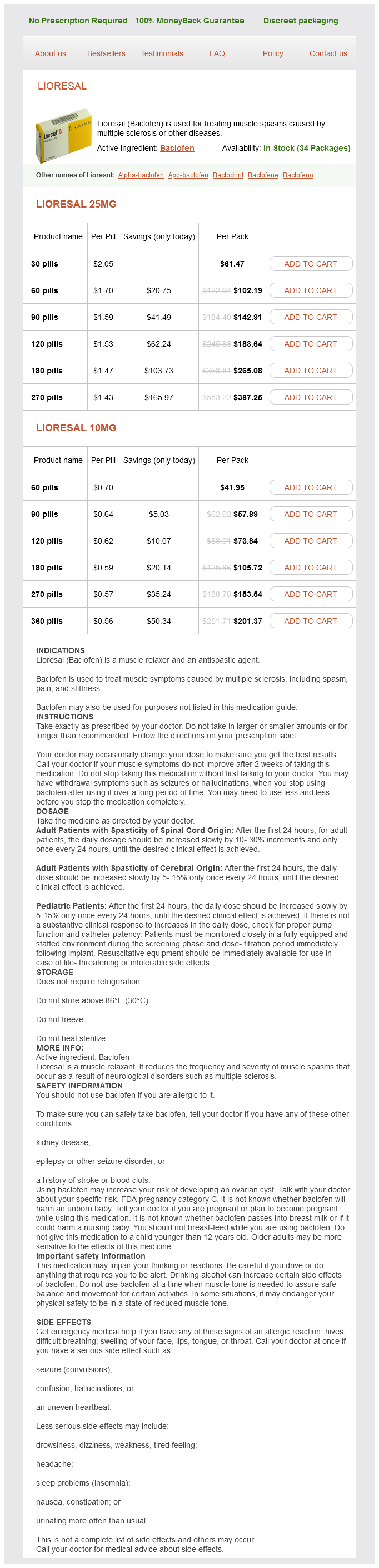
Lioresal dosages: 25 mg, 10 mg
Lioresal packs: 30 pills, 60 pills, 90 pills, 120 pills, 180 pills, 270 pills, 360 pills

European Society of Anaesthesiology evidence-based and consensusbased guideline on postoperative delirium. Evidence basis for regional anesthesia in multidisciplinary fast-track surgical care pathways. Randomized medical trial investigating the stress response from two different strategies of analgesia after laparoscopic colorectal surgery. Ensuring early mobilization inside an enhanced recovery program for colorectal surgery: A randomized controlled trial. Liposomal bupivacaine infiltration at the surgical web site for the management of postoperative pain. Randomized clinical trial on epidural versus patient managed analgesia for laparoscopic colorectal surgical procedure within an enhanced restoration pathway. The analgesic effects of perioperative gabapentin on postoperative pain: A meta-analysis. Randomized scientific trial of epidural, spinal or patient-controlled analgesia for patients present process laparoscopic colorectal surgical procedure. Efficacy of steady wound catheters delivering native anesthetic for postoperative analgesia: A quantitative and qualitative systematic evaluation of randomized controlled trials. Impact of adherence to care pathway interventions on recovery following bowel resection within an established enhanced restoration program. Effect of a peri-operative, cardiac output-guided, hemodynamic remedy algorithm on outcomes following major gastrointestinal surgery: A randomized clinical trial and updated systematic review. Protective effects of epidural analgesia on pulmonary problems after stomach and thoracic surgery: A meta-analysis. Preoperative carbohydrate therapy for enhancing restoration after elective surgery. Pain administration modalities after complete knee arthroplasty: A network meta-analysis of one hundred seventy randomized managed trials. Opioid-free complete intravenous anaesthesia reduces postoperative nausea and vomiting in bariatric surgery beyond triple prophylaxis. This is as a end result of the average kinetic power of particles in solution is similar regardless of their mass. Potassium is crucial determinant of intracellular osmotic stress, whereas sodium is crucial determinant of extracellular osmotic pressure. Fluid change between the intracellular and interstitial areas is ruled by the osmotic forces created by differences in nondiffusible solute concentrations. Excessively rapid correction of hyponatremia has been related to demyelinating lesions in the pons (central pontine myelinolysis), and more usually in each pontine and extrapontine central nervous system buildings (osmotic demyelination syndrome), leading to each momentary and permanent neurological sequelae. A main hazard of increased extracellular quantity is impaired gas exchange as a result of pulmonary interstitial edema, alveolar edema, and/or massive collections of pleural or ascitic fluid. Because of its lethal potential, hyperkalemia exceeding 6 mEq/L should all the time be corrected. Moreover, giant volumes of intravenous fluids and blood components are frequently required to correct fluid deficits and compensate for blood loss throughout surgical procedure. Major disturbances in fluid and electrolyte stability can rapidly alter cardiovascular, neurological, and neuromuscular functions, and anesthesia suppliers must have a transparent understanding of regular water and electrolyte physiology. Acid�base issues and intravenous fluid and blood remedy are discussed in Chapters 50 and 51. Osmotic stress is the stress that have to be utilized to the aspect with extra solute to prevent a web motion of water throughout the membrane to dilute the solute. For substances that ionize, however, each mole leads to n Osm, where n is the variety of ionic species produced. A difference of 1 mOsm/L between two options results in an osmotic stress of 19. The osmolarity of an answer is the identical as the variety of osmoles per liter of solution, whereas its osmolality equals the number of osmoles per kilogram of solvent.
Diseases

Relatively widespread anomalies include sacralization of L5 (the vertebral body is fused to the sacrum), lumbarization of S1 (it capabilities as a sixth lumbar vertebra), spondylolysis (disruption of the pars interarticularis), spondylolisthesis (displacement anteriorly of 1 vertebral body on the following as a outcome of disruption of the posterior parts, normally the pars interarticularis), and spondyloptosis (subluxation of 1 vertebral body on one other leading to one physique in entrance of the next). Spinal fusion could additionally be necessary in sufferers with progressive symptoms and spinal instability. Cervical Pain Although most spine-related pain as a end result of disc disease, spinal stenosis, or degenerative modifications in the zygapophyseal joints is felt within the low again and decrease extremities, sufferers might have cervical ache attributed to these processes. This happens till the level of C7, the place the extra cervical nerve roots, C8, exit under the pedicles of C7, thus transitioning to the nomenclature of the thoracicand lumbar-level vertebral our bodies and nerve root denominations. Risks inherent with percutaneous cervical procedures include unintended intravascular injection of local anesthetic or steroid. Particulate steroid injections within the neck have been related to devastating outcomes and must be averted. For primarily axial ache within the neck with extension into the pinnacle or to the shoulders, cervical eight. When identified by imaging these tumors shall be managed by neurosurgeons, radiotherapists, and or medical oncologists, not by ache specialists. Infection Bacterial infections of the spine usually start as a discitis before progressing to osteomyelitis, and could be because of pyogenic as well as tuberculous organisms. Patients might present with persistent back ache with out fever or leukocytosis (eg, spinal tuberculosis). Those with acute discitis, osteomyelitis, or epidural abscess current with acute pain, fever, leukocytosis, elevated sedimentation rate, and elevated C-reactive protein, warranting instant initiation of antibiotics. Urgent surgical intervention is indicated when the affected person additionally suffers from acute weak spot. It usually presents as low back pain associated with early morning stiffness in a younger male affected person. After a few months to years, the pain steadily intensifies and is related to progressively restricted motion of the spine. Diagnosis may be difficult early within the disease, but radiographic evidence of sacroiliitis is usually current. As the illness progresses, the spine develops a attribute "bamboo-like" radiographic look. Some patients develop arthritis of the hips and shoulders, as well as extraarticular inflammatory manifestations. Anti�tumor necrosis factor- brokers, including infliximab (Remicade), etanercept (Enbrel), adalimumab (Humira), and golimumab (Simponi), lower the progression of ankylosing spondylitis when administered early in the course of remedy. However, patients treated with these drugs may be at increased threat for infection and for the event of lymphoma. Patients with Reiter syndrome, psoriatic arthritis, or inflammatory bowel illness may current with low again pain, but extraspinal manifestations are usually extra distinguished. Rheumatoid arthritis normally spares the backbone apart from the zygapophyseal joints of the cervical spine. Of notice, tricyclic antidepressants could have significant anticholinergic unwanted facet effects which will restrict their tolerability. Secondary amines, such as nortriptyline or desipramine, may have fewer or much less severe anticholinergic unwanted effects than tertiary amines such as amitriptyline or imipramine. Diabetic Neuropathy of neuropathic pain and is a serious reason for morbidity and disability. Its pathophysiology may be associated to microangiopathy and to irregular activation of glycation of proteins as a consequence of persistent hyperglycemia. Diabetic neuropathy could also be symmetric (generalized), focal, or multifocal, affecting peripheral (sensory or motor), cranial, or autonomic nerves. The commonest diabetic neuropathy syndrome is peripheral polyneuropathy, which leads to symmetric numbness ("stocking-and-glove" distribution), paresthesias, dysesthesias, and ache. Loss of proprioception may lead to gait disturbances, and sensory deficits can lead to repetitive traumatic injuries. Isolated mononeuropathies affecting particular person nerves might result in wrist or foot drop or to cranial nerve palsy. Mononeuropathies typically have a sudden onset and are selflimiting, lasting a quantity of weeks. Autonomic neuropathy sometimes impacts the gastrointestinal tract, inflicting diarrhea, delayed gastric emptying, and esophageal motility disorders. Treatment of diabetic neuropathy is symptomatic and directed at optimum glycemic control to slow development.

Patients with the sickle trait produce variable amounts of HbA (55�60%) and HbS (35�40%). Sickling is particularly apt to happen within the renal medulla; certainly, many patients with the sickle trait have impaired renal concentrating ability. Sickle cell anemia is primarily a disease of individuals of Central African ancestry. Hypothermia may also be detrimental because of associated vasoconstriction (see below). Intracellular polymerization of HbS distorts purple cells, makes them less pliable and more "sticky," growing blood viscosity. Formation of red cell aggregates in capillaries can impede tissue microcirculation, and a vicious cycle is established in which circulatory stasis results in localized hypoxia, which, in turn, causes more sickling. The illness is characterized by both acute episodic crises and persistent and progressive features (Table 51�7). Recurrent splenic infarction results in splenic atrophy and functional asplenism by adolescence. Chronic stomach, bone, and joint pain is typical, typically complicated by repeated, acutely painful sickling crises, and sufferers frequently require persistent opioid remedy. Because of points related to analgesic tolerance and dependancy, these patients usually profit from management by ache specialists. Crises are sometimes precipitated by an infection, cold weather, dehydration, or different forms of stress. Vasoocclusive crises: Depending on the vessels involved, these acute episodes can lead to micro- or macroinfarctions. Differentiation between surgical and nonsurgical causes of abdominal pain is tough. Vasoocclusive phenomena in larger vessels can produce thromboses resulting in splenic, cerebral, pulmonary, hepatic, renal, and, less generally, myocardial infarctions. Aplastic disaster: Profound anemia (Hb 2�3 g/dL) can quickly occur when red cell production in the bone marrow is exhausted or suppressed. Splenic sequestration disaster: Sudden pooling of blood within the spleen can happen in infants and younger kids and may cause life-threatening hypotension. The mechanism is believed to be partial or complete occlusion of venous drainage from the spleen. What can be the finest way to prepare patients with sickle cell anemia for surgical procedure Optimal preoperative preparation contains the next: sufferers ought to be properly hydrated, infections should be controlled, and the hemoglobin concentration ought to be at an appropriate stage. Preoperative transfusion have to be individualized for the patient and to the surgical process. Partial change transfusions before major surgical procedures are normally advocated, which decrease blood viscosity, improve blood oxygen-carrying capability, and reduce chance of sickling. The aim of such transfusions is usually to obtain a hematocrit of 35% to 40% with 40% to 50% regular hemoglobin (HbA). Chronic management of sickle cell illness has been revolutionized by the introduction of hydroxyurea. Conditions that might promote hemoglobin desaturation or low-flow states should be avoided. The principal compensatory mechanism for impaired tissue oxygen supply in these sufferers is increased cardiac output, which ought to be maintained intraoperatively. Mild alkalosis might assist keep away from sickling, however even average levels of respiratory alkalosis may have an antagonistic effect on cerebral blood move. Most perioperative deaths happen in the postoperative interval, and the same management principles utilized intraoperatively should be utilized following surgical procedure. Hypoxemia and pulmonary problems (particularly acute chest syndrome) are main threat elements. Supplemental oxygen; optimum hemodynamic, fluid, and ache and symptom management; and pulmonary physiotherapy with early mobilization all help minimize the chance of those complications. Thalassemia is a hereditary defect within the production of one or more of the normal subunits of hemoglobin.

The anesthesia supplier should be succesful of assess intravascular volume with enough accuracy to correct present fluid or electrolyte deficits and exchange ongoing losses. Errors in fluid and electrolyte replacement or transfusion could end in morbidity or dying. Evaluation of Intravascular Volume Intravascular quantity can be estimated utilizing patient historical past, physical examination, and laboratory evaluation, often with the help of sophisticated hemodynamic monitoring methods. Multiple modalities complement one another, as a result of all parameters are oblique, nonspecific measures of quantity; reliance upon anybody parameter may result in erroneous conclusions. Intraoperatively, along with coronary heart price and blood strain, the fullness of a peripheral pulse, urinary move fee, and oblique indicators, such as the blood strain response to positive-pressure air flow and to vasodilating or negative inotropic effects of anesthetics, are sometimes used for guidance. Pitting edema-presacral within the bedridden affected person or pretibial in the ambulatory patient-and increased urinary circulate are signs of extra extracellular water and sure hypervolemia in sufferers with normal cardiac, hepatic, and renal perform. Late signs of hypervolemia in settings similar to congestive coronary heart failure might embody tachycardia, tachypnea, elevated jugular pulse strain, pulmonary crackles, wheezing, cyanosis, and pink, frothy pulmonary secretions. Unfortunately, many drugs administered throughout anesthesia, in addition to the neuroendocrine stress response to operative procedures, incessantly alter these signs and render them unreliable in the quick postoperative period. Fluid Loss (Expressed as Percentage of Body Weight) Sign Mucous membranes Sensorium Orthostatic changes In coronary heart fee In blood pressure Urinary flow price Pulse fee Blood strain 1 5% Dry Normal None 10% Very dry Lethargic Present 15% Parched Obtunded Marked >15 bpm 1 >10 mm Hg Mildly decreased Normal or elevated Normal Decreased Increased >100 bpm Mildly decreased with respiratory variation Markedly decreased Markedly elevated >120 bpm Decreased bpm, beats per minute. Laboratory indicators of dehydration could include rising hematocrit and hemoglobin, progressive metabolic acidosis (including lactic acidosis), urinary specific gravity greater than 1. Ultrasound can reveal a virtually collapsed vena cava or incompletely filled cardiac chambers. Radiographic indicators of volume overload embrace elevated pulmonary vascular and interstitial markings (Kerley "B" lines), diffuse alveolar infiltrates, or each. Consequently, we infrequently employ pulmonary artery catheters to information hemodynamic remedy. Crystalloid options are aqueous options of ions (salts) with or without glucose, whereas colloid solutions also include high-molecular-weight substances similar to proteins or large glucose polymers. Controversy remains concerning the utilization of colloid versus crystalloid fluids for surgical sufferers. Proponents of colloids justifiably argue that by maintaining plasma oncotic stress, colloids are extra environment friendly (ie, a smaller volume of colloids than crystalloids is required to produce the identical effect) in restoring normal intravascular quantity and cardiac output. Crystalloid proponents, then again, maintain that the crystalloid solutions are equally efficient when given in acceptable amounts. Concerns that colloids could enhance the formation of pulmonary edema fluid in sufferers with elevated pulmonary capillary permeability are unfounded (see Chapter 23). Crystalloids, when given in adequate quantities, are simply as efficient as colloids in restoring intravascular volume. Replacing an intravascular quantity deficit with crystalloids typically requires three to 4 times the volume needed when utilizing colloids. Surgical sufferers could have an extracellular fluid deficit that exceeds the intravascular deficit. Severe intravascular fluid deficits may be extra rapidly corrected using colloid solutions. The speedy administration of large quantities of crystalloids (>4�5 L) is commonly related to tissue edema. Tissue edema secondary to extreme fluid administration can impair oxygen transport, tissue healing, and return of bowel operate following surgery and will enhance the chance of surgical web site an infection. A wide number of solutions is available, and selection is in accordance with the sort of fluid loss being changed. For losses primarily involving water, substitute is with hypotonic options, and if losses involve both water and electrolytes, substitute is with isotonic electrolyte options. Glucose is provided in some options to preserve tonicity, or stop ketosis and hypoglycemia due to fasting, or based on custom. Children are prone to developing hypoglycemia (<50 mg/dL) following 4- to 8-h fasts. Normal saline, when given in giant volumes, produces hyperchloremic metabolic acidosis because of its high chloride content and lack of bicarbonate (see Chapter 50). In addition, chloride-rich crystalloids such as regular saline could contribute to perioperative acute kidney harm. Normal saline is the preferred answer for hypochloremic metabolic alkalosis and for diluting packed red blood cells prior to transfusion.
Blueberries (Blueberry). Lioresal.
Source: http://www.rxlist.com/script/main/art.asp?articlekey=96974

Hyperkalemia has been reported after release of the vascular clamp following completion of the arterial anastomosis, notably in pediatric and other small sufferers. Release of potassium contained within the preservative resolution has been implicated as the cause of this phenomenon. Urological procedures vary in influence from simple outpatient cystoscopy to surgical procedures with elevated threat of perioperative complications, corresponding to radical cystectomy and nephrectomy for renal cell carcinoma with vena caval thrombosis. Patients undergoing genitourinary procedures could also be of any age, however many are elderly with coexisting medical diseases, including kidney dysfunction. Use of lithotomy and steep head-down (Trendelenburg) positions complicates many of these procedures. Moreover, advances in preoperative affected person optimization, perioperative administration, and postoperative rehabilitation allow more patients with coexisting disease to be thought-about acceptable candidates for kidney transplantation, intensive tumor debulking operations, and reconstructive genitourinary procedures. Viscous lidocaine topical anesthesia with or without sedation provides satisfactory anesthesia for diagnostic cystoscopy in most women due to the quick urethra. Operative cystoscopies involving biopsies, cauterization, or manipulation of ureteral catheters require regional or general anesthesia, no matter affected person gender. Lithotomy Position 1 Next to the supine place, the lithotomy position is probably the most commonly used place for patients present process urological and gynecological procedures. Failure to correctly place and pad the patient can end result in stress sores, nerve injuries, or compartment syndromes. Bladder biopsies, retrograde pyelograms, transurethral resection of bladder tumors, extraction or laser lithotripsy of kidney stones, and placement or manipulation of ureteral catheters (stents) are additionally commonly performed via the cystoscope. If the legs are allowed to relaxation on medially placed strap helps, compression of the saphenous nerve can outcome in numbness along the medial calf. Excessive flexion of the thigh against the groin can injure the obturator and, much less commonly, the femoral nerves. The commonest nerve injuries directly associated with the lithotomy position contain the lumbosacral plexus. Brachial plexus accidents can likewise occur if the higher extremities are inappropriately positioned (eg, hyperextension on the axilla). Compartment syndrome of the lower extremities with rhabdomyolysis has been reported with prolonged time in the lithotomy place, after which decrease extremity nerve damage is also extra probably. Conversely, rapid lowering of the legs from the lithotomy or Trendelenburg position acutely decreases venous return and cardiac output and may find yourself in hypotension. Vasodilation from both basic or regional anesthesia potentiates the hypotension on this scenario, and for this reason, blood stress measurement ought to be taken instantly after the legs are lowered. General anesthesia-Any anesthetic method three suitable for outpatients may be utilized. Oxygen saturation ought to be intently monitored when obese or elderly sufferers, or those with marginal pulmonary reserve, are placed in the lithotomy or Trendelenburg position. However, when neuraxial regional anesthesia is chosen most anesthesiologists choose spinal anesthesia as a end result of onset of passable sensory blockade might require 15 to 20 min for epidural anesthesia in contrast with 5 min or less for spinal anesthesia. Studies fail to reveal that immediate elevation of the legs into lithotomy place following administration of hyperbaric spinal anesthesia either will increase the dermatomal extent of anesthesia to a clinically significant diploma or will increase the chance of severe hypotension. A T10 sensory degree block supplies wonderful anesthesia for all cystoscopic procedures. Despite advanced age and prevalence of great comorbidity, perioperative mortality and medical morbidity (most frequently myocardial infarction, pulmonary edema, and kidney failure) for this procedure are both less than 1%. A blood type and display screen (see Chapter 51) is sufficient for most sufferers, although crossmatched blood should be out there for anemic patients and for sufferers with a large prostate by which intensive resection is contemplated. Using steady irrigation and direct visualization, prostatic tissue is resected by making use of a chopping current to the loop. This syndrome presents intraoperatively or postoperatively as headache, restlessness, confusion, cyanosis, dyspnea, arrhythmias, hypotension, seizures, or a mix of those, and it can be rapidly fatal. Water irrigation is generally restricted to transurethral resection of bladder tumors only.
Information must be obtained concerning recent drug exposures, including alcohol consumption, intravenous drug use, recent transfusions, and prior anesthetics. The presence of nausea or vomiting must be noted, and, if current, dehydration and electrolyte abnormalities must be anticipated and corrected. Inappropriate habits or obtundation in alcoholic sufferers could also be signs of acute intoxication, whereas tremulousness, irritability, tachycardia, and hypertension normally replicate withdrawal. However, benzodiazepines and thiamine are indicated in alcoholic patients with, or in danger for, acute alcohol withdrawal; however, benzodiazepines have to be administered cautiously, as they could precipitate hepatic coma in an encephalopathic patient. Intraoperative Considerations the aim of intraoperative management is to preserve present hepatic operate. Some patients with viral hepatitis might exhibit elevated central nervous system sensitivity to anesthetics, whereas alcoholic sufferers will typically show cross-tolerance to each intravenous and volatile anesthetics. Alcoholic patients additionally require shut cardiovascular monitoring as a end result of the cardiac depressant results of alcohol are additive to those of anesthetics; furthermore, alcoholic cardiomyopathy could also be current in alcoholic patients. Inhalation anesthetics are generally preferable to intravenous brokers as a outcome of most of the latter are depending on the liver for metabolism, elimination, or both. Standard induction doses of intravenous induction agents can typically be used as a outcome of their action is terminated by redistribution somewhat than metabolism or excretion. A extended period of action, nevertheless, could also be encountered with giant or repeated doses of intravenous agents, significantly 2 opioids. Isoflurane and sevoflurane are the unstable agents of alternative for affected person with important liver illness as a end result of they preserve hepatic blood flow and oxygen delivery. Factors known to reduce hepatic blood move, corresponding to hypotension, excessive sympathetic activation, and high mean airway pressures during managed air flow, must be averted. Regional anesthesia, including major conduction blockade, may be employed in the absence of coagulopathy, provided hypotension is averted. Patients with persistent active hepatitis have chronic hepatic irritation with destruction of normal mobile architecture "piecemeal necrosis" on the biopsy. Evidence of cirrhosis is either present initially or ultimately develops in 20% to 50% of patients. Although continual energetic hepatitis seems to have many causes, it occurs mostly as a sequela of hepatitis B or hepatitis C. Other causes embrace drugs (methyldopa, isoniazid, and nitrofurantoin) and autoimmune disorders. Both immunological components and a genetic predisposition may be accountable in most cases. Manifestations of cirrhosis eventually predominate in sufferers with progressive illness. In 3 evaluating patients for persistent hepatitis, laboratory check outcomes might present only a mild elevation in serum aminotransferase exercise and sometimes correlate poorly with illness severity. Patients with out continual hepatitis B or C an infection normally have a good response to immunosuppressants and are handled with long-term corticosteroid therapy with or without azathioprine. Anesthetic Management Patients with chronic persistent or chronic lobular hepatitis must be handled similarly to these with acute hepatitis. In contrast, those with continual lively hepatitis should be assumed to have already got cirrhosis and ought to be treated accordingly (as discussed next). Patients can usually be categorized as having one of three distinct syndromes based on a liver biopsy: chronic persistent hepatitis, persistent lobular Cirrhosis the liver of irritation, hepatocellular damage, and the resulting fibrosis and regeneration of hepatocytes. Other causes embrace continual energetic hepatitis (postnecrotic cirrhosis), continual biliary irritation or obstruction (primary biliary cirrhosis, sclerosing cholangitis), chronic right-sided congestive coronary heart failure (cardiac cirrhosis), autoimmune hepatitis, hemochromatosis, Wilson disease, 1-antitrypsin deficiency, and cryptogenic cirrhosis. Regardless of the cause, hepatocyte necrosis is adopted by fibrosis 5 and nodular regeneration. Manifestations are typically absent initially, however jaundice and ascites ultimately develop in most patients. Other signs include spider angiomas, palmar erythema, gynecomastia, and splenomegaly. Moreover, cirrhosis is usually related to the event of three major issues: (1) variceal hemorrhage from portal hypertension, (2) intractable fluid retention within the type of ascites and the hepatorenal syndrome, and (3) hepatic encephalopathy or coma. Approximately 10% of patients with cirrhosis additionally develop at least one episode of spontaneous bacterial peritonitis, and some sufferers eventually develop hepatocellular carcinoma.

If the operative procedure is close to the airway, the usage of electrocautery or laser increases the danger of fire. At the end of surgery, the oropharyngeal pack should be 9 eliminated and the pharynx suctioned. In such uncertain situations, extubation could additionally be carried out over an endotracheal tube exchanger (eg, Cook Airway Exchange Catheter with Rapi-Fit Adapter, Cook Medical), which might facilitate reintubation and provide oxygenation in the setting of instant postextubation respiratory obstruction. In addition, the working group should be ready for emergent tracheotomy or cricothyrotomy. Patients with intermaxillary fixation (eg, maxillomandibular wiring) will need to have suction and acceptable wire chopping instruments repeatedly on the bedside in case of vomiting or other airway emergencies. Extubating a patient whose jaws are wired shut and whose oropharyngeal pack has not been eliminated can lead to life-threatening airway obstruction. Because nitrous oxide is extra soluble than nitrogen in blood, it diffuses into air-containing cavities more quickly than nitrogen (the main element of air) could be absorbed by the bloodstream (see Chapter 8). Normally, changes in center ear pressures caused by nitrous oxide are nicely tolerated as a result of passive venting by way of the eustachian tube. However, sufferers with a history of persistent ear problems corresponding to otitis media or sinusitis typically undergo from obstructed eustachian tubes and will, on rare event, expertise hearing loss or tympanic membrane rupture from administration of nitrous oxide anesthesia. However, once the surgeon has placed a tympanic membrane graft, the middle ear turns into a closed house, and if nitrous oxide is allowed to diffuse into any gasoline remaining in this house, center ear stress will rise and the graft may be displaced. Conversely, discontinuing nitrous oxide after graft placement will create a negative middle ear pressure that might additionally cause graft dislodgment. There10 fore, nitrous oxide is both completely averted throughout tympanoplasty or discontinued prior to graft placement. Obviously, the exact period of time required to wash out the nitrous oxide depends on many factors, together with alveolar air flow and fresh gasoline flows (see Chapter 8), however 15 to 30 min is normally really helpful. Hemostasis As with any form of microsurgery, even tiny amounts of blood can obscure the working field. Techniques to minimize blood loss during ear surgery include gentle (15�) head elevation, infiltration or topical application of epinephrine (1:50,000�1:200,000), and reasonable controlled hypotension. Because coughing on the endotracheal tube throughout emergence (particularly during neck motion related to head bandaging) will enhance venous strain and may trigger bleeding and elevated center ear stress, deep extubation is usually utilized. Myringotomy with insertion of tympanostomy tubes is the most typical pediatric surgical procedure and is mentioned in Chapter 42. Facial Nerve Identification Preservation of the facial nerve is a crucial consideration throughout some ear procedures, such as resection of a glomus tumor or acoustic neuroma. Patients undergoing ear surgery should be carefully assessed for vertigo postoperatively, and their ambulation intently monitored, to find a way to minimize the risk of falling. Oral Surgical Procedures Most minor oral surgical procedures are carried out in a clinic or workplace setting utilizing local anesthesia, augmented with varying levels of sedation. If intravenous sedation is employed, or if the process is complex, a professional anesthesia provider must be current. A qualified anesthesia supplier have to be present to administer deep sedation or general anesthesia if both is utilized. For light to moderate ranges of sedation, the oropharyngeal pack prevents irrigating fluids and dental particles from coming into the airway. Deep sedation and general anesthesia require an elevated level of airway management by a certified anesthesia provider. Minor oral surgical procedures, such as dental extractions, typically final no longer than 1 h. Pediatric patients are particularly vulnerable to local anesthesia toxicity due to excess local anesthetic dose administration or unintended intravascular injection. Small doses of fentanyl and midazolam are often adequate for adults prior to injection of the native anesthetic. The sedation can be further augmented by extra small dosages of fentanyl, midazolam, or propofol. Incremental doses of propofol, 20 to 30 mg for adults, are sometimes used if the surgeon requires a short episode of deep sedation or general anesthesia. These methods require a excessive degree of cooperation and participation by both the surgeon and anesthesia provider.

Occasionally, shivering is intense enough to cause hyperthermia (38�39�C) and metabolic acidosis, both of which promptly resolve when the shivering stops. Other causes of shivering should be excluded, similar to sepsis, drug allergy, or a transfusion response. These physiological effects are sometimes poorly tolerated by patients with preexisting cardiac or pulmonary impairment. Postoperative shivering could enhance oxygen consumption as a lot as fivefold, might lower arterial oxygen saturation, and may be associated with an increased danger of myocardial ischemia. Although postoperative shivering may be successfully handled with small intravenous doses of meperidine (12. Shivering in intubated and mechanically ventilated patients can also be controlled with sedation and a muscle relaxant pending normothermia and dissipation of all results of anesthesia. In addition to an increased incidence of myocardial ischemia, hypothermia has been related to arrhythmias, elevated transfusion necessities, and increased duration of muscle relaxant effects, the latter of which may be especially dangerous in the recently extubated affected person. Most circumstances have been reported in younger males; virtually none have been reported in infants, and few have been reported within the aged. In many of the early reported circumstances, each succinylcholine and a halogenated anesthetic agent have been used and so-called masseter muscle rigidity was observed. However, succinylcholine is much less regularly used in modern follow, and about half of the circumstances prior to now decade had been related to a unstable anesthetic as the one triggering agent. Whether succinylcholine is a set off within the absence of a volatile agent is now controversial. The sudden launch of calcium from sarcoplasmic reticulum removes the inhibition of troponin, leading to sustained muscle contraction. Ryr1 is a calcium channel liable for calcium release from the sarcoplasmic reticulum and it performs an essential function in muscle depolarization. Clinical Manifestations embrace muscle rigidity, tachycardia, unexplained hypercarbia, and increased temperature (Table 52�3). Overactivity of the sympathetic nervous system produces tachyarrhythmias, hypertension, and mottled cyanosis. Hyperthermia may be an early sign, and when it happens, core temperature can rise as a lot as 1�C every 5 min. Laboratory testing sometimes reveals blended metabolic and respiratory acidosis with a marked base deficit, hyperkalemia, hypermagnesemia, and decreased mixed-venous oxygen saturation. Serum ionized calcium concentration is variable: It might initially improve earlier than a later lower. These embrace central-core illness, multi-minicore myopathy, and King�Denborough syndrome. Other possible clues to susceptibility embrace a household history of anesthetic problems, or a history of unexplained fevers or muscular cramps. Intraoperative Considerations terminating the episode and treating issues such as hyperthermia and acidosis. Acute Treatment Measures First and most significantly, volatile brokers and succinylcholine have to be discontinued instantly. Even trace amounts of anesthetics launched from soda lime, breathing tubes, and breathing bags could additionally be detrimental. Treat extreme hyperkalemia with dextrose, 25�50 g intravenously, and common insulin, 10�20 models intravenously (adult dose). Administer antiarrhythmic agents if needed regardless of correction of hyperkalemia and acidosis. Its security and efficacy mandate its instant use in this poten9 tially life-threatening situation. Dantrolene, a hydantoin by-product, directly interferes with muscle contraction by binding the Ryr1 receptor channel and inhibiting calcium ion launch from the sarcoplasmic reticulum. Dantrolene is a relatively secure drug that is also used to lower temperature in patients with thyroid "storm" and neuroleptic malignant syndrome. Although its use in continual remedy for spastic disorders has been associated with hepatic dysfunction, the most critical complication following acute administration is generalized muscle weakness which will result in respiratory insufficiency or aspiration pneumonia. Dantrolene may cause phlebitis in small peripheral veins and must be given by way of a central venous line if one is available. Following administration of dantrolene, most patients revert to normal acid� base status promptly and no further pharmacological treatment is important. Correction of Acid�Base/ Electrolyte Imbalances Persisting metabolic acidosis should be treated with intravenous sodium bicarbonate, recognizing that this therapy will worsen the hypercarbia.

The biggest danger of anesthesia is rupture of the air cavity throughout positive-pressure ventilation, resulting in rigidity pneumothorax; the latter could happen on both side prior to thoracotomy or on the nonoperative facet during the lung resection. Anesthesia for Tracheal Resection Preoperative Considerations Tracheal resection is mostly carried out for tracheal stenosis, tumors, or, much less generally, congenital abnormalities. Tracheal stenosis may finish up from penetrating or blunt trauma, in addition to tracheal intubation and tracheostomy. The dyspnea could also be worse when the patient is lying down, with progressive airway obstruction. Anesthetic Considerations Little premedication is given, as most patients presenting for tracheal resection have moderate to severe airway obstruction. Use of an anticholinergic agent to dry secretions is controversial due to the theoretical risk of inspissation. An inhalation induction (in 100% oxygen) is carried out in sufferers with severe obstruction. Laryngoscopy is carried out solely when the affected person is judged to be beneath deep anesthesia. Intravenous lidocaine (1�2 mg/kg) can deepen the anesthesia with out depressing respirations. The surgeon may then carry out inflexible bronchoscopy to consider and presumably dilate the lesion. Following bronchoscopy, the affected person is intubated with a tracheal tube small enough to be passed distal to the obstruction each time possible. The surgeon divides the trachea within the neck and advances a sterile armored tube into the distal trachea, passing off a sterile connecting respiratory circuit to the anesthesiologist for air flow in the course of the resection. Return of spontaneous air flow and early extubation on the end of the procedure are desirable. Surgical management of low tracheal lesions requires a median sternotomy or right posterior thoracotomy. Most procedures are carried out through three or extra small incisions in the chest, with the affected person in the lateral decubitus position. Anesthetic administration is similar to that for open procedures, except that one-lung air flow is required (as opposed to being desirable) for almost all procedures. These procedures are difficult by the necessity to share the airway with the surgeon or pulmonologist; luckily, these procedures are often temporary. One of three strategies can then be used during rigid bronchoscopy: (1) apneic oxygenation utilizing a small catheter positioned alongside the bronchoscope to insufflate oxygen (see above); (2) standard air flow by way of the facet arm of a ventilating bronchoscope (when the proximal window of this instrument is opened for suctioning or biopsies, ventilation should be interrupted); or (3) jet ventilation via an injector-type bronchoscope. Mediastinoscopy Mediastinoscopy, far more generally employed up to now than at current, provides entry to the mediastinal lymph nodes and is used to set up both the prognosis or the resectability of intrathoracic malignancies (see above). Mediastinoscopy is carried out beneath common tracheal anesthesia with neuromuscular paralysis. A: the catheter is superior past the obstruction, and the cuff is deflated when jet ventilation is initiated. Jet air flow could be continued without interruption during resection and reanastomosis. Because the innominate artery may be compressed in the course of the procedure, blood stress ought to be measured within the left arm. Complications associated with mediastinoscopy embody (1) vagally mediated reflex bradycardia from compression of the trachea or the nice vessels; (2) excessive hemorrhage; (3) cerebral ischemia from compression of the innominate artery (detected with a proper radial arterial line or pulse oximeter on the proper hand); (4) pneumothorax (usually presents postoperatively); (5) air embolism (because of a 30� head elevation, the danger is biggest throughout spontaneous ventilation); (6) recurrent laryngeal nerve harm; and (7) phrenic nerve damage. Bronchoalveolar Lavage Bronchoalveolar lavage may be employed for sufferers with pulmonary alveolar proteinosis. In such patients, bronchoalveolar lavage could additionally be indicated for extreme hypoxemia or worsening dyspnea. Unilateral bronchoalveolar lavage is carried out underneath common anesthesia with a double-lumen bronchial tube. The cuffs on the tube must be properly positioned and will make a watertight seal to prevent spillage of fluid into the opposite side. The process is normally carried out in the supine place; although lavage with the lung in a dependent position helps to reduce contamination of the opposite lung, this position may cause severe ventilation/perfusion mismatch.
Abe, 38 years: Changes in neurological perform appear to be associated to modifications in axonal conduction. In these situations, intermittent venting of a gastrostomy tube might allow positive-pressure air flow without extreme gastric distention. Inhaled 2-adrenergic agonists, glucocorticoids, and ipratropium are routinely employed. Input from these sources is probably important throughout train and in pathological situations associated with decreased lung or chest compliance.
Ballock, 59 years: For example, a easy mastectomy would require blocks at levels T3�6; for axillary node dissection, extra injections must be produced from C7 through T2. These inclusions include surfactant, an necessary substance needed for regular pulmonary mechanics. Irrespective of the modality used, there should be a complete plan for ache management. Indications Cervical paravertebral nerve blocks can be helpful diagnostically and therapeutically for sufferers with cervical disc displacement, cervical foraminal stenosis, or cancer-related ache originating from the cervical backbone or shoulder.
Kalan, 26 years: Stridor is prominent with the first two, whereas wheezing is extra widespread with the latter. Another enticing various method involves handbook jet air flow via laryngoscope facet port. The addition of fentanyl, 50 to 100 mcg, or sufentanil, 10 to 20 mcg, significantly enhances analgesic intensity and prolongs its duration with out adversely affecting neonatal outcome. Considerable variability in opioid necessities ought to be expected, and adequate analgesia have to be balanced against the risk of excessive sedation and respiratory depression.
References

Desarrolló: Grupo Guadalupe S.R.L.