
Spencer Yost MD

https://anesthesia.ucsf.edu/people/spencer-yost
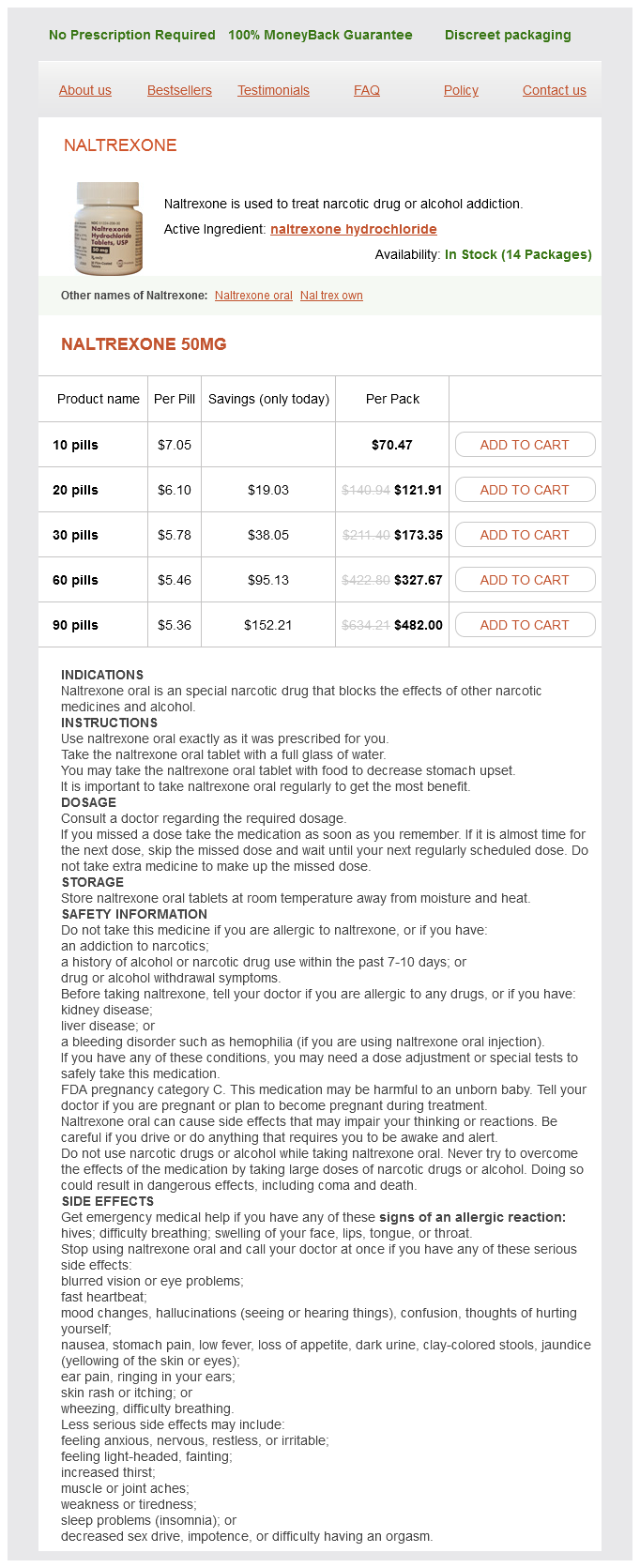
Naltrexone dosages: 50 mg
Naltrexone packs: 10 pills, 20 pills, 30 pills, 60 pills, 90 pills

Given the amount of information that now counsel that asymptomatic hyperuricaemia might be deleterious for the kidney, the guts, and arteries, it seems cheap to critically consider the treatment of hyperuricaemic topics. This may be achieved, to some extent, by food plan and life-style changes, and the risk/benefit ratio of dietary advices and exercise seems as, in any case, extremely beneficial. In specific, weight loss is indicated within the overweight, because of the danger or coexistence of metabolic syndrome. Similarly, hyperuricaemia ought to prompt a seek for and therapy of different cardiovascular danger components. Prognostic value of serum uric acid: new-onset in and out-of-office hypertension and long-term mortality. Elevated uric acid will increase blood strain within the rat by a novel crystal-independent mechanism. Hyperuricemia induces a major renal arteriolopathy in rats by a blood pressure-independent mechanism. Uric acid stimulates monocyte chemoattractant protein-1 manufacturing in vascular smooth muscle cells through and efficacy. The Japanese Society of Gout and Nucleic Acid Metabolism has beneficial the treatment of asymptomatic hyperuricaemia above 540 �mol/L (9 mg/dL) in sufferers with no cardiovascular threat issue and above 480 �mol/L (6. Serum uric acid and risk for cardiovascular disease and demise: the Framingham Heart Study. Serum urate affiliation with hypertension in younger adults: evaluation from the Coronary Artery Risk Development in Young Adults cohort. Significance of serum uric acid ranges on the risk of all-cause and cardiovascular mortality. Serum uric acid and long-term mortality from stroke, coronary heart disease and all causes. Hyperuricemia and threat of incident hypertension: a scientific review and meta-analysis of observational studies. Relations of serum uric acid to longitudinal blood strain monitoring and hypertension incidence. Allopurinol initiation and alter in blood stress in older adults with hypertension. Effect of allopurinol on blood pressure of adolescents with newly identified important hypertension: a randomized trial. Serum uric acid and plasma norepinephrine concentrations predict subsequent weight acquire and blood stress elevation. Association of plasma uric acid with ischaemic heart illness and blood stress: mendelian randomisation evaluation of two giant cohorts. Association of kidney disease with prevalent gout within the United States in 1988�1994 and 2007�2010. Gout and threat of chronic kidney illness and nephrolithiasis: meta-analysis of observational research. Association of uric acid with change in kidney function in wholesome normotensive people. Hypertriglyceridaemia and hyperuricaemia are threat components for development of IgA nephropathy. Clinical end result of hyperuricemia in IgA nephropathy: a retrospective cohort study and randomized managed trial. Serum uric acid as a predictor for growth of diabetic nephropathy in kind 1 diabetes: an inception cohort examine. The role of hyperuricemia within the elevated cytokine manufacturing after lipopolysaccharide problem in neutropenic mice. Uric acid-induced phenotypic transition of renal tubular cells as a novel mechanism of continual kidney disease. Serum uric acid stage as an impartial risk issue for all-cause, cardiovascular, and ischemic stroke mortality: a Chinese cohort examine. Independent and conjoint associations of gout and hyperuricaemia with complete and cardiovascular mortality. Baseline serum uric acid level as a predictor of cardiovascular disease associated mortality and all-cause mortality: a meta-analysis of potential studies. Relation between serum uric acid and risk of heart problems in essential hypertension. Uric acid as a danger issue for cardiovascular disease and mortality in overweight/obese people.
Sports and bodily exercise, particularly these with longer duration and at greater depth, are major risk elements for joint trauma. Despite these suggestions and well being advantages, physical exercise and definitely sporting actions put main loads on the energetic joints and hence stress the joint cartilage and different passive buildings, such as the joint capsule. A massive part of this association might be explained by overweight/obesity (see later in this chapter), caused by an imbalance between vitality consumption and expenditure. Occupational actions Like physical activity, the term occupational activities covers a extensive range of occupations, bodily duties, and possible harmful exposures. Overweight/obesity According to the World Health Organization, the prevalence of weight problems has tripled in many European nations since the Eighties and the numbers of those affected continue to rise [1]. Especially when the danger for joint trauma is minimalized, practising sports and bodily actions of mild to moderate intensity in order to prevent or deal with overweight/obesity and muscle weakness appears recommendable for joint and general health. Because the preventive impact was nullified amongst cohort research, especially in communitybased settings, the authors conclude that the association is fake adverse [42]. Although this may only look like a distinction within the selection of subjects, the latter form of study design has some methodological issues [45]. Two recent systematic reviews from the Cochrane library confirmed pooled effect sizes of -0. Nevertheless, follow-up length of those trials is mostly brief and no results of train therapy on structural modifications are found. Therefore, the effect of bodily activity and sports on the progression of structural abnormalities in already affected knees is much less well-known. Risk factors for onset of osteoarthritis of the knee in older adults: a scientific evaluation and metaanalysis. Influence of sporting actions on the event of osteoarthritis of the hip: a systematic review. Participation in athletic actions may be related to later improvement of hip and knee osteoarthritis. Are joint harm, sport exercise, bodily activity, obesity, or occupational actions predictors for osteoarthritis Is quadriceps muscle weak spot a danger issue for incident or progressive knee osteoarthritis Knee osteoarthritis: affect of labor involving heavy lifting, kneeling, climbing stairs or ladders, or kneeling/squatting combined with heavy lifting. Hip osteoarthritis: affect of labor with heavy lifting, climbing stairs or ladders, or combining kneeling/squatting with heavy lifting. Influence of labor on the development of osteoarthritis of the hip: a scientific evaluation. Osteoarthritis and meniscus issues of the knee as occupational ailments of miners. Epidemiological evidence for work load as a risk factor for osteoarthritis of the hip: a scientific evaluate. Occupational physical loading duties and knee osteoarthritis: a review of the evidence. Associations of labor actions requiring pinch or hand grip or exposure to hand-arm vibration with finger and wrist osteoarthritis: a meta-analysis. Factors associated with the severity and progression of self-reported hand pain and useful issue in community-dwelling older adults: a scientific review. Updated analyses should be carried out in observational studies, accounting for the potential epidemiologic limitations. Etiologic fractions for bodily work load, sports and obese in the incidence of coxarthrosis. A systematic review on modified biomechanics of lower extremities in overweight people: a attainable role in improvement of osteoarthritis. Body mass index and susceptibility to knee osteoarthritis: a scientific evaluate and meta-analysis. The relationship between body mass index and hip osteoarthritis: a systematic evaluation and meta-analysis. Influence of weight problems on the event of osteoarthritis of the hip: a scientific evaluation. Epidemiology of collegiate accidents for 15 sports: abstract and suggestions for damage prevention initiatives. Effect of bodily therapy on pain and function in sufferers with hip osteoarthritis: a randomized clinical trial.

Additional nonreceptor-mediated mechanisms of particular compounds are mentioned when those drugs are examined of their respective chapters. Receptor Supersensitivity A prolonged lower within the stimulation of the postsynaptic receptors may find yourself in a useful improve in receptor sensitivity. The finest instance of that is the denervation supersensitivity seen when a peripheral nerve is severed. Similarly, the lack of the endogenous neurotransmitter dopamine in neurodegenerative situations such as Parkinson disease can lead to supersensitivity of receptors for that neurotransmitter. Cellular receptors are proteins positioned on the cell surface or at particular locations inside the cell. The main role of the receptor is to acknowledge particular chemicals from the huge number of compounds which would possibly be introduced to the cell and to provoke a change in cell operate by interacting with a specific agent. Activated receptors mediate a change in operate by altering cell permeability or modifying the biochemical operate throughout the cell, or each. The precise mechanism by which a receptor affects cell perform is determined by the kind and location of the receptor. Also, the event of chemical agents that block specific receptors (antagonists) has been helpful in moderating the effects of endogenous compounds on particular physiological processes. Finally, adjustments in receptor number and sensitivity are essential in the altered response seen in sure drugs with extended use. Information concerning the relationship between medication and cellular receptors has been, and will proceed to be, important to our understanding of how medicine work and in serving to researchers develop new compounds. End-plate acetylcholine receptor: construction, mechanism, pharmacology, and disease. Associated proteins: the universal toolbox controlling ligand gated ion channel operate. Diversity of metabotropic glutamate receptorinteracting proteins and pathophysiological capabilities. Structural insights into agonist-induced activation of G-protein-coupled receptors. Relationship between every day dose, plasma concentrations, dopamine receptor occupancy, and clinical response to quetiapine: a evaluation. Agonist binding, agonist affinity and agonist efficacy at G protein-coupled receptors. Opioid antagonists, partial agonists, and agonists/antagonists: the position of office-based detoxing. Implications of the binding of tamoxifen to the coactivator recognition web site of the estrogen receptor. Cannabinoid-1 receptor inverse agonists: current understanding of mechanism of action and unanswered questions. Regulation of -adrenergic receptor operate: an emphasis on receptor resensitization. Agonist-dependent mu-opioid receptor signaling can lead to heterologous desensitization. Mechanisms of rapid opioid receptor desensitization, resensitization and tolerance in brain neurons. Taking the guts failure battle inside the cell: small molecule focusing on of G subunits. Minireview: Extranuclear steroid receptors: roles in modulation of cell capabilities. Allosteric modulators of steroid hormone receptors: structural dynamics and gene regulation. Structural alterations of erythrocyte membrane parts induced by exhaustive train. Cannabinoid receptor signaling in neurodegenerative illnesses: a possible function for membrane fluidity disturbance. An built-in catch-and-hold mechanism activates nicotinic acetylcholine receptors. Dopamine D(2)class receptor supersensitivity as mirrored in Ca2+ current modulation in neostriatal neurons. The cerebrum consists of bilateral hemispheres, with every hemisphere divided anatomically into several lobes (frontal, temporal, parietal, and occipital).

First, there must be some type of difference or "gradient" on one facet of the membrane compared with the opposite. A concentration gradient, for instance, occurs when the concentration of the substance differs on one side of the membrane compared to that on the opposite aspect. When this gradient happens, the diffusing substance can move "downhill" from the area of high concentration to that of low focus. In addition to a focus distinction, diffusion also can occur because of a stress gradient or, in the case of charged particles, an electrical potential gradient. The driving forces in passive diffusion are the electrical, chemical, and strain differences on the 2 sides of the membrane. The second important factor for passive diffusion to happen is that the membrane have to be permeable to the diffusing substance. As talked about earlier, nonlipidsoluble compounds must diffuse by way of the membrane through particular pores. Some nonlipid-soluble drugs corresponding to lithium are sufficiently small to diffuse by way of these pores. Passive lipid diffusion is nonselective, and a drug with a excessive diploma of lipid solubility can achieve entry to many tissues. As indicated earlier, sure nonlipid-soluble substances-including some proteins-can be encapsulated in lipid vesicles, thereby enhancing their lipid solubility and increasing their capability to cross lipid membranes by passive diffusion Effect of Ionization on Lipid Diffusion. Passive lipid diffusion of sure medicine is also depending on whether or not the drug is ionized. In the plasma and in most different fluids, most drugs stay in their neutral, nonionized kind due to the comparatively neutral pH of those fluids. But in particular fluids, a drug could exist in an ionized state, and its absorption might be affected. The same drug will become positively charged if the pH of the answer increases and becomes more primary. The aspirin is absorbed pretty easily from the stomach because of its lipid solubility. This same drug, then again, will be poorly absorbed if it reaches the fundamental pH of the duodenum and turns into ionized. Conversely, a weak base drug is ionized in the acidic environment of the stomach and poorly absorbed, however when it reaches the duodenum, the identical drug turns into nonionized and lipid soluble, permitting it to be absorbed from the proximal small intestine. Changes in lipid solubility caused by ionization can be necessary when the body attempts to excrete a drug in the urine. If the drug becomes nonionized whereas within the nephron, it may be reabsorbed back into the body due to its increased lipid solubility. However, an ionized type of the drug is "trapped" in the nephron and ultimately excreted in the urine. The significance of the kidneys in excreting drugs from the body is mentioned in Chapter three. So far, the dialogue has centered on the diffusion of medicine and different substances through particular person cell membranes. Often, teams of cells be part of to type a barrier that separates one body compartment from one other. In these circumstances, the primary method that a drug could diffuse throughout the barrier is by diffusing first into and then out of the other facet of the cells comprising the barrier. In other tissues corresponding to peripheral capillaries, there are relatively giant gaps between adjacent cells. Here, massive substances with molecular weights as excessive as 30,000 can cross the barrier by diffusing between adjacent cells. Of course, permeability continues to be an element when osmosis occurs across a membrane or tissue barrier. During osmosis, sure medicine might simply journey with the diffusing water, thus crossing the membrane by the process of "bulk move. The protein service exhibits a point of specificity for certain substances, usually discriminating amongst different compounds based on their shape and electrical cost. The time period active transport implies that some power have to be used to gas the service system.

Changes in baroreflex control of renal sympathetic nerve activity in high-fat-fed rats as a predictor of hypertension. Relationship between sympathetic baroreflex sensitivity and arterial stiffness in aged men and women. The role of sympathetic nervous activity in renal injury and end-stage renal disease. Tissue-specific insulin signaling, metabolic syndrome, and cardiovascular disease. Role of antihypertensive medication in arterial "de-stiffening" and central pulsatile hemodynamics. Arterial stiffness, central hemodynamics, and cardiovascular danger in hypertension. Long-term stability of cardiovascular and catecholamine responses to stress tests: an 18-year follow-up study. Nitric oxide-the endothelium-derived relaxing factor and its role in endothelial functions. Impaired vasodilation within the pathogenesis of hypertension: give consideration to nitric oxide, endothelial-derived hyperpolarizing elements, and prostaglandins. The human sympathetic nervous system: its relevance in hypertension and coronary heart failure. Meta-analysis of carvedilol versus beta 1 selective beta-blockers (atenolol, bisoprolol, metoprolol, and nebivolol). Time to re-appraise the role of alpha-1 adrenoceptor antagonists in the administration of hypertension From endothelial dysfunction to vascular occlusion: position of the renin-angiotensin system. Renin-angiotensin system blockade and reduction of cardiovascular threat: future views. Angiotensinconverting enzyme inhibitors reduce mortality in hypertension: a meta-analysis of randomized clinical trials of reninangiotensin-aldosterone system inhibitors involving 158,998 sufferers. The position of angiotensin receptor blockers in lowering the danger of heart problems. Direct renin inhibition: from pharmacological innovation to novel therapeutic opportunities. Tolerability of angiotensinreceptor blockers in patients with intolerance to angiotensinconverting enzyme inhibitors: a systematic review and metaanalysis. Role of dihydropyridinic calcium channel blockers in the management of hypertension. Treatment of benign prostatic hyperplasia in patients with heart problems. Imidazoline antihypertensive drugs: selective i(1)-imidazoline receptors activation. Pharmacological administration of hypertensive emergencies and urgencies: give attention to newer agents. Nitric oxide synthase uncoupling: a therapeutic goal in cardiovascular illnesses. The impact of antihypertensive brokers on insulin sensitivity, lipids and haemostasis. Single-pill telmisartan and amlodipine: a rational mixture for the remedy of hypertension. Obesity-related hypertension: pathogenesis, cardiovascular danger, and therapy: a position paper of the Obesity Society and the American Society of Hypertension. Attacks of angina pectoris start suddenly and are often described as a sensation of intense compression and tightness in the retrosternal region, with ache typically radiating to the jaw or left arm. In many patients, episodes of angina pectoris are precipitated by bodily exertion. Some forms of angina may occur spontaneously even when the patient is at rest or asleep. The basic drawback in angina pectoris is that the provision of oxygen to the center is insufficient to meet myocardial calls for at a given cut-off date, which leads to an imbalance between myocardial oxygen supply and demand.

Di Gu Pi (Lycium). Naltrexone.
Source: http://www.rxlist.com/script/main/art.asp?articlekey=96984
During febrile sickness, patients must be instructed to enhance their intake of complicated carbohydrates and once more keep away from fasting. Histopathology Muscle biopsies reportedly demonstrate abnormal accumulation of lipid. There is an increase in plasma focus of tetradecanoic acid (C14:1) with regular ranges of myristic acid (C14:1), according to a defect in -oxidation of long-chain fatty acids. Some of the previously described cases of long-chain acyl-CoA deficiency probably actually had very�long-chain CoA deficiency. Total and free carnitine levels are lowered within the plasma, liver, and muscle, but long-chain acylcarnitine esters are increased. Facial weak point, ptosis, progressive exterior ophthalmoplegia, respiratory weak point, and cardiomyopathy have also been described. Progressive weakness and recurrent episodes of myoglobinuria turn into more prevalent later in childhood. Urinary natural acids reveal dicarboxylic aciduria and 3-hydroxydicarboxylic aciduria. Serum acylcarnitine profile reveals increased butyrylcarnitine (C4) concentration. A nerve biopsy in a single patient demonstrated marked loss of myelinated nerve fibers and axonal degeneration. Deficiency of the enzyme leads to impairment in metabolism of long-chain fatty acids. Treatment Patients could benefit from a high-carbohydrate, lowfat protein food plan with or with out supplementation with medium-chain triglycerides, riboflavin, and L-carnitine supplementation. Treatment No specific medical remedy has been proven to be useful, together with carnitine supplementation. It can present in infancy or early childhood with Reye-like syndrome, nausea, vomiting, seizures, hypoketotic hypoglycemia, respiratory failure, and cardiomyopathy. Serum acylcarnitine evaluation often reveals increased concentrations of all chain lengths, however mainly medium- and long-chain acylcarnitines. The plasma-free carnitine level is usually decreased, but can generally be normal. Urine natural acid demonstrates C5�C10 dicarboxylic aciduria and acylglycine derivatives. Histopathology Muscle biopsies reveal vacuoles with abnormal accumulation of lipid. Plasma carnitine profile reveals regular or mildly reduced total and free carnitine. The syndrome of systemic carnitine deficiency: clinical, morphologic, biochemical, and pathophysiologic options. A gentle type of muscular glycogenosis in two brothers with alpha-1,4-glucosidase deficiency. It often manifests in children with recurrent bouts of myoglobinuria within the setting of febrile sickness however it has also been associated with exertional myalgias and has been reported in adults. Total and free carnitine, plasma acylcarnitine profile, and urine natural acid levels are normal. Phosphatidic acid phosphatase is necessary in triglyceride synthetase and catalyzes the conversion of phosphatidate to diacylglycerol. Autophagic glycogenosis of late onset with mitochondrial abnormalities: mild and electron microscopic observations. Clinical variability in adult-onset acid maltase deficiency: report of affected sibs and evaluate of the literature. Determination of acid alpha-glucosidase activity in blood spots as a diagnostic take a look at for Pompe disease. Rapid analysis of lateonset Pompe illness by fluorometric assay of alpha-glucosidase actions in dried blood spots. Recombinant human acid [alpha]-glucosidase: main clinical advantages in infantileonset Pompe disease. Enzyme alternative remedy in lateonset Pompe disease: a systematic literature evaluation.
Syndromes
In addition, prostaglandins are essential in mediating a variety of the painful effects of damage and irritation and the symptoms of different pathological conditions. Some of the better-documented situations related to excessive prostaglandin synthesis embrace the next: Inflammation. Increased prostaglandin synthesis is often detected on the site of acute inflammation. In truth, certain prostaglandins may actually assist decrease irritation, especially during the resolution section of an acute inflammatory response. Prostaglandins seem to help mediate painful stimuli in a selection of situations (including inflammation). Prostaglandins appear to be pyretogenic-that is, they play a job in selling fever associated with systemic an infection and other pyretogenic disorders. The painful cramps that accompany menstruation in some women have been attributed a minimal of in part to increased prostaglandin manufacturing in the endometrium of the uterus. Because of their many various physiological results, the eicosanoids are concerned in several other pathological conditions. Prostaglandins have been implicated in cardiovascular issues (hypertension), neoplasms (colon cancer), respiratory dysfunction (asthma), neurological issues (multiple sclerosis, allergic encephalomyelitis, affective disorders), endocrine dysfunction (Bartter syndrome, diabetes mellitus), and a selection of other problems. Considering that prostaglandins and thromboxanes are implicated in producing pain, inflammation, fever, excessive blood clotting, and different pathological situations, just about all of the therapeutic effects of aspirin and related drugs could be explained by their capability to inhibit the synthesis of those two eicosanoid classes. Other salicylates (sodium salicylate, choline salicylate) are used clinically, but aspirin is probably the most frequently used and appears to have the widest vary of therapeutic effects. Because aspirin has been used clinically for more than a hundred years, is cheap, and is available without prescription, many individuals may be underneath the impression that this drug is just a slightly efficient therapeutic agent. On the opposite, aspirin is a very highly effective and effective drug that must be considered a significant medication. Nonetheless, aspirin continues to be used extensively for musculoskeletal disorders, and it has emerged as an necessary treatment for stopping thromboembolic conditions. Hence, this dialogue focuses totally on the scientific applications of aspirin and the issues sometimes associated with it. Aspirin appears to be particularly helpful in treating ache and irritation in musculoskeletal and joint problems. Prevention of Cancer There is now considerable proof that common aspirin use decreases the danger of colorectal most cancers. Aspirin has due to this fact been used to help prevent the onset or recurrence of heart attacks in some individuals by inhibiting thrombus formation in the coronary arteries. Enteric-coated aspirin tablets delay dissolution and launch of the drug until it reaches the small intestine. These coated types of aspirin spare the stomach from irritation, but the duodenum and higher small gut should still be subjected to damage. The buffered aspirin pill is also available to assist lower stomach irritation. The rationale is that including a chemical buffer helps blunt the acidic effects of the aspirin molecule on the abdomen mucosa. However, the presence of food will also delay drug absorption, which may lower the peak ranges of drug that attain the bloodstream. Misoprostol (Cytotec) is a prostaglandin E1 analog that inhibits gastric acid secretion and prevents gastric damage. Cardiovascular Problems As addressed earlier, aspirin and aspirinlike drugs inhibit the manufacturing of thromboxanes, which might lower platelet activity and scale back the danger of plateletinduced clots that cause heart attack and ischemic stroke. In explicit, they have an inclination to relax the vasculature and inhibit the results of different factors that trigger arterial thrombus (clot) formation. Loss of these vasoactive prostaglandins can subsequently end in elevated blood pressure and increased clotting exercise that can result in myocardial infarction and stroke in prone individuals. This increase, for instance, is modest in normotensive people however could be especially problematic in people with hypertension or different cardiac threat factors. For occasion, critical hepatotoxicity is relatively rare in most sufferers, but aspirinlike medicine can produce antagonistic adjustments in hepatic operate in sufferers with liver illness, when taken in extreme doses, and in people who may have genetic susceptibility to druginduced liver harm. More extreme circumstances additionally end in metabolic acidosis and dehydration, which can be life-threatening. In adults, a dose of 10 to 30 g of aspirin is sometimes deadly, although a lot larger doses (130 g in a single documented case) have been ingested without inflicting dying. Evidence has advised that aspirin may also be associated with a comparatively uncommon condition known as Reye syndrome.

To keep away from beam-hardening artefacts, the contrast materials can be diluted with saline or native anaesthetics [78]. It has to be stored in mind that any arthrographic examination has a low danger of an infection from the intra-articular injection [80]. It provides high spatial decision and excessive distinction between the low attenuating cartilage and excessive attenuating superficial (contrast material filling the joint space) and deep (subchondral bone) boundaries [78]. This study suggested that the cartilage thickness in the lateral zone divided by that in the medial zone could additionally be a sensitive index for quantifying early cartilage injury related to extent of labral problems. Longitudinal performance analysis and validation of fixed-flexion radiography of the knee for detection of joint house loss. One-year change in radiographic joint house width in patients with unilateral joint house narrowing: data from the Osteoarthritis Initiative. Comparison of radiographic joint house width with magnetic resonance imaging cartilage morphometry: evaluation of longitudinal data from the Osteoarthritis Initiative. Impact of the joint house width measurement method on the design of knee osteoarthritis research. Location-specific hip joint house width for development of hip osteoarthritis-data from the Osteoarthritis Initiative. Responsiveness to change and reliability of measurement of radiographic joint area width in osteoarthritis of the knee: a scientific review. Validity and responsiveness of radiographic joint area width metric measurement in hip osteoarthritis: a scientific review. Several detailed overviews of the newest research endeavours coping with subjects mentioned have been published that will add perception beyond what might be lined on this chapter [90�95]. Change in joint area width: hyaline articular cartilage loss or alteration in meniscus Defining radiographic incidence and development of knee osteoarthritis: suggested modifications of the Kellgren and Lawrence scale. A new strategy yields excessive charges of radiographic development in knee osteoarthritis. Different thresholds for detecting osteophytes and joint house narrowing exist between the positioning investigators and the centralized reader in a multicenter knee osteoarthritis study-data from the Osteoarthritis Initiative. Quantitative evaluation of joint house width and rate of joint space loss in osteoarthritis of the hip. Assessment of joint space width in sufferers with osteoarthritis of the knee: a comparability of four measuring instruments. Trainable rule-based algorithm for the measurement of joint space width in digital radiographic pictures of the knee. Fixed-location joint area width measurement increases sensitivity to change in osteoarthritis. Association of vitamin D standing with knee pain and radiographic knee osteoarthritis. Fractal dimension of trabecular bone projection texture is said to three-dimensional microarchitecture. Relevance of 2D radiographic texture evaluation for the assessment of 3D bone micro-architecture. Trabecular morphometry by fractal signature evaluation is a novel marker of osteoarthritis development. Circular tomosynthesis: potential in imaging of breast and upper cervical spine-preliminary phantom and in vitro study. Use of tomosynthesis for erosion analysis in rheumatoid arthritic palms and wrists. Detection of osteophytes and subchondral cysts within the knee with use of tomosynthesis. Reliability of semiquantitative evaluation of osteophytes and subchondral cysts on tomosynthesis images by radiologists with completely different levels of experience. Alterations in subchondral bone plate, trabecular bone and articular cartilage properties of rabbit femoral condyles at four weeks after anterior cruciate ligament transaction. Prevalence of magnetic resonance imaging�defined atrophic and hypertrophic phenotypes of knee osteoarthritis in a populationbased cohort. Differences in multijoint radiographic osteoarthritis phenotypes among African Americans and Caucasians: the Johnston County Osteoarthritis Project. The relationship between cartilage loss on magnetic resonance imaging and radiographic progression in women and men with knee osteoarthritis.
Radiographic shoulder calcific tendinitis was first described in 1907 [37] with primary calcium crystals inside calcific tendon deposits reported in 1966 [38]. A massive longitudinal radiographic study demonstrated calcific deposits within the shoulders of two. Calcific tendinitis may occur due to tendon degeneration inflicting secondary calcification [42]. In acute calcific tendinitis of the shoulder, patients sometimes current with an acutely infected shoulder, with associated pain, swelling, erythema, warmth, and restricted movement. The onset is usually spontaneous, though a history of minor trauma or over-use could additionally be reported. An acute part response with raised inflammatory markers (C-reactive protein and erythrocyte sedimentation rate) could also be present. Plain radiographs during the acute inflammatory episode typically present poorly outlined calcification [46], which is often more simply seen by computed tomography [47]. Resolution of signs is often associated with disappearance of the periarticular calcification. Persistent calcification may be associated with chronic shoulder pain, tendon rupture, or frozen shoulder syndrome. Less regularly, different large joints such as the hip (most often affecting the gluteus medius tendon), knee, wrist, and ankle may be affected by acute calcific periarthritis. Acute calcific retropharyngeal tendinitis is a rare presentation affecting the superior fibres of the longus colli muscle tendons. Rarely, smaller joints, together with the primary metatarsophalangeal joint (hydroxyapatite pseudopodagra) could additionally be affected. If non-surgical treatments fail in calcific tendinitis of the shoulder, surgical debridement with or with out subacromial decompression may be of benefit however partial tendon tears could happen following surgery and scientific signs will not be entirely restored [52]. The most widely known clinical presentation of intra-articular deposition is a destructive arthropathy (most incessantly as Milwaukee shoulder syndrome) [14,39]. The condition is incessantly bilateral, with the dominant facet most severely affected. Plain radiographs show evidence of an effusion and superior subluxation of the humoral head (consistent with a rotator cuff tear). An effusion is normally easily visible on joint examination, and examination of synovial fluid reveals a relatively non-inflammatory sample, with a low white cell count and predominantly mononuclear cells. Synovial histology exhibits non-specific adjustments of vascular congestion, synovial cell hyperplasia with villi and fibrin deposition and not using a pronounced inflammatory response [55,56]. There have been no randomized managed trials of treatments for Milwaukee shoulder syndrome. Occasionally other giant joints such as the hips, knees, and midtarsal joints could additionally be affected in an identical method to Milwaukee shoulder syndrome [14,53]. Patients present with a quickly progressive, destructive arthropathy, with giant cool effusions and instability of the joint due to joint destruction. The rules of administration at different joints are just like that described for Milwaukee shoulder syndrome. Such deposition could additionally be asymptomatic, but may also cause restricted joint movement and recurrent episodes of focal acute inflammatory episodes. Note the joint effusion, superior subluxation of the humeral head, lack of cartilage, and bone injury. Marked bone atrophy on the hip and knee in a affected person with apatite-associated arthropathy. In these joints, the severity of articular damage closely correlates with the extent of cartilage mineralization. However, these mice even have a quantity of other phenotypic abnormalities including spontaneous ankyloses of peripheral and axial joints. Induction of chondrocyte hypertrophy results in elevated mineral formation by chondrocytes [54].
Rasul, 39 years: In contrast, if weak point developed whereas the affected person was on persistent excessive doses of steroids, a steroid myopathy must be thought-about. Note regression of posterior cystic lesion in the tibia and no change in size for cystic lesion within the anterior lateral tibia (arrow).
Ballock, 61 years: Others current later in maturity with fixed weak point, which can predominantly have an result on the proximal or occasionally the scapuloperoneal muscle tissue. Does sonographic needle steering have an result on the clinical consequence of intraarticular injections A randomized managed trial of the cost-effectiveness of ultrasound-guided intraarticular injection of inflammatory arthritis.
Emet, 62 years: Are joint injury, sport activity, physical activity, weight problems, or occupational actions predictors for osteoarthritis Is quadriceps muscle weakness a danger factor for incident or progressive knee osteoarthritis Knee osteoarthritis: affect of work involving heavy lifting, kneeling, climbing stairs or ladders, or kneeling/squatting combined with heavy lifting. A second Thermotherapy Thermotherapy, involving the local application of warmth or chilly (cryotherapy) is often used to help handle symptomatic musculoskeletal issues in individuals with intact sensory notion [33].
References

Desarrolló: Grupo Guadalupe S.R.L.