
Alex Han Cho, MD

https://medicine.duke.edu/faculty/alex-han-cho-md
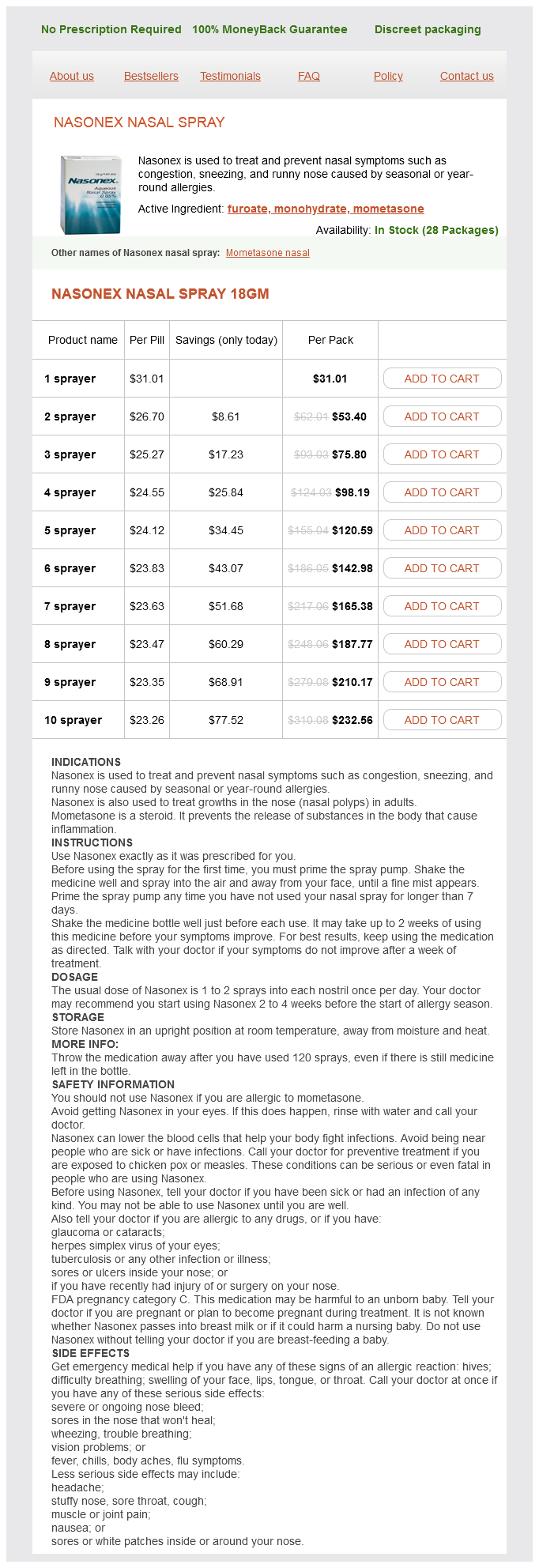
Nasonex nasal spray dosages: 18 gm
Nasonex nasal spray packs: 1 sprayer, 2 sprayer, 3 sprayer, 4 sprayer, 5 sprayer, 6 sprayer, 7 sprayer, 8 sprayer, 9 sprayer, 10 sprayer

Under normal circumstances, about half of calcium is loosely certain to serum proteins while the opposite half is free. Under usual circumstances, a traditional calcium concentration implies a standard free ionized calcium concentration. Ionized calcium must be obtained in sufferers with comorbid conditions that may lead to inconsistency between total calcium and free serum calcium (abnormal albumin, protein, or immunoglobulin concentrations). For continual asymptomatic hypocalcemia, oral calcium supplements are given at doses of 2 to four g/day of elemental calcium. Many sufferers with calcium deficiency have concurrent vitamin D deficiency that should even be corrected so as to restore calcium homeostasis. Causes of hypercalcemia embrace hyperparathyroidism, malignancy, Paget disease, Addison disease, granulomatous illnesses (eg, tuberculosis, sarcoidosis, or histoplasmosis), hyperthyroidism, immobilization, a quantity of bony fractures, acidosis, and milk-alkali syndrome. Multiple medicines cause hypercalcemia and embody thiazide diuretics, estrogens, lithium (available as generic), tamoxifen (Nolvadex, available as generic), vitamin A, vitamin D, and calcium supplements. All sufferers with hypercalcemia ought to be treated with aggressive rehydration: normal saline at 200 to 300 mL/hour is a routine preliminary fluid prescription. For sufferers with gentle hypercalcemia, hydration alone could present adequate therapy. The moderate and extreme forms of hypercalcemia usually have a tendency to have vital manifestations and require immediate initiation of further therapy. Calcium performs a important role in the transmission of nerve impulses, skeletal muscle contraction, myocardial contractions, upkeep of regular mobile permeability, and the formation of bones and tooth. There is a reciprocal relationship between the serum calcium concentration (normally eight. About one-half of the serum calcium is sure to plasma proteins; the opposite half is free ionized calcium. Clinical manifestations of hypocalcemia are seen with complete serum concentrations lower than 6. Chvostek signal is elicited by tapping on the proximal distribution of the facial nerve (adjacent to the ear). This will produce a brief spasm of the higher lip, eye, nostril, or face in hypocalcemic sufferers. Ionized calcium concentrations are usually used to assess calcium status in the critically ill patient. Causes of hypocalcemia include hypoparathyroidism, hypomagnesemia, alcoholism, hyperphosphatemia, blood product infusion (due to chelation by the citrate buffers), chronic renal failure, vitamin D deficiency, acute pancreatitis, alkalosis, and hypoalbuminemia. In the setting of hypocalcemia, magnesium concentration must be checked and corrected if low. Given that hypocalcemia may be caused by hypomagnesemia, clinicians should be conscious that the serum calcium concentrations might not normalize till serum magnesium is changed. Medications that trigger hypocalcemia embrace phosphate substitute products, loop diuretics, phenytoin (Dilantin, out there as generic), phenobarbital (available as generic), corticosteroids, aminoglycoside antibiotics, and acetazolamide (available as generic). Other treatment choices embody bisphosphonates (zoledronic acid [Zometa, Novartis], pamidronate [Aredia, obtainable as generic]), hydrocortisone (available as generic), calcitonin, and gallium. Given their efficacy and favorable side-effect profile, bisphosphonates are typically the agents of selection. Table 27�9 outlines the treatment options for hypercalcemia, together with time to onset of impact, duration of effect, and efficacy. Phosphorus is expressed in milligrams (mg) or millimoles (mmol), not as milliequivalents (mEq). Dietary consumption, parathyroid hormone levels, and renal operate are the main determinants of the serum phosphorus concentration, which is normally 2. Signs and symptoms of hypophosphatemia embody paresthesias, muscle weak spot, myalgias, bone ache, anorexia, nausea, vomiting, purple blood cell breakdown (hemolysis), acute respiratory failure, seizures, and coma. Diarrhea may be a doselimiting aspect impact with oral phosphate alternative products. Injectable phosphate products are reserved for sufferers with extreme hypophosphatemia or these within the intensive care unit. Dietary restriction of phosphate and protein is effective for most minor elevations.
Khat. Nasonex nasal spray.
Source: http://www.rxlist.com/script/main/art.asp?articlekey=96538
Drugs such as ketoconazole, itraconazole, erythromycin, clarithromycin, atazanavir, indinavir, nefazodone, nelfinavir, ritonavir, saquinavir, telithromycin, and voriconazole may lower the speed of metabolism of larotrectinib, leading to elevated drug ranges and probably elevated toxicity. The dose of drug should be lowered by 50% in sufferers with moderate or severe hepatic dysfunction. No dose adjustment is required for patients with gentle, moderate, or extreme renal dysfunction. Patients must be warned not to drive or operate hazardous machinery if experiencing neurotoxicity. Females of reproductive potential ought to use effective contraception throughout drug therapy and for at least 1 week after the ultimate dose. Chemotherapeutic and Biologic Drugs 307 L Neurotoxicity with dizziness, delirium, dysarthria, gait abnormalities, reminiscence impairment. Rapidly absorbed following oral administration, with peak plasma concentrations at 60�90 minutes post-ingestion. Lenalidomide is a thalidomide analog, a identified human teratogen that causes severe or life-threatening start defects. Breastfeeding whereas on remedy should be prevented, as it remains unknown if lenalidomide is excreted in breast milk. Use with caution in sufferers with impaired renal perform, as the danger of toxicity may be elevated. Oral absorption is comparatively quick, with peak plasma concentrations achieved inside 1 to four hours after ingestion. Should be held if grade three cardiac dysfunction occurs, till improved to grade 0 or 1 or baseline. Either resume at a decreased dose or discontinue relying on the severity and persistence of cardiac dysfunction. Monitor liver operate checks previous to initiation of remedy and every 2 weeks thereafter for the first 2 months, after which at least monthly during treatment. Should be held for the development of grade three or greater liver impairment until resolved to grade zero to 1 or baseline. Should be withheld for two g of proteinuria/24 hours and resumed at a lowered dose when proteinuria is < 2 g/24 hours. Parent drug and metabolites are excreted through the kidneys, with over 75%�90% cleared in urine. Second-line treatment of postmenopausal girls with advanced breast most cancers after development on antiestrogen remedy. These drugs might improve the rate of metabolism of letrozole, leading to its inactivation and decrease efficient drug ranges. The dose of warfarin might require cautious adjustment in the presence of letrozole therapy. Metabolism of leuprolide occurs mainly by way of hydrolysis of the C-terminal amino acids. Leuprolide is nearly completely eliminated in its parent kind in urine (> 90%), with an elimination half-life of 3�4 hours. Patients with impending ureteral obstruction and/or spinal twine compression or these with painful bone metastases are at particularly high risk. To forestall tumor flare, sufferers ought to be began on antiandrogen therapy at least 2 weeks earlier than beginning leuprolide. Serum testosterone ranges decrease to castrate ranges inside 2�4 weeks after initiation of therapy. May happen in up to 20% of patients, usually within the first 2 weeks of beginning remedy. May be prevented by pretreating with an antiandrogen agent such as flutamide, bicalutamide, or nilutamide. The elimination half-life of the drug is about seventy two hours, and excretion primarily occurs via the kidneys. Alcohol-Ingestion of alcohol ought to be averted for a minimum of 1 hour earlier than and after administration of lomustine. Platelet and leukocyte counts should return to regular before beginning the subsequent course of therapy.

Important to get hold of baseline CrCl and to monitor renal function earlier than each cycle of therapy. Dietary folate standing of patient is a crucial consider figuring out danger for scientific toxicity. Evaluation of serum homocysteine and folate ranges at baseline and through remedy may be helpful. A baseline serum homocysteine level > 10 is an efficient predictor for the development of grade 3/4 toxicities. Folic acid supplementation should begin 7 days prior to initiation of pemetrexed remedy, and the primary vitamin B12 injection ought to be administered at least 1 week previous to the start of pemetrexed. No proof has been discovered to recommend that vitamin supplementation reduces scientific efficacy. Prophylactic use of steroids could ameliorate and/or utterly remove the development of skin rash. These agents might inhibit the renal clearance of pemetrexed, resulting in enhanced toxicity. Dose-limiting, dose-related toxicity, with neutropenia and thrombocytopenia being mostly observed. The terminal half-life is roughly 18 days using an every-3-week infusion schedule. Should administer 3�6 cycles before surgery after which give up to a complete of 1 12 months (up to 18 cycles) of pertuzumab, trastuzumab, and chemotherapy following surgical resection. No drug�drug interactions have been noticed between pertuzumab and trastuzumab or between pertuzumab and docetaxel. Caution must be exercised in treating patients with preexisting cardiac illness corresponding to congestive heart failure, ischemic coronary heart illness, myocardial infarction, valvular coronary heart disease, or arrhythmias. The being pregnant status of a feminine affected person should be verified previous to the start of pertuzumab therapy. Infusion-related signs with fever, chills, urticaria, flushing, fatigue, headache, hypersensitivity, and myalgia. Distributed in male semen at concentrations of approximately 67% of plasma levels after 4 days of remedy. Women of reproductive age will must have two adverse pregnancy exams before starting remedy: one should be 10 to 14 days earlier than therapy is begun, and the second should be 24 hours before therapy. Men taking pomalidomide should use latex condoms for each sexual encounter with a girl of childbearing potential, as the drug could additionally be current in semen. Although no formal renal dysfunction studies have been carried out, pomalidomide must be averted in sufferers with a serum creatinine > 3 mg/dL. Neuropathy observed in practically 20% of patients, with approximately 10% in the form of peripheral neuropathy. Absorbed following oral administration at various ranges of bioavailability based mostly on pH ranges, with higher gastric pH levels resulting in decrease oral bioavailability. Approximately 87% and 5% of an administered dose is eliminated in feces and urine, respectively. Proton pump inhibitors and H2-blockers could scale back the plasma drug concentrations of ponatinib by lowering oral bioavailability. Patients should be intently monitored for an increased threat of arterial thromboembolic events, similar to cardiovascular, cerebrovascular, and peripheral vascular thrombosis, together with fatal myocardial infarction and stroke. Closely monitor hepatic function prior to and at least month-to-month thereafter, as hepatotoxicity, liver failure, and demise have been reported in sufferers treated with ponatinib. Severe bleeding can occur, and warning should be taken in patients with thrombocytopenia or in these on anticoagulation. Ponatinib remedy must be interrupted in patients undergoing main surgical procedures. Ponatinib remedy can lead to the development of gastrointestinal perforation and fistula formation. Monitor sufferers for fluid retention that can manifest as peripheral edema, pericardial effusion, pleural effusion, pulmonary edema, or ascites.

Gemcitabine 1 Oxaliplatin Gemcitabine: Oxaliplatin: Repeat cycle every 14 days [15]. Capecitabine 1 Cisplatin Capecitabine: Cisplatin: Repeat cycle every 21 days [17]. Capecitabine 1 Oxaliplatin Capecitabine: Oxaliplatin: Repeat cycle each 21 days [18]. Common Chemotherapy Regimens in Clinical Practice 519 Paclitaxel 1 Carboplatin Paclitaxel: Carboplatin: Repeat cycle each 21 days [33]. Irinotecan 1 Bevacizumab Irinotecan: Bevacizumab: Repeat cycle each 2 weeks for 6 cycles [49]. Temozolomide 1 Bevacizumab Temozolomide: Bevacizumab: Repeat cycle each 28 days [50]. Carboplatin 1 Irinotecan 1 Bevacizumab Carboplatin: Irinotecan: Bevacizumab: Repeat cycle every 28 days [51]. Common Chemotherapy Regimens in Clinical Practice 527 Pertuzumab 1 Trastuzumab 1 Docetaxel Docetaxel: Trastuzumab: Pertuzumab: Repeat cycle each 21 days [78]. Gemcitabine 1 Paclitaxel Gemcitabine: Paclitaxel: Repeat cycle each 21 days [96]. Carboplatin 1 Paclitaxel Carboplatin: Paclitaxel: Repeat cycle every 21 days [97]. Trastuzumab 1 Paclitaxel Trastuzumab: Paclitaxel: Repeat cycle each 21 days [100]. Gemcitabine 1 Carboplatin 1 Trastuzumab Gemcitabine: Carboplatin: Trastuzumab: Repeat cycle every 2 weeks [104]. Trastuzumab 1 Gemcitabine Trastuzumab: Gemcitabine: Repeat cycle every 21 days [106]. Trastuzumab 1 Capecitabine Trastuzumab: Capecitabine: Repeat cycle every 21 days [107]. Trastuzumab 1 Lapatinib Trastuzumab: Lapatinib: Continue till illness progression [109]. Everolimus 1 Exemestane [86] Everolimus: Exemestane: Palbociclib 1 Letrozole Palbociclib: Letrozole: Repeat cycle each 21 days [111]. Abemaciclib 1 Anastrozole Abemaciclib: Anastrozole: Repeat cycle each 28 days [115]. Single-Agent Regimens Tamoxifen Tamoxifen: Toremifene Toremifene: Exemestane Exemestane: Anastrozole Anastrozole: Letrozole Letrozole: Fulvestrant Fulvestrant: Repeat injection each month [121]. In the absence of disease progression, proceed weekly upkeep dose of 2 mg/kg [124]. Gemcitabine 1 Cisplatin 1 Paclitaxel Gemcitabine: Cisplatin: Paclitaxel: Repeat cycle every 21 days [146]. Gemcitabine 1 Irinotecan Gemcitabine: Irinotecan: Repeat cycle every 21 days [147]. Capecitabine 1 Oxaliplatin Capecitabine: Oxaliplatin: Repeat cycle every 21 days [148]. Bevacizumab 1 Erlotinib Bevacizumab: Erlotinib: Continue till illness progression [149]. Doxorubicin 1 Streptozocin Doxorubicin: Streptozocin: Repeat cycle every 6 weeks [150]. Capecitabine 1 Temozolomide Capecitabine: Temozolomide: Repeat cycle every 28 days [153]. Single-Agent Regimens Octreotide Octreotide: Continue till illness progression [154]. Cisplatin 1 Paclitaxel 1 Bevacizumab Cisplatin: Paclitaxel: Bevacizumab: Repeat cycle every 21 days [162]. Cisplatin 1 5-Fluorouracil Cisplatin: 5-Fluorouracil: Repeat cycle each 21 days [165]. Cisplatin 1 Gemcitabine Cisplatin: Gemcitabine: or Cisplatin: Gemcitabine: Repeat cycle every 28 days [169]. Cetuximab 1 Bevacizumab 1 Irinotecan Cetuximab: Bevacizumab: Irinotecan: Repeat cycle every 2 weeks [215]. Irinotecan 1 Cetuximab Irinotecan: Cetuximab: Repeat cycle each 6 weeks [216, 217]. Doxorubicin 1 Paclitaxel Doxorubicin: Paclitaxel: Repeat cycle every 21 days [247].

There had been 648 livers that had been donated and procured for transplantation however have been unable to be transplanted. Among pediatric sufferers, 64% obtain an entire liver graft, whereas 36% obtain a partial liver graft. Eleven % of pediatric recipients receive a dwelling donor graft, and these living donor grafts have better longterm survival. Five-year survival is 73%, 75%, and 77% for sufferers age younger than 1 yr, 1 to 5 years, and 5 to 17 years respectively (Table 37. Indications in Adults Noncholestatic Liver Disease Hepatitis C the main indication for liver transplantation in the United States is hepatitis C�related cirrhosis (Box 37. Since the introduction of directacting antiviral therapy, more than 250,000 individuals have undergone treatment for this disease in the United States. The virus is instantly cleared in a big share of patients, taking an oral treatment solely, with few side effects. Aggressive screening measures are being implemented among the atrisk inhabitants to establish contaminated individuals, and to start remedy earlier than they develop continual liver disease. Data assessing the impression of hepatitis C mixed with different disease processes injurious to the liver are incomplete and extrapolation concerning long-term disease development has not been defined. Thus, treatment may end in delay, or complete avoidance, of liver transplantation. Hepatitis B and Hepatitis A Hepatitis B is the most common reason for liver cirrhosis worldwide and impacts an estimated 400 million individuals. Acute hepatitis B infection can lead to acute liver failure in 1% to 4% of contaminated patients, however these patients can achieve affordable survival outcomes with transplantation and appropriate follow-up remedy. Approximately 5% of the whole population drank closely, whereas 15% of the inhabitants binge drank. This abstinence interval typically includes a required period of intensive outpatient addiction-related therapy in addition to random alcohol and drug screening. Posttransplant alcohol recidivism is a serious concern as alcohol intake posttransplant could be significantly toxic to the transplant liver and may result in fast hepatic decompensation and demise depending on complete consumption. Alcohol recidivism varies extensively posttransplant, but most facilities quote a 10% to 20% rate inside 5 years. Many of these sufferers have extra addiction issues and require ongoing support and therapy related to the use of each legal and illegal addictive substances. The prevalence is highest in younger females (70%) and the illness usually responds to immunosuppressive therapy. As such, the analysis is certainly one of exclusion by which different illnesses have been ruled out and the patient suits with a set of medical, histologic, and laboratory parameters. These patients usually do nicely with the transplant process as a result of they have a tendency to be young and in any other case properly compensated. Disease recurrence and liver allograft failure is widespread, however, as the hyperactive immune system leads to high rates of acute and chronic allograft rejection and difficulty in modulating immunosuppression. The disease tends to affect middle-aged females, is assumed to be immune-mediated, and impacts 0. No current research provide proof, however, that out there medical therapy in the end precludes the necessity for transplantation or prolongs transplant-free 609 Practical Hepatic Pathology: A Diagnostic Approach survival. A significant number of these sufferers, subsequently, do progress to transplantation which prolongs their survival when compared with the natural history of the illness. This duct was felt to be at risk for stricture that might compromise the transplant liver. Recurrence frequently occurred inside 2 years of transplantation and was localized to the transplant liver. During that time, outcomes for liver transplantation continued to improve, leading to an growing demand for the process. As different therapy for these sufferers, several modalities had been studied and confirmed promise in reducing tumor measurement and slowing tumor development. Use of broader standards for acceptable tumor characteristics at these centers might result in acceptable posttransplant survival. Unfortunately, many affected individuals progress to large, nonreversible end-organ Clinical Aspects of Liver Transplantation damage requiring liver transplantation. The major cause of death in these critically unwell sufferers is brain herniation associated to severe cerebral edema and multiorgan failure related to extreme acidosis.

The pharmacodynamic characteristics of loop diuretics are similar when equivalent doses are administered. Substances that interfere with the secretion of loop diuretics, similar to endogenous organic acids that accumulate in kidney disease, competitively inhibit secretion of loop diuretics into the lumen of the tubules. Therefore, massive doses of loop diuretics are sometimes needed in kidney illness to ensure that enough drug reaches the nephron lumen. Several adaptive mechanisms by the kidney limit effectiveness of loop diuretic therapy. As the concentration of diuretic in the loop of Henle decreases, postdiuretic sodium retention can happen. This impact can be minimized by reducing the dosage interval (ie, dosing more frequently) or by administering a continuous infusion. Hypertrophy of distal convoluted tubule cells can occur secondary to enhanced delivery of sodium to the distal tubule. Addition of a distal convoluted tubule diuretic, such as metolazone or hydrochlorothiazide, to a loop diuretic may end up in a synergistic enhance in urine output. Reasonable starting doses for bumetanide and torsemide are 1 and 20 mg, respectively. Other strategies to improve diuresis may be initiated sequentially, corresponding to (a) shortening the dosage interval, (b) including hydrochlorothiazide or metolazone, and (c) switching to a continuous infusion loop diuretic. A loading dose ought to be administered previous to both initiating a continuous infusion and increasing the infusion price. When high doses of loop diuretics are administered or with a steady infusion, notably in combination with distal convoluted tubule diuretics, the hemodynamic and fluid standing of the affected person ought to be monitored each shift, and the electrolyte standing of the patient ought to be monitored a minimal of daily to prevent profound diuresis and electrolyte abnormalities, similar to hypokalemia. She has been taking all of her medications for years, excluding naproxen. She additionally checks it within the afternoons and it runs low 4 to five instances per week (in the vary of 60�70 mg/ dL [3. She often takes acetaminophen (once a week) for back pain however stopped as soon as she started taking naproxen. She lately started taking naproxen 3 or 4 weeks in the past as a outcome of her neighbor told her it was higher for pain. Other Agents Thiazide diuretics, when used as single agents, are usually not efficient for fluid removing. In sufferers with renal dysfunction, mannitol excretion is decreased, resulting in expanded blood quantity and hyperosmolality. No information conclusively assist its use, and the risk of hypotension further limits routine administration. Dialysis includes the perfusion of blood and a physiologic dialysis answer via a semipermeable membrane. Substances diffuse across the membrane, from a high concentration in the blood to a low concentration in the dialysis resolution. Waste products corresponding to urea and creatinine, electrolytes similar to potassium and magnesium, and some drugs are eliminated by diffusion. Hydrostatic stress differences end in convection and ultrafiltration and removal of water and a few larger molecular weight substances from the body. For instance, critical gram-negative infections might require double antibiotic protection and aminoglycoside protection may be essential primarily based on tradition and sensitivity reports. In conditions corresponding to this, monitoring of aminoglycoside drug concentrations is warranted. Methods to reduce drug publicity with conventional dosing (multiple doses per day) embrace sustaining trough concentrations less than 2 mcg/mL (2 mg/L; four. The goal of extended-interval dosing is to provide higher efficacy in opposition to the microorganism with a lower incidence of nephrotoxicity. Aminoglycosides reveal concentration-dependent killing and a prolonged postantibiotic impact. Once saturated, the remaining aminoglycoside molecules move by way of the proximal tubule and are excreted in the urine.
Syndromes
Lifestyle modifications can limit disease complications and gradual further liver injury. The only confirmed treatment for alcoholic liver illness is immediate cessation of alcohol use. Patients with cirrhosis from causes apart from alcohol additionally profit from avoiding alcohol consumption. Regardless of the etiology, all cirrhotic patients ought to abstain from alcohol to forestall further liver injury. Intake ought to be limited to less than 800 mg sodium (2 g sodium chloride) per day. More stringent restriction could trigger faster mobilization of ascitic fluid, however adherence to such strict limits may be very troublesome. Ascites usually responds properly to sodium restriction accompanied by diuretic therapy. Hepatically metabolized medications could accumulate in patients with liver illness. Little steering is available on drug dosing in hepatic impairment because these sufferers have traditionally been excluded from drug trials. Aspiration pneumonia is a serious cause of dying in patients with variceal bleeding. Endoscopic band ligation (application of a stricture around the varix) is used to stop acutely bleeding varices. Band ligation is the popular endoscopic therapy and is efficient in stopping acute variceal bleeding in up to 90% of patients. Cirrhotic sufferers are already in a nutritionally poor state, and prolonged protein restriction will exacerbate the issue. Shunts divert blood circulate through or around the diseased liver, depending on the situation and kind of shunt employed. What signs and signs does this patient have which are in maintaining with cirrhosis Portal Hypertension Nonselective -blockers corresponding to propranolol and nadolol are first-line therapies for portal hypertension. Only nonselective -blockers (those that block each 1 and a pair of receptors) reduce bleeding issues in sufferers with recognized varices. The combination of 1 and 2 blockade makes the nonselective -blockers preferable to cardioselective brokers (1 selective) in treating portal hypertension. Because -blockers decrease blood stress and coronary heart fee, they should be began at low doses to increase tolerability; cirrhotic sufferers often have already got low blood stress and coronary heart rate. Propranolol is hepatically metabolized, so preliminary drug focus, half-life, and pharmacologic effects are all elevated in portal hypertension. Doses ought to be titrated as tolerated with the goal of reducing coronary heart fee by 25% or to roughly 55 to 60 beats/min. Nitrates (eg, isosorbide mononitrate), alone and together with -blockers, reduced portal pressure in clinical trials; nevertheless, they increase mortality when used alone. Patients treated with mixture therapy have considerably extra opposed events compared to -blocker monotherapy. Unfortunately, -blockers either alone or in combination could also be intolerable for many sufferers with advanced cirrhosis. Treatment ought to modify underlying disease pathology; without directed remedy, fluid rapidly reaccumulates. Often eradicating simply 1 to 2 L of ascitic fluid offers relief from ache and fullness. Albumin has not be shown to be beneficial in hemodynamically secure patients if lower than 5 L of fluid is eliminated. Spironolactone (an aldosterone antagonist) with or without furosemide types the premise of pharmacologic remedy for ascites. In cirrhosis, not solely is aldosterone production elevated, but its half-life can additionally be prolonged because of decreased hepatic metabolism. Spironolactone additionally conserves potassium that may otherwise be excreted due to elevated aldosterone ranges.

A comparison of angiographic embolization with surgery after failed endoscopic hemostasis to bleeding peptic ulcers. Meta-analysis: Duration of first-line proton-pump inhibitor based triple therapy for Helicobacter pylori eradication. Effects of early oral feeding on relapse and signs of higher gastrointestinal bleeding in peptic ulcer illness. Risk of recurrent Helicobacter pylori an infection 1 yr after preliminary eradication therapy in 7 Latin American communities. Meta-analysis: Sequential remedy appears superior to commonplace therapy for Helicobacter pylori an infection in sufferers naive to therapy. World Gastroenterology Organisation Global Guideline: Helicobacter pylori in growing nations. Review article: Prevention of non-steroidal anti-inflammatory drug gastrointestinal complications-Review and suggestions based mostly on danger evaluation. Sequential and concomitant therapy with four medicine are equally effective for eradication of H. The relative efficacies of gastroprotective methods in persistent users of nonsteroidal anti-inflammatory medication. Management of patients on nonsteroidal anti-inflammatory medicine: A medical 305 practice suggestion from the primary international working party on gastrointestinal and cardiovascular results of nonsteroidal anti-inflammatory results and anti-platelet agents. Comparison of infusion or low-dose proton pump inhibitor treatments in higher gastrointestinal system bleeding. The age of initial presentation is bimodal, with patients usually identified between the ages of 20 to 40 or 60 to eighty years. Approximately 20% of sufferers have isolated colonic involvement, whereas inflammation proximal to the small intestine is nearly by no means seen without the presence of small or large intestinal illness. These ulcers may coalesce into larger linear ulcers, resulting in fissure formation as they enhance in depth, giving rise to the attribute "cobblestone" sample noticed upon examination of the mucosa. This propensity for transmural involvement may lead to severe problems corresponding to strictures, fistulae, abscesses, and perforation. Inflammation involving the complete colon is referred to as extensive illness or pancolitis. Left-sided (distal) illness, outlined as inflammation extending from the rectum to the splenic flexure, happens in 30% to 40% of sufferers. Ocular involvement with episcleritis, uveitis, or iritis may manifest as blurred imaginative and prescient, eye ache, and photophobia. Associated skin findings embody pyoderma gangrenosum (papules and vesicles that turn into painful ulcerations) and erythema nodosum (red nodules of various dimension sometimes found on the lower extremities). Patients with toxic megacolon sometimes manifest systemic signs of severe irritation corresponding to fever, tachycardia, and abdominal distention. Endoscopy is helpful for determining the illness distribution, sample and depth of irritation, and to get hold of mucosal biopsy specimens. Supplemental info from imaging procedures, similar to computed tomography, belly x-ray, abdominal ultrasound, or intestinal barium research might present proof of issues corresponding to obstruction, abscess, perforation, or colonic dilation. Moderate disease is classed as greater than 4 stools per day with evidence of systemic toxicity. She reviews two to four free stools per day 2 to 3 days per week with intermittent blood and stomach pain. Her medical supplier has decided this episode to be of delicate to reasonable severity. How would you establish what therapy choices are most appropriate for this patient Administration of vitamin B12, folic acid, fat-soluble vitamins, and iron could additionally be needed to stop or deal with deficiencies. In extreme cases, enteral or parenteral vitamin could also be wanted to obtain enough caloric intake.
Differential Diagnosis Differential diagnosis of ciliated hepatic foregut cysts consists of solitary bile duct cysts, mucinous cystic neoplasm, and echinococcal cysts. In addition, mucinous cystic neoplasms typically have a particular ovarian-type stroma, whereas daughter cysts and scoleces are distinctive findings in echinococcal cysts. Bile Duct Hamartoma these lesions are also called von Meyenburg complexes or biliary microhamartomas. They are often small (up to a number of millimeters in diameter), a number of, and positioned adjoining to a portal area. Clinical Manifestations these lesions are virtually all the time incidental findings discovered at belly surgery. They are a number of, firm, and white, appearing as metastatic seedlings on the surface of the liver and are thus sampled for intraoperative consultation, underlining the significance of intraoperative frozen part for liver lesions of unknown origin. In a Benign and Malignant Tumors of Bile Ducts sequence of just about 3000 consecutive autopsies, bile duct hamartomas were found in 5. In this sequence, macroscopic hepatic cysts had been found in 16% of livers that also had bile duct hamartomas; of livers with hepatic cysts, 73% additionally had bile duct hamartomas, suggesting an affiliation of bile duct hamartomas with polycystic liver. On gross examination, bile duct hamartomas are small, ranging from 2 to 5 mm in diameter. Microscopically, bile duct hamartomas are composed of a variable number of ductal structures embedded in a hyalinized stroma. The ductal lumens are lined by a flattened or cuboidal epithelium and are immunoreactive for K7, K8, K18, and K19, reflecting a lineage of biliary cell origin. The typical luminal dilatation with bile is a useful characteristic that distinguishes bile duct hamartomas from metastatic adenocarcinoma. In addition, the epithelial cells of bile duct hamartoma are typically bland and lack the malignant features seen in adenocarcinoma, including pleomorphism, hyperchromasia, and mitoses. Benign lesions that can be confused with bile duct hamartomas are peribiliary gland hamartomas (see later discussion). In a big sequence of 152 circumstances, roughly 80% of the instances have been solitary lesions. The name peribiliary gland hamartoma was instructed by Bhathal and colleagues because the epithelial cells of this lesion share the immunophenotypical profile of peribiliary glands. The acini and tubules of a so-called bile duct adenoma additionally encompass serous and mucous cells that categorical D10 and 1F6. Practical Hepatic Pathology: A Diagnostic Approach some gender-specific pathogenetic issue. Pain and an abdominal mass are the most common displays, whereas a couple of circumstances current with jaundice. Grossly, these cystic neoplasms are typically massive, ranging in size from a quantity of centimeters to more than 20 cm. Most present variable extent of inner septation, which correlates with the findings on imaging studies. Papillary excrescences or thickened areas might recommend malignancy, and extensive sampling of these lesions is warranted. Sometimes it may be purulent when the lesion is infected or tinged with blood when the cyst undergoes hemorrhage on account of malignant transformation or different causes. The epithelial cells resemble biliary epithelium with cytoplasmic mucin that may be highlighted by Alcian blue or mucicarmine stain. Differential Diagnosis Mucinous cystic neoplasm must be distinguished from other cystic lesions in the liver. They are immunoreactive for K7, K8, K18, and K19,9 and for D10 and 1F6, markers of peribiliary glands. The lack of bile and cystic changes and lack of affiliation with polycystic illness of the liver and kidney are helpful options to differentiate between peribiliary gland hamartoma and bile duct hamartoma. Overall, the lack of mitoses and pleomorphism, the smooth contours of the ductules and acini, and the presence of portal tracts throughout the lesion all favor peribiliary gland hamartoma. In some situations, severe cautery effects could make interpretation harder, and the fibrous stroma may seem similar in high quality to the desmoplastic stroma of the adenocarcinoma. During intraoperative consultation, the index of suspicion for metastatic adenocarcinoma certainly ought to be larger than peribiliary gland hamartoma when a laparotomy is performed for a Whipple procedure or colorectal most cancers surgery than when a laparotomy is performed for an appendectomy or cholecystectomy.
It helps sufferers to acknowledge and alter patterns of distorted pondering and dysfunctional habits. Selection of a specific antidepressant usually relies on history of prior response, side impact and drug interaction profile (see Chapter 38), value, or formulary availability. Bupropion, a dopamine and norepinephrine reuptake-inhibitor, lacks the common antidepressant side effects of weight achieve and sexual dysfunction. Bupropion has not been studied or used extensively in anxiousness problems owing to its stimulating results that may be anticipated to worsen anxiousness symptoms. Venlafaxine is effective at doses 75 to 225 mg/day and maintains response with extended remedy. Major benzodiazepine disadvantages are lack of effectiveness for despair; risk for dependency and abuse; and potential interdose rebound nervousness, particularly with short-acting benzodiazepines. They must be avoided in older adults and patients with current or past chemical dependency. All benzodiazepines are expected to provide equivalent benefit when given in comparable doses. Benzodiazepines are metabolized by hepatic oxidation (cytochrome P450 3A4) and glucuronide conjugation. Anterograde amnesia is more likely with high-potency benzodiazepines corresponding to alprazolam. Higher doses of benzodiazepines and an extended duration of remedy increase the severity of withdrawal and danger of seizures after abrupt or rapid discontinuation. Patients must be tapered rather than discontinued abruptly from benzodiazepine remedy to keep away from withdrawal signs. The duration of the taper ought to increase with extended period of benzodiazepine remedy. A common method to the taper is to cut back the dose by 25% every 5 to 7 days until reaching half the unique dose after which lowering by 10% to 12% per week until discontinued. Patients should count on minor withdrawal symptoms and discomfort even when tapering. Rebound symptoms (eg, return of original signs at increased intensity) are transient. Relapse or recurrence of tension might occur in as many as 50% of patients discontinuing benzodiazepine treatment. In a 4-week managed trial versus alprazolam and placebo, pregabalin was efficient for each somatic and psychic symptoms of hysteria with onset of effect just like that of alprazolam. Pregabalin is a schedule V managed substance owing to a propensity to cause euphoria, and it may trigger withdrawal signs if discontinued abruptly. It ought to be used cautiously in sufferers with a present or previous history of substance abuse. Hydroxyzine may be efficient for acute reduction of somatic symptoms of anxiety18 however not for psychic options of anxiety, depression, or other widespread comorbid anxiety problems. In three giant placebo managed trials, quetiapine in day by day doses of fifty to 300 mg resulted in 26% higher chance of remedy response (effect dimension, ~0. Outcome Evaluation Assess sufferers for enchancment of hysteria symptoms and return to baseline occupational, social, and interpersonal functioning. With initiation of drug therapy, evaluate patients frequently for tolerability and response. Monitor for suicidal ideation and behaviors for youngsters, adolescents, and younger adults (24 years of age or less) initiated on antidepressants. Individualize the length of treatment as some sufferers require up to 1 year of remedy. Onset in older adults raises suspicion of a relationship to medical disorders or substance use. A panic assault is an abrupt surge of intense worry or discomfort peaking inside minutes, and with 4 or extra of the next signs: � Palpitations or speedy coronary heart rate � Sweating � Trembling or shaking � Sensation of shortness of breath or smothering � Feeling of choking � Chest pain or discomfort � Nausea or belly distress � Feeling dizzy or lightheaded � Chills or hot flushes � Paresthesias � Derealization or depersonalization � Fear of dying � Fear of shedding control or "going crazy" At least one of many attacks has been adopted by 1 month or more of 1 or each: � Persistent concern or worry about extra assaults � Significant maladaptive change in conduct related to the assaults (eg, avoidance) Differential Diagnosis Rule out underlying medical or psychiatric disorders and medications that may trigger anxiousness (see Tables 40�1 and 40�2). General Approach to Treatment Treatment choices include treatment, psychotherapy, or a combination of both. Patients with panic symptoms without agoraphobia might respond to pharmacotherapy alone.
Ballock, 35 years: Active moiety is paclitaxel, which isolated from the bark of the Pacific yew tree, Taxus brevifolia. An understanding of these new mechanisms of pain transmission may lead to enchancment in pain administration as pharmacologic administration of ache turns into extra mechanism particular. Patients with anxiousness issues spend a good portion of time "being sick" during a selected episode, ranging from 41% to 80% of the time.
Killian, 60 years: The dose of warfarin may require careful adjustment in the presence of romidepsin therapy. Soon the demand for donor organs outstripped the necessity, and dwelling donor liver transplantation started to grow. Although theoretically of benefit, there has been no confirmed proof of superior outcomes from use of -blockers with these vasodilatory properties.
References

Desarrolló: Grupo Guadalupe S.R.L.