
Paul Sorajja, MD
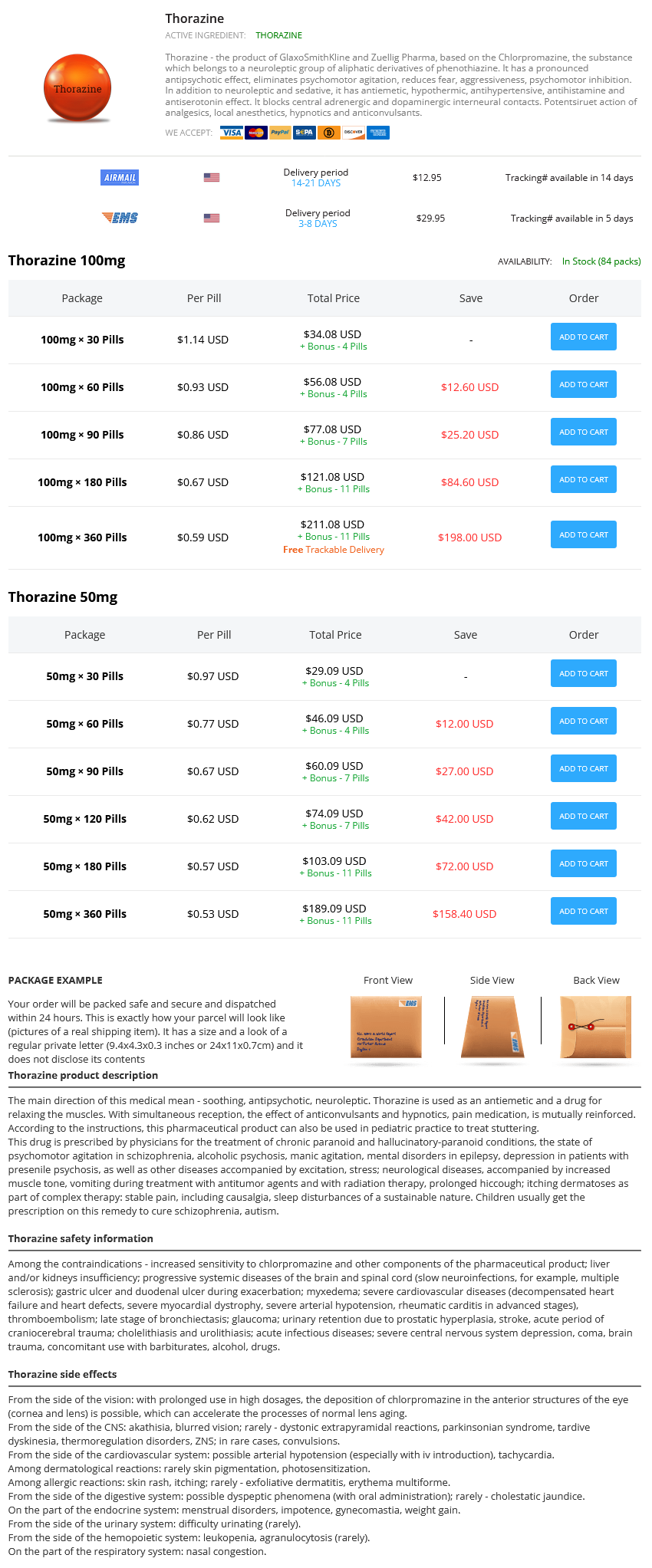
Thorazine dosages: 100 mg, 50 mg
Thorazine packs: 30 pills, 60 pills, 90 pills, 180 pills, 360 pills, 120 pills

Quantitation of human immunodeficiency virus kind 1 in the blood of contaminated persons. Cellular pharmacology of 2,3-dideoxy-2,3didehydrothymidine, a nucleoside analog active in opposition to human immunodeficiency virus. Use of zidovudine and interferon alfa with chemotherapy improves survival in each acute and lymphoma subtypes of adult T-cell leukemia/lymphoma. An in vivo mutation from leucine to tryptophan at position 210 in human immunodeficiency virus sort 1 reverse transcriptase contributes to high-level resistance to 3-azido-3-deoxythymidine. Prior antiretroviral remedy expertise protects against zidovudine-related anaemia. The mode of supply and the risk of vertical transmission of human immunodeficiency virus sort 1. Clinical efficacy of high-dose acyclovir in patients with human immunodeficiency virus infection: a meta-analysis of randomized particular person patient information. Occupational human immunodeficiency virus an infection in health care employees: worldwide cases through September 1997. Zidovudine antagonizes the action of pyrimethamine in experimental infection with Toxoplasma gondii. Multidrug-resistant human immunodeficiency virus type 1 strains ensuing from mixture antiretroviral remedy. Interferon-alpha and zidovudine combination remedy for chronic hepatitis B: results of a randomized, placebo-controlled trial. Azidothymidine therapy of hepatocellular carcinoma in rats: an in vivo examine of telomerase inhibition. Two-drug combinations of zidovudine, didanosine, and recombinant interferon-alpha A inhibit 7. Clinical uses of the drug 3689 replication of zidovudine-resistant human immunodeficiency virus sort 1 synergistically in vitro. Antipsoriatic results of zidovudine in human immunodeficiency virus-associated psoriasis. Safety and efficacy of lamivudinezidovudine mixture therapy in antiretroviral-naive sufferers. Plasma viremia in human immunodeficiency virus an infection: Relationship to stage of illness and antiviral remedy. The combination of arsenic, interferon-alpha, and zidovudine restores an "immunocompetent-like" cytokine expression profile in sufferers with grownup T-cell leukemia lymphoma. Fifth mutation in human immunodeficiency virus sort 1 reverse transcriptase contributes to the development of high-level resistance to zidovudine. Zidovudine therapy leads to the selection of human immunodeficiency virus sort 1 variants whose genotypes confer growing ranges of drug resistance. A managed trial of zidovudine in major human immunodeficiency virus an infection. Synergistic inhibition of human immunodeficiency virus sort 1 replication in vitro by two-drug and three-drug combinations of 3-azido-3-deoxythymidine, phosphonoformate, and a pair of,3-dideoxythymidine. Comparisons of anti-human immunodeficiency virus activities, mobile transport, and plasma and intracellular pharmacokinetics of 3-fluoro-3-deoxythymidine and 3-azido3-deoxythymidine. Treatment of persistent woodchuck hepatitis virus infection in the eastern woodchuck (Marmota monax) with nucleoside analogues is predictive of therapy for continual hepatitis B virus an infection in humans. Inhibition of human immunodeficiency virus in vitro by mixtures of 3-azido-3-deoxythymidine and foscarnet. Mutagenic study of codons seventy four and 215 of the human immunodeficiency virus kind 1 reverse transcriptase, that are vital in nucleoside analog resistance. Interactions between drug resistance mutations in human immunodeficiency virus type 1 reverse transcriptase. Zidovudine-resistant human immunodeficiency virus selected by passage in cell tradition. Evaluation of the quality of life associated with zidovudine remedy in asymptomatic human immunodeficiency virus infection.
Syndromes

Tipranavir dose was 500 mg twice every day and the twice-daily dose of ritonavir (100 or 200 mg) is shown in the table. At the 48-week end level, there were no significant differences among the many three teams by method of virologic response (see Table 247. Further, there was no proof of lowered responses to boosted tipranavir in patients infected with non-clade B virus, which was stunning given that some non-B clades appeared to have a high background level of tipranavir-associated resistance mutations. Virologic failure charges have been related across all three remedy groups, and none of the subjects analyzed had evidence of genotypic resistance to tipranavir. However, therapy failures due to adverse event-related discontinuations have been significantly greater in the two tipranavir groups (100 and 200 mg ritonavir), 7. These differences have been largely as a outcome of more tipranavir-treated patients discontinuing treatment as a result of gastrointestinal adverse events (7 and 8 patients, respectively, in the 100 and 200 mg ritonavir groups) compared to the lopinavir-treated patients (1 subject), and to elevations in liver transaminases (5 and 14 tipranavir-treated topics in comparison with 2 topics handled with lopinavir). Based on the upper frequency of liver transaminase elevations in the subjects given tipranavir boosted with 200 mg of ritonavir, the external Data Safety Monitoring Board for this study beneficial closure of this treatment group after the 48-week evaluation had been accomplished. In this research, sufferers have been randomized to obtain two completely different doses of tipranavir�ritonavir: high dose (375/150 mg/m3) or low dose (290/115 mg/m3). Both regimens had been mixed with an optimized, nonprotease inhibitor, background regimen. The a hundred and fifteen antiretroviral-naive and -experienced pediatric sufferers enrolled within the study had been stratified by age group. Approximately half of the youngsters had virus resistant to all protease inhibitors examined primarily based on genotype testing, > 80% had resistance to several nucleoside reverse transcriptase inhibitors, and 70% had virus immune to nonnucleoside reverse transcriptase inhibitors. This could have been because the youthful patients had less antiretroviral expertise (a median of three medicine in contrast with 8 and 10 drugs, respectively, in older subjects) and fewer viral resistance as measured by genotypic sensitivity rating, median variety of protease gene mutations (10 compared with thirteen and 17), and higher median tipranavir mutation scores (1. There was a trend towards better virologic response in the high-dose group in comparability with the low-dose group across all age groups (Salazar et al. The study was extended up to 292 weeks to evaluate the long-term safety, efficacy, and tolerability of tipranavir� ritonavir. Among adolescents (12�18 years), 35/53 (66%) have been receiving drug at week forty eight and 2/53 (4%) at week 288. Among sufferers 2 to < 6 years, 18/25 (72%) had viral masses < four hundred copies/ml at week 48. Among older patients, week 48 responder rates had been 35% (13/37 of sufferers 6 to < 12 years) and 32% (17/53 of patients 12�18 years). By week 292, 6/37 (16%) of these 6 to < 12 years and 2/53 (4%) of these 12�18 years had viral hundreds < 400 copies/ml. Overall security and tolerability profiles had been best for youngsters who initiated treatment between 2 and < 6 years (Salazar et al. Further, the drug has several uncommon opposed reactions that deserve the attention of healthcare suppliers, together with a propensity to trigger intracranial hemorrhage and extreme and even deadly hepatitis. Increased threat of bleeding with the use of tipranavir boosted with ritonavir in haemophilic patients. Paper offered at the 5th Conference on Retrovirusues and Opportunistic Infections, Chicago. Genotypic changes in human immunodeficiency virus type 1 protease related to lowered susceptibility and virologic response to the protease inhibitor tipranavir. Analysis of protease inhibitor mixtures in vitro: activity of lopinavir, amprenavir and tipranavir 7d. Effects of boosted tipranavir and lopinavir on body composition, insulin sensitivity and adipocytokines in antiretroviral-naive adults. Steady-state disposition of the nonpeptidic protease inhibitor tipranavir when coadministered with ritonavir. The pharmacokinetics of single-dose and steady-state tipranavir/ritonavir 500 mg/200 mg in topics with delicate or moderate hepatic impairment. Paper introduced on the twelfth Conference on Retroviruses and Opportunistic Infections, Boston. An investigation into the influence of the tipranavir-associated V82L/T mutations on the susceptibility to darunavir and brecanavir. Poster presented at the 14th Conference on Retroviruses and Opportunistic Infections, Los Angeles. Effect of tipranavir/ritonavir mixture on the pharmacokinetics of tadalafil in wholesome volunteers.
The bioavailability of metrifonate is unaffected by taking the drug with or without meals (Heinig and Sachse, 1999). Newborn infants and children There are few knowledge obtainable regarding using metrifonate in children and infants. After 21 days of therapy, mean share erythrocyte ChE inhibition was 14% for the placebo group, and ranged in a dose-dependent trend from 35% to 82% for the 4 therapy teams (Pettigrew et al. Clinically essential pharmacokinetic and pharmacodynamic options There are minimal data linking the medical efficacy of metrifonate to its pharmacokinetic and pharmacodynamic parameters. The similar paper reported that 33 mg/kg triggered similar signs that resolved over 3 hours with 1 mg of intramuscular atropine. A dose of 15 mg/kg produced intestinal colic in three of six male volunteers (Forsyth and Rashid, 1967), which settled inside 24 hours. Some cholinergic side effects have been noticed in schistosomiasis patients given 5 mg/kg every day for 12 days (Hanna et al. This is probably explained by differences in lipid solubility between the two compounds. The acute toxic results of excessive doses in mammals result in scientific findings typical of cholinergic drug results. Maximum inhibition of brain ChE after intraperoneal administration of metrifonate to rats occurred within 15 minutes (Nordgren et al. The fee of restoration is dose dependent, with 100% of brain ChE recovery 1 hour after 25 mg/kg in contrast with 75% 5 hours after a hundred twenty five mg/kg (Nordgren et al. Subacute and chronic organ toxicity has been reported in livestock after use of the industrial insecticide preparation, trichlorfon (Holmstedt et al. These preliminary reports describe cardiac and liver necrosis, interstitial nephritis, and hemorrhagic infarction of the adrenal glands. When given to rats (by mouth, intramuscular, or intraperoneal) at doses of 15�30 mg/kg two to three times per week for the lifespan of the animals, an extra of malignant tumors (mostly sarcomas of the liver and spleen) was noticed, compared with controls given saline injections (Holmstedt et al. Disruption of the phosphonate bond is the main catabolic pathway of metrifonate, with 65% of administered drug recovered as a trichloroethylglucuronide conjugate from the urine (Holmstedt et al. The major pathway of metrifonate catabolism observed in the rat additionally occurs in pigs, mice, hamsters, and people (Holmstedt et al. Drug interactions There are few data out there regarding co-administration of metrifonate with different brokers. Extensive monitoring in early scientific trials demonstrated an expected fall in plasma and erythrocyte ChE, however no other biochemical, hematologic, or cardiovascular issues. The decreased ChE exercise could be reversed with pralidoxime, and cholinergic signs were relieved with atropine (Holmstedt et al. Human instances of neurotoxicity, predominantly presenting as a late peripheral neuropathy, were reported in overdose suicide attempts in the Former Soviet Union (Johnson, 1981). The largest reported single oral dose administered was 72 mg/kg (Talaat, 1964a; Holmstedt et al. Mutagenicity and embryotoxicity Embryotoxicity and teratogenicity has been evaluated in laboratory animals with combined outcomes. It is associated with embryotoxicity in rats and hamsters after administration on days 7�11 of gestation at 400 mg/kg/day by gavage feeding (Staples and Goulding, 1979). Mice, nevertheless, appeared relatively immune to the embryotoxic effects, however a big increase within the incidence of cleft palates was noticed from publicity on days 10�14. More recent work suggests that the 3402 Oxamniquine and Metrifonate mouse preimplantation and pregestation embryos are in a position to recuperate from metrifonate toxicity (Tian et al. However, guinea pig pups and piglets reveal cerebellar hypoplasia following in utero exposure to Dipterex (Knox et al. Risks in being pregnant and lactation There is a paucity of knowledge regarding the protection of metrifonate in pregnancy (Monson and Alexander, 1984). There is one revealed case report of a Liberian toddler born with hydrocephalus and meningomyelocele after the mother was handled with 450 mg of metrifonate at week 5 after which again at week eight of pregnancy (Monson and Alexander, 1984). Another report paperwork a cluster of eleven (of 15) reside births from a Hungarian village in 1989�1990 with various congenital abnormalities together with Down syndrome (Czeizel et al.

Compared with 13% in the placebo group, 56�67% of people in the raltegravir groups achieved a viral load < 50 copies/ml (p < zero. Approximately 90% of those treated with enfuvirtide and naive at study entry achieved a viral load < 400 copies/ml at week 24. These results reveal the potential for raltegravir to considerably impression the remedy of heavy antiretroviral- experienced patients when combined with active brokers within the optimized background regimen. Considerations of variability in raltegravir levels between and within individuals, in addition to the potential for drug interactions with concomitant antiviral brokers, led to the selection of the 400-mg twice-daily dose of raltegravir for these studies. Enfuvirtide was included for the first time as part of optimized background regimen in 19�21% of subjects. Similar tendencies were famous in subgroups defined by baseline phenotypic sensitivity score. In those for whom neither enfuvirtide nor darunavir was used in the optimized background routine, only 60% (115/191) of the raltegravir arm achieved viral suppression versus 20% (18/90) in the placebo group (Cooper et al. Not surprising, these results strongly support the utilization of raltegravir in combination with energetic antiretroviral medication in the optimized background regimen within the successful administration of sufferers with heavy antiretroviral treatment experience. Clinical uses of the drug 4233 antiretroviral responses within the raltegravir plus optimized background therapy arm in comparison with optimized background therapy alone (Steigbigel et al. At this time level, virological failure had occurred in 36% (166/462) of raltegravir recipients. At the shut of the double-blind section of the examine 54% (251/462) of those initially assigned to the raltegravir group and 20% (47/237) from the placebo group entered the open-label part of the examine. The resulting 240-week efficacy and tolerability data symbolize the longest reported followup for people receiving raltegravir-containing regimens to date. As famous at earlier time points, nausea, headache and diarrhea had been essentially the most generally reported antagonistic events at the shut of 5 years (Eron et al. The most typical reasons for discontinuation within the elvitegravir arm have been nonadherence (10/33) and withdrawal of consent (9/33). In the raltegravir arm, loss to followup (6/29) was the most common, with lack of efficacy, nonadherence, and consent withdrawal every accounting for 5 cases. The incidence of opposed occasions and laboratory abnormalities have been typically similar in elvitegravir and raltegravir therapy groups (Elion et al. Studydrug-attributable severe antagonistic occasions have been noted in 3 and seven subjects in the elvitegravir and raltegravir groups, respectively. A statistically vital increased incidence of diarrhea was noted in those receiving elvitegravir (p = 0. The examine remained blinded via week 96, at which time elvitegravir remained statistically noninferior to raltegravir, with 47. Protocol-defined virologic failure occurred in 6% (21/354) and 12% (45/361) of these in the dolutegravir and raltegravir groups, respectively. In a prespecified secondary examine finish level, significantly fewer patients in the dolutegravir group developed virologic failure in live performance with treatment-emergent integrase-inhibitor resistance than within the raltegravir group (1% vs. Analysis of the four topics with treatment-emergent resistance on dolutegravir revealed one affected person with a raltegravir primary resistance mutation at baseline (Q148H/G140S), two patients who chosen for a singular substitution in integrase (R263R or R263R/K) and one who developed a polymorphism at V151 (V151V/I). None of the therapy emergent modifications resulted in phenotypic resistance to dolutegravir or raltegravir. In distinction, in the 16 topics with treatment-emergent resistance on raltegravir for whom genotype/phenotype data had been available, genotypic resistance was related to high fold-change to raltegravir however limited cross-resistance to dolutegravir. In both teams, diarrhea was the commonest adverse occasion, reported in 20% of dolutegravir and 18% of raltegravir recipients. Upper respiratory tract an infection and headache had been noted in in each teams at charges ranging from 8% to 11%. Adverse events leading to examine discontinuation were unusual (3�4% in each groups) (Cahn et al. At 96 weeks, the raltegravir routine continued to meet noninferiority efficacy criteria, as eighty. In subjects from the raltegravir arm for whom viral sequences might be genotyped, emergent nucleotide reverse transcriptase inhibitor resistance mutations were noted in 3.

In this small study, amprenavir and atazanavir Cmin exceeded the minimal acceptable Cmin, defined as 0. Tipranavir 500 mg plus ritonavir one hundred mg twice triggered an approximately 50% reduction in amprenavir plasma concentrations when it was co-administered with ritonavir a hundred mg and amprenavir 600 mg twice daily (Walmsley et al. The plasma amprenavir exposure elevated approximately 35% compared with historic controls. The safety profile of the mix of rifabutin and fosamprenavir�ritonavir was similar to previously described events with rifabutin or fosamprenavir� ritonavir alone (Ford et al. Co-administration of ketoconazole 200 mg daily with fosamprenavir�ritonavir 700/100 mg twice daily resulted in a 2. This interaction suggests that co-administration of paroxetine with ritonavir-boosted fosamprenavir would improve serum concentrations of paroxetine, however a clinical pharmacokinetic research demonstrated a 55% discount in paroxetine plasma publicity when paroxetine at the standard dose of 20 mg every day was administered concurrently with fosamprenavir�ritonavir 700/100 mg twice daily. Protein displacement of paroxetine, as a result of paroxetine, fosamprenavir, and ritonavir are, respectively, 95%, 89%, and 98% certain to the same plasma proteins (alpha-1 acid glycorptein and albumin), supplies a partial clarification for this interaction (van der Lee et al. The investigators concluded that this interaction may be vital and dose titration of paroxetine could also be needed. A low dose of ritonavir used in a routine of fosamprenavir�ritonavir (700/100 mg) equally induces olanzapine metabolism (Jacobs et al. This has created a strong crucial to understand the interactions between antiretroviral medication and antirejection medicine. When co-administered with cyclosporine, fosamprenavir increases trough concentrations of cyclosporine. Determination of the optimum cyclosporine dose requires serial measurement of serum cyclosporine concentrations (Guaraldi et al. The scientific response and serum levels of different immunosuppressants (tacrolimus, rapamycin, and sirolimus) also needs to be closely monitored if these brokers are used in patients on fosamprenavir. The reported side effects are just like others within the protease inhibitor drug class. The most typical reasonable to severe adverse events are diarrhea, rash, nausea, vomiting, and headache. It is essential that each research included the nucleoside reverse transcriptase inhibitor backbone of abacavir�lamivudine, and most of the treatment discontinuations had been as a end result of abacavir hypersensitivity and not as a end result of adverse effects related to fosamprenavir. The pharmacokinetics of rifabutin and dAc-rifabutin was investigated in 22 wholesome subjects receiving the standard 300-mg every day dose of rifabutin alone versus rifabutin a hundred and fifty mg every different day plus fosamprenavir�ritonavir 700/100 mg twice day by day. Skin rash Rash is doubtless considered one of the commonest antagonistic effects of fosamprenavir, principally due to the sulfonyl group of the molecule. Excluding patients with presumed abacavir hypersensitivity response, the frequency of moderate to severe skin rash among fosamprenavir recipients in the massive scientific trials ranged from 3% to 8% (DeJesus et al. Because fosamprenavir contains a sulfonyl moiety, it should be used with warning in patients with a history of allergy to sulfonamides. Gastrointestinal intolerance Gastrointestinal intolerance is generally more frequent when protease inhibitors was boosted with ritonavir. Overall, diarrhearelated discontinuations remained unusual, occurring in < 1% of sufferers within the fosamprenavir�ritonavir 700/100 mg twice-daily arm (Eron et al. Other gastrointestinal opposed effects similar to nausea and vomiting have been reported in as much as 9% of patients administered fosamprenavir plus 200 mg ritonavir every day (DeJesus et al. Grade 2�4 treatment-related opposed gastrointestinal results are less frequent when fosamprenavir 1400 mg is boosted with ritonavir 100 mg than with 200 mg whole day by day dose. In a head to head comparison of those regimens in antiretroviral therapy-naive sufferers, the incidence of grade 2�4 nausea was 3% versus 5% for fosamprenavir�ritonavir 1400/100 mg versus fosamprenavir�ritonavir 1400/200 mg, respectively. These rates are lower than historical charges from trials that used a 200 mg complete daily dose of ritonavir. In distinction, triglycerides > 750 mg/dl occurred in 8�11% of patients handled with fosamprenavir 1400 mg plus ritonavir 200 mg complete daily dose (DeJesus et al. Fosamprenavir boosting with ritonavir a hundred mg day by day has fewer lipid results than boosting with 200 mg ritonavir daily. This is larger than the 8% of patients who initiated lipid-lowering agents whereas receiving fosamprenavir�ritonavir 1400/100 mg day by day, a regimen that may improve serum triglycerides, although solely to regular or high-normal values in most sufferers (Smith et al. Atazanavir� ritonavir 300/100 mg day by day has little or no lipid benefit over fosamprenavir�ritonavir 1400/100 mg every day (Smith et al.
Osmunda struthiopteris (Ostrich Fern). Thorazine.
Source: http://www.rxlist.com/script/main/art.asp?articlekey=96498

These results may occur at decrease boosting doses; nevertheless, the frequency is unreported. The serious gastrointestinal unwanted effects embrace nausea, vomiting, diarrhea, style perversion, and circumoral paresthesia, all extra frequent at larger doses. It must be famous that ritonavir answer accommodates 43% alcohol and 27% propylene glycol; accidental ingestion could probably be toxic and doubtlessly deadly to a younger baby. Another early study famous marked increases in gammaglutamyltransferase, with the worth being a minimum of doubled in 24% of the handled group (Markowitz et al. Adverse reactions and toxicity 4203 ritonavir was noted to be considerably elevated (30%) compared with the incidence in sufferers taking nelfinavir (5. The incidence of hepatotoxicity amongst those taking mixture saquinavir and ritonavir was similar to that among these taking ritonavir alone (Sulkowski et al. This patient (who was seronegative for hepatitis B and C before therapy) recovered and liver perform checks returned to normal eight weeks after discontinuation of antiretroviral therapy. A more recent systematic review of patients is extra reassuring with respect to low-dose ritonavir. It is unclear if individual drugs are more probably to contribute than others because the syndrome is complex and develops within the context of combination antiretroviral therapy. Cholesterol and triglyceride concentrations had been significantly raised (up to 40% and 300%, respectively) in early studies with ritonavir (Danner et al. A longitudinal analysis of a cohort of perinatally infected youngsters found that increased cholesterol and triglycerides were more widespread amongst those taking protease inhibitors, with those taking ritonavir having an elevated threat (Carter et al. Lower (boosting) doses of ritonavir can still contribute to hyperlipidemia, and all boosted protease inhibitors have been associated with this aspect effect (Kotler, 2008). However, boosted atazanavir and darunavir have extra favorable lipid profiles in contrast with beforehand marketed brokers (Overton et al. Diabetes mellitus and raised blood glucose have been reported in < 2% sufferers taking ritonavir (AbbVie, 2015). In a 5-year historical cohort research of 221 sufferers, using a protease inhibitor was strongly associated with hyperglycemia, hypercholesterolemia, hypertriglyceridemia, and lipodystrophy; as a lot as a fivefold elevated risk for hyperglycemia was discovered (Tsiodras et al. The authors comment that 10 patients might have had different contributing factors (drugs, sepsis, dehydration), however really helpful shut monitoring of any patient taking ritonavir who may have extra risk elements for renal dysfunction (Bochet et al. In addition, there have been a number of reports of acute renal failure, and a marked enhance in serum creatinine on reintroduction was found in 4 of eight instances (Deray, 1998). Lopinavir�ritonavir was also associated with progression to chronic kidney illness (Ryom et al. In a retrospective evaluation of sixty seven sufferers, 51% had an increased tendency for bleeding, often in the first few weeks of therapy. The bleeds responded suboptimally to 4204 Ritonavir and Cobicistat issue focus substitute and generally occurred spontaneously in atypical places (small joint, gentle tissue, muscle). Some patients needed to change their protease inhibitor remedy to another protease inhibitor; the bulk fared higher on the second drug (Wilde et al. Patients with hemophilia taking ritonavir-boosted tipranavir and lopinavir have been reported to have an elevated threat of bleeding (Arbuthnot and Wilde, 2008; Yazdanpanah et al. The use of protease inhibitors in pregnancy was thought of typically safe in an early multicentre evaluate; 5 patients took ritonavir on this evaluation (Morris et al. However, a retrospective (1988�2011) evaluate of 525 Canadian mother� child pairs discovered the risk of preterm birth was higher in these taking ritonavir-boosted versus nonboosted protease inhibitors (Kakkar et al. The authors remark their findings must be interpreted with caution; the unboosted protease inhibitors within the study are not beneficial in being pregnant. The prevalence of delivery defects after any trimester exposure to ritonavir is corresponding to the prevalence observed in the common population. Paritaprevir is considered one of these agents and is included in an AbbVie combination therapy used for hepatitis C genotype 1. The accredited mixture pill accommodates ritonavir 50 mg and paritaprevir seventy five mg (as nicely as ombitasvir 12. Pharmacokinetic studies of older protease inhibitors (saquinavir, indinavir) had been undertaken to decide the optimal dose of ritonavir required to boost their plasma levels; the purpose was to scale back the dose and frequency of the drug. As newer protease inhibitors have been produced, the advantages of utilizing ritonavir have been investigated before the marketing approval of every drug. Dose-finding studies established that one hundred fifty mg cobicistat is bioequivalent to utilizing one hundred mg ritonavir for these three agents.
As a result, numerous drugs are contraindicated with lopinavir� ritonavir because of the potential for critical and/or lifethreatening events (Table 243. The mixture with pimozide and cisapride ought to be averted due to the potential for cardiac arrhythmia. The use of lopinavir�ritonavir with ergot derivatives can result in severe peripheral ischemia due to the potent vasoconstricting effects of this class. Simvastatin and lovastatin are contraindicated due to the danger of myopathy, together with rhabdomyolysis. Atorvastatin, pravastatin, and rosuvastatin are potential alternatives if low doses are used and sufferers are intently monitored. Oversedation is a possible complication when midazolam and triazolam are administered with lopinavir�ritonavir (AbbVie, 2015b). Other contraindications are caused by the effect of the concomitant drug on plasma lopinavir�ritonavir concentrations. In the resource-limited settings, regardless of the crucial drug interplay leading to markedly decreased lopinavir exposure, using rifampin and lopinavir�ritonavir is frequently essential. Other clinically important drug interactions with lopinavir�ritonavir are listed in Table 243. Drug class/drug name Anticoagulants (directly acting) Apixaban, dabigatran, rivaroxaban, ticagrelor, vorapaxar Anti-infectives, antimycobacterials Rifampin Induction of lopinavir�ritonavir metabolism, resulting in loss of virologic response and attainable resistance to lopinavir�ritonavir and other protease inhibitors; rifampin is often used with double-dose lopinavir�ritonavir when options are unavailableb Increased hepatitis C drug exposurec Increased danger of bleedinga Potential medical effect Antiviral brokers for hepatitis C Elbasvir, grazoprevir, paritaprevir, simeprevir Ergot derivatives Dihydroergotamine, ergonovine, ergotamine, methylergonovine Gastrointestinal motility agent Cisapride Herbal merchandise St. Although the low-dose ritonavir is used to increase the plasma concentrations of lopinavir, it still has the potential to interact, albeit less potently. Case reviews have been published describing iatrogenic Cushing syndrome in patients on ritonavir and both inhaled or intranasal fluticasone, budesonide, and mometasone as well as acute adrenal insufficiency with withdrawal of the inhaled or intranasal corticosteroid. In sufferers receiving lopinavir�ritonavir and requiring an inhaled or intranasal corticosteroid, use of those agents must be averted. Safe alternate options with lopinavir� ritonavir co-administration embody inhaled or intranasal beclomethasone or flunisolide (Saberi et al. Because the oral bioavailability of both didanosine and lopinavir� ritonavir is considerably affected by administration with meals, didanosine should be administered 1 hour before or 2 hours after lopinavir�ritonavir has been taken with food. Important drug�drug interactions with lopinavir�ritonavir are summarized in Table 243. A pooled analysis demonstrated that 6% of topics receiving lopinavir�ritonavir in early scientific trials discontinued lopinavir�ritonavir because of drug-related toxicity (Bernstein et al. The incidence of diarrhea has been between 5% and 27% in early licensing research of the lopinavir�ritonavir soft gel capsules and is significantly improved with the new tablet formulation of lopinavir�ritonavir (Gathe et al. A newer formulation of lopinavir�ritonavir minitab sprinkles has been approved, which may have improved tolerability in youthful children than lopinavir�ritonavir liquid formulation (Musiime et al. Body habitus modifications including peripheral lipoatrophy and visceral adiposity have been described in patients receiving lopinavir�ritonavir, but a direct correlation between lopinavir�ritonavir use and body habitus changes has not been demonstrated to date. Severe antagonistic occasions the incidence of severe adverse occasions associated to using lopinavir�ritonavir is uncommon. Immediately before the licensing of lopinavir�ritonavir, it was used for about 6. Protease inhibitors have additionally been associated with a modest enhance in threat of myocardial infarction related to period of protease inhibitor exposure, though this threat is partially mitigated by the use of lipid-lowering brokers (Bavinger et al. Serious toxicity in neonates receiving lopinavir�ritonavir oral solution, which accommodates each alcohol and propylene glycol, has been reported. Generally elevated transaminases are transient, occurring early in the course of therapy, average in severity, and are associated with hepatitis B or C co-infection or elevated transaminases at baseline (Sulkowski et al. Protease inhibitor use has additionally been associated with diabetes, hyperglycemia, and insulin resistance. Lopinavir�ritonavir is the protease inhibitor mostly utilized in pregnant girls in resource-limited settings. Several research have advised an association between lopinavir�ritonavir use during being pregnant and preterm supply but this discovering remains controversial (Powis et al. Laboratory abnormalities Significant laboratory abnormalities associated with using lopinavir�ritonavir in medical trials embody hypertriglyceridemia, hypercholesterolemia, and elevated liver function exams. Significant hypertriglyceridemia (triglycerides > 750 mg/ dl) and hypercholesterolemia (cholesterol > 300 mg/dl) have occurred in up to 36% and 39% of protease-experienced patients receiving lopinavir�ritonavir in early clinical trials (Abbott Laboratories, 2007).

Consequently, these medicine might be predicted to work together with each cobicistat and ritonavir. The novel long-acting integrase inhibitor cabotegravir is usually metabolized by glucuronidation, meaning an interaction with ritonavir is feasible. Cytochrome P-450-mediated metabolism is expected to have a minimal role in cabotegravir metabolism (Reese et al. Cobicistat and its co-formulated merchandise may similarly work together with different antiretroviral agents, and the limited knowledge describing interactions may be conflicting with respect to medical consequence. It is further recommended that cobicistat not be given in combinations that embody a couple of antiretroviral drug requiring pharmacokinetic enhancement, due to the complicated nature of any interactions that may occur. An instance of that is the interaction between cobicistat-boosted elvitegravir (150 mg) and darunavir 800 mg, all given as soon as every day. The ensuing trough concentrations for both darunavir and elvitegravir have been decrease than historic information (Ramanathan et al. A small simplification study comparing secure patients taking darunavir 800 mg as part of a multitablet regimen with switching to darunavir 800 mg daily plus tenofovir alafenamide�emtricitabine�elvitegravir�cobicistat daily demonstrated equal efficacy at 24 weeks. S-warfarin is about five times stronger; thus adjustments to the metabolism of this enantiomer will lead to modifications in clinical impact. Healthy adults given 30 mg dolutegravir daily + lopinavir�ritonavir 400/100 mg twice day by day: no change to steady-state dolutegravir kinetics (Song et al. Well tolerated Not thought of clinically No dose change required significant (Song et al. Boosted drug Atazanavir 300 mg + Cobicistat one hundred fifty mg every day Darunavir 800 mg + cobicistat 150 mg daily Elvitegravir 150 mg + cobicistat a hundred and fifty mg day by day Nonnucleoside reverse transcriptase inhibitors Efavirenz 600 mg day by day No data. Not beneficial No data Not beneficial Etravirine 200 mg twice day by day No information Nevirapine 200 mg twice daily Rilpivirine 25 mg day by day No knowledge Interaction unpredictable (both decreased atazanavir and elevated nevirapine possible) No data Potential to increase plasma concentrations of rilpivirine n/a No knowledge at every day dose In healthy volunteers given cobicistat� darunavir 150/600 mg twice daily with etravirine 200 mg twice day by day for 10 days: no impact on cobicistat or darunavir (Ramanathan et al. The significance of these data in scientific practice is unclear; and the conflicting information show the hazard of mixing untested therapies with cobicistatboosted medicine. Cobicistat-boosted elvitegravir (as dosed in Stribild) (see Chapter 250) has not been studied with atazanavir. However, in wholesome volunteers given cobicistat�darunavir 150/600 mg twice every day with etravirine 200 mg twice every day for 10 days, there was no impact on cobicistat or darunavir publicity (Ramanathan et al. In another pharmacokinetic examine, commonplace dose tipranavir (500 mg), boosted with ritonavir 200 mg, given twice daily, was compared with tipranavir 500 mg plus cobicistat a hundred and fifty mg twice every day. Extrapolation of information available for ritonavir to cobicistat could be similarly unwise. There is proscribed data of the effects of co-administration of herbal/complementary medications with antiretroviral drugs. Data are lacking about the clinical effects of inhibiting P-glycoprotein with compounds such as silymarin, garlic, green tea, ginseng, and a lot of flavonoids (Lee et al. Similarly, the impact of inducing glucuronosyltransferases by natural merchandise stays unclear. Those taking mineral supplements (and vitamin supplements or antacid merchandise containing polyvalent cations) need to be cautioned concerning the chelation effect of aluminium, iron, calcium, and magnesium on the integrase inhibitors. A case report of virological failure in a patient taking ritonavir-boosted atazanavir and garlic described a major drop in atazanavir levels, which continued some 10 days after cessation of garlic (Mills and Duncan, 2013). The mechanism by which garlic impacts the protease inhibitors is complicated; garlic accommodates many biologically active compounds, which can have an effect on intestinal absorption as properly as metabolism by the cytochrome system (Berginc and Kristl, 2012). As it has the potential to lower other protease inhibitor ranges in a similar means, it has been recommended by the product manufacturers that the herb be prevented with protease inhibitors. These embody milk thistle (Silymarin marianum), goldenseal root (Hydrastis canadensis), red yeast rice, aloe, and licorice. Consequently, they can be predicted to interact with ritonavir, which will increase their ranges through inhibition of the 6. There are several case reports documenting elevated length of motion of the medicine and likewise serious opposed effects, corresponding to seizures, tachycardia, tachypnea, and lack of consciousness (Harrington et al. No formal interplay studies have been carried out, nor have case stories been documented about the usage of these medicine with ritonavir, although it might be predicted that their co-administration may have critical consequences. Heroin is rapidly converted to morphine by esterases; morphine is then further metabolized by glucuronidation. Ritonavir induces glucuronidation, so levels of morphine may decrease; nonetheless, the extent of lively metabolite morphine 6-glucuronide may enhance, making a clinically noticeable interaction unlikely.

Severe lactic acidosis throughout remedy of chronic hepatitis B with entecavir in sufferers with impaired liver function. Efficacies of entecavir in opposition to lamivudine-resistant hepatitis B virus replication and recombinant polymerases in vitro. Efficacy and safety of entecavir versus adefovir in persistent hepatitis B patients with 4334 Entecavir hepatic decompensation: a randomized, open-label research. Mortality, liver transplantation, and hepatocellular carcinoma amongst sufferers with chronic hepatitis B handled with entecavir vs lamivudine. Entecavir exhibits inhibitory exercise in opposition to human immunodeficiency virus beneath situations of reduced viral challenge. Reactivation of hepatitis B virus replication in patients receiving cytotoxic remedy. Antiviral therapy for chronic hepatitis B viral infection in adults: a systematic evaluate and meta-analysis. Efficacy of entecavir with or without tenofovir disoproxil fumarate for nucleos(t)ide-naive patients with persistent hepatitis B. Systematic evaluation: the impact of preventive lamivudine on hepatitis B reactivation throughout chemotherapy. Entecavir plus tenofovir mixture therapy in patients with multi-drug resistant persistent hepatitis B: outcomes of a multicenter, potential research. Entecavir and hepatitis B immune globulin in sufferers undergoing liver transplantation for continual hepatitis B. Long-term remedy with entecavir induces reversal of advanced fibrosis or cirrhosis in sufferers with continual hepatitis B. Long-term monitoring exhibits hepatitis B virus resistance to entecavir in nucleoside-naive patients is rare by way of 5 years of remedy. Comparing the efficacy and scientific outcome of telbivudine and entecavir naive patients with hepatitis B virus-related compensated cirrhosis. Living related liver transplantation for hepatitis B-related liver disease with out hepatitis B immune globulin prophylaxis. Evolution of entecavir-resistant hepatitis B virus throughout entecavir and adefovir dipivoxil mixture remedy. Entecavir remedy reduces hepatic events and deaths in continual hepatitis B patients with liver cirrhosis. Entecavir remedy in patients with severe acute exacerbation of persistent hepatitis B. Entecavir pharmacokinetics, safety, and tolerability after multiple ascending doses in wholesome topics. Long-term use of entecavir in nucleoside-naive Japanese sufferers with continual hepatitis B infection. Pooled model-based strategy to evaluate the pharmacokinetics of entecavir between Japanese and non-Japanese chronic hepatitis B sufferers. Entecavir versus lamivudine therapy for sufferers with persistent hepatitis B-associated liver failure: a metaanalysis. Entecavir vs lamivudine remedy for naive patients with spontaneous reactivation of hepatitis B presenting as acute-on-chronic liver failure. Lack of an effect of human immunodeficiency virus coinfection on the pharmacokinetics of entecavir in hepatitis B virus-infected patients. Adefovir dipivoxil is quickly converted to adefovir within the gastrointestinal tract and then further sequentially phosphorylated intracellularly by cellular kinases to its energetic metabolite, adefovir diphosphate. Adefovir dipivoxil has the molecular formulation C20H32N5O8P and a molecular weight of 501. Adefovir dipivoxil is a white to off-white crystalline powder with an intrinsic aqueous solubility in water of 19 mg/ml at pH 2 and 0. It has an octanol/aqueous phosphate buffer (pH 7) partition coefficient (log p) of 1. Adefovir dipivoxil (not adefovir) has been reported to have activity in opposition to vaccinia virus and cowpox virus in tissue tradition cells (Keith et al. Resistance to adefovir is commonly a results of two key mutations (rtA181V/Tand/or rtN236T) (Zoulim and Locarnini 2009). In cell culture, the rtN236T mutation lead to a 4- to 14-fold reduced susceptibility to adefovir.

A report from the D:A:D examine (2008) of 33,347 sufferers implicated didanosine exposure throughout the previous 6 months (as nicely as recent abacavir and cumulative protease inhibitor exposure) in increasing danger of cardiovascular events. Ribavirin has been shown by numerous investigators to improve the antiretroviral activity of didanosine in lymphocytes and T-cell strains (Balzarini et al. Ribavirin will increase the formation of the active form of didanosine, its triphosphate by-product, by inhibiting inosinate dehydrogenase, due to this fact potentially also rising its mitochondrial toxicity (Hartman et al. There is in vivo affirmation of the medical significance of this interplay in sufferers receiving ribavirin and interferon for the therapy of hepatitis C co-infection with an elevated risk for mitochondrial toxicity (lactic acidosis, pancreatitis, neuropathy) (Moreno et al. The mechanism for this drug interplay is prone to be a direct inhibition by phosphorylated metabolites of ganciclovir of purine nucleoside phosphorylase, an enzyme involved within the metabolic breakdown of didanosine (Ray et al. Pancreatitis essentially the most probably severe toxicity is pancreatitis, which may be delicate however has been deadly in some patients (Bouvet et al. Didanosine-induced pancreatitis develops most frequently in individuals receiving more than 9. In part I scientific trials, 3 of 92 sufferers developed pancreatitis, the time of onset being between thirteen and 19 weeks after initiating remedy (Rozencweig et al. Other investigators have reported a better incidence and earlier development of symptoms (Maxson et al. This mixture is likely to improve exposure to didanosine and also needs to be used with caution (Boelaert et al. When used in mixture with methadone, old buffered formulations of didanosine resulted in a major reduction in didanosine publicity, requiring a rise in didanosine dose. Such an interaction is now not observed with the new enteric-coated formulation (Bruce et al. Recent data, obtained by retrospective analysis of fecal elastase measurements in 233 sufferers who had been identified with pancreatitis, found no association between didanosine and improvement of pancreatitis, whereas co-infection with hepatitis C virus or alcohol misuse was significantly associated with pancreatic exocrine insufficiency (Martin et al. Overall, pancreatitis rates for the combination of didanosine and stavudine have been high at four. The highest charges were seen with the mixture of indinavir, didanosine, and stavudine with or with out hydroxyurea. The danger of pancreatitis can also be elevated when didanosine is utilized in mixture with tenofovir or ribavirin (Martinez et al. No case of symptomatic medical pancreatitis was reported in a randomized trial of 286 sufferers receiving didanosine, emtricitabine, and efavirenz after a mean period of 60 weeks (Saag et al. However, elevations in serum amylase, lipase, or triglycerides might precede the development of pancreatic signs, and asymptomatic elevations have been frequently reported (Seidlin et al. Some clinicians suggest that therapy must be discontinued if pancreatic amylase ranges rise to 1. If a patient develops an elevated serum amylase level within the absence of pancreatic symptoms, the writer suggests that a pancreas-specific assay must be carried out to information clinical administration. There are case stories of didanosine-related hyperglycemia and diabetes mellitus (Munshi et al. In an ex vivo perfused canine pancreas preparation, arterial strain and pancreatic oxygen consumption decreased after the administration of didanosine (Nordback et al. The concomitant use of didanosine and tenofovir was also associated with the next risk of hyperglycemia, significantly in patients with low physique weight (Garcia-Benayas et al. In the D:A:D research, exposure to didanosine was associated with an elevated danger of diabetes, but this was modified after adjusting for other factors (De Wit et al. Neurotoxicity A dose-related, predominantly sensory, bilaterally symmetrical peripheral neuropathy is the most frequent major antagonistic response and is generally reversible within 3� 5 weeks of cessation of remedy (Cooley et al. Didanosine-associated peripheral neuropathy occurs much less incessantly than zalcitabine-induced neuropathy (Fichtenbaum et al. In one section I examine, peripheral dysesthesia occurred only in sufferers receiving 19. The time of onset appears to be related to the dose, with patients in part I studies who obtained over 50 mg/kg daily creating signs inside 4�7 weeks, and people receiving 25�45 mg/kg every day developing signs typically round 10 weeks; a single patient who received solely 12 mg/kg daily grew to become symptomatic at 22 weeks (Rozencweig et al. The earliest symptoms are intermittent numbness, tingling, burning, or pain involving the soles of the ft (and a lot less frequently the hands) that progress over 10�14 days to being current continuously and involving the lower legs (Kieburtz et al. Distal vibration, pinprick sensation, and ankle reflexes may be reduced or absent.
Deckard, 25 years: A total of 4 sufferers discontinued treatment inside three months of remedy initiation, and danger elements included a decrease stage of training, fewer baseline central nervous symptoms, better baseline bodily well being, and better baseline somatization scores. There are numerous reports on in vitro results of nelfinavir in inhibiting the expansion of prostate most cancers cells (Yang et al.
Ballock, 31 years: Clinically important pharmacokinetic and pharmacodynamic features There are minimal information linking the medical efficacy of metrifonate to its pharmacokinetic and pharmacodynamic parameters. In this examine, sufferers were randomized to obtain two completely different doses of tipranavir�ritonavir: excessive dose (375/150 mg/m3) or low dose (290/115 mg/m3).
Julio, 61 years: Human immunodeficiency virus kind 1 drug-resistance patterns with different 1-[2-hydroxyethoxy) methyl]-6-(phenylthio)thymine derivatives. Lamivudine was present in larger concentrations in human breast milk than serum (Shapiro et al.
Grompel, 37 years: This contrasts with the findings when fosamprenavir�ritonavir 1400/200 mg every day was coadministered with efavirenz 600 mg every day. Pharmacokinetics and pharmacodynamics 3975 which can be a problem because efficient plasma concentrations are relatively low, within the < 1.
References

Desarrolló: Grupo Guadalupe S.R.L.